filter - Master This Word
Master this word with our 5-step learning method – Learn English in English
Train English Through Brain Routes, Not Translation.
This page helps you stop memorizing isolated translations and start understanding a word through its shared mental image, native-style thinking, and practical training steps.
Master this word with our 5-step learning method – Learn English in English
Example sentences are the start of understanding. Don't rush to memorize. First feel how the word works in a sentence.
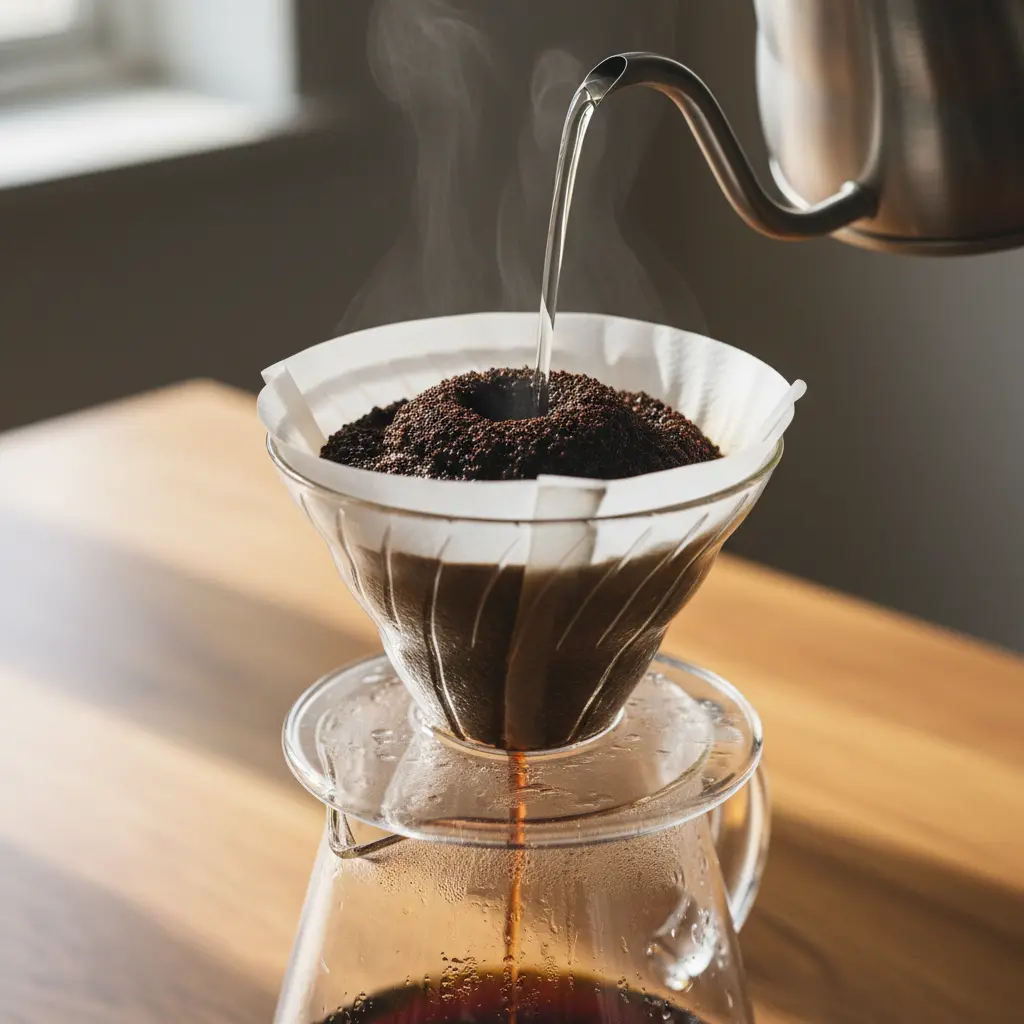
filter = fil- (to pass through) + -ter (agent). Origin: Latin → Old French → English. Imagine a coffee filter soaking up hot water and separating the grounds from the drinkable liquid, representing how filtering works.
Note 1: These definitions and etymologies are not standard dictionary definitions, but extended explanations provided to help with memorization and understanding of the actual application of words. Through this background information, we strive to make words more vivid and easier to understand, and help you remember their meanings in real life.
Note 2: LexiTalk designs the learning flow around the linguistics principle of “Comprehensible Input.” When learners encounter material that is slightly above their level but still understandable from context, the brain naturally absorbs the language. That’s why we keep every word inside authentic contexts, using examples and associations to help you understand it and use it flexibly.
Read the FAQ explanation of Comprehensible InputI set a coffee filter into the cone and hold it steady, then I pour water and watch it move through the grate. The liquid shifts as it passes, the grounds stay behind while the clear brew rises. I adjust my grip, steady my wrist, and the flow changes from a hiss to a slow drip. The small action feels like a gate I keep in place, letting the good through and keeping the bad out.
Filter is a versatile word that covers both physical and abstract ideas. As a verb it means to remove unwanted substances from something, to separate desirable parts from the rest, or to screen information and keep only what is relevant. As a noun it refers to a device or material that blocks or catches unwanted items, such as a coffee filter or a water filter. The etymology goes fil- meaning to pass through and ter as an agent, with a lineage from Latin and Old French into English. In everyday life you filter coffee or water; in data work you filter a list; in journalism you filter ideas for a clear takeaway. This helps distinguish similar terms like refine or screen.
For English learners, filter is often used both as a practical action and a physical device. Learners tend to confuse it with refine or sort, forgetting that filtering excludes items rather than ranking them. Emphasize the exclusion nuance and the noun vs verb forms.
What is the meaning of the word 'filter'?
In which sentence is the word 'filter' used correctly?
Which word is a synonym of 'filter'?
What is the opposite of 'filter'?
How is the word 'filter' commonly used in a real-life context?
Download LexiTalk app for personalized learning experience
Download AppCookies
We use cookies for essential site functions, analytics, and ads. You can accept, reject, or manage preferences. Privacy Policy