fulfillment - Master This Word
Master this word with our 5-step learning method – Learn English in English
Train English Through Brain Routes, Not Translation.
This page helps you stop memorizing isolated translations and start understanding a word through its shared mental image, native-style thinking, and practical training steps.
Master this word with our 5-step learning method – Learn English in English
Example sentences are the start of understanding. Don't rush to memorize. First feel how the word works in a sentence.
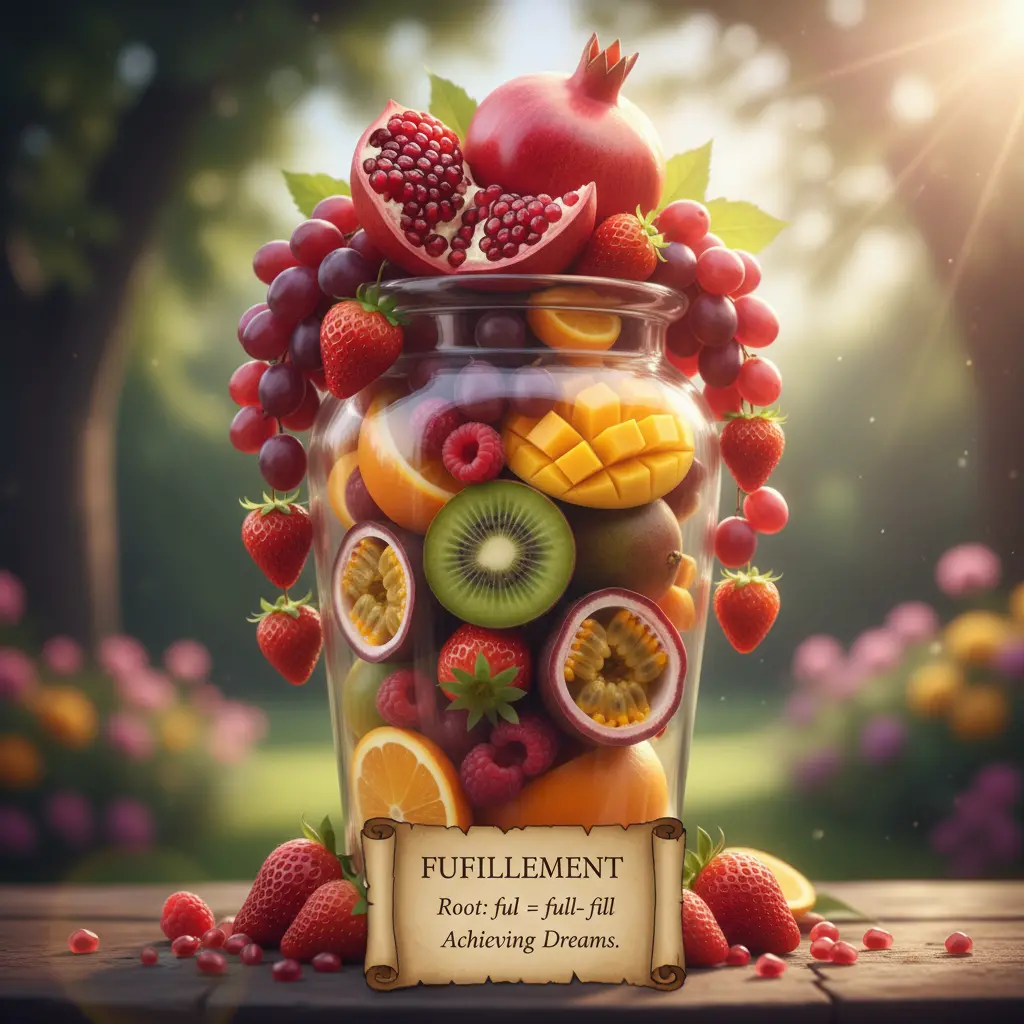
Root: ful- = full, fill = to make full; Historical origin: Middle English (fulfilling) → Old French (fulfiller) → English; Memory image: Picture a jar overflowing with fruit, representing the completeness of achieving dreams and desires.
Note 1: These definitions and etymologies are not standard dictionary definitions, but extended explanations provided to help with memorization and understanding of the actual application of words. Through this background information, we strive to make words more vivid and easier to understand, and help you remember their meanings in real life.
Note 2: LexiTalk designs the learning flow around the linguistics principle of “Comprehensible Input.” When learners encounter material that is slightly above their level but still understandable from context, the brain naturally absorbs the language. That’s why we keep every word inside authentic contexts, using examples and associations to help you understand it and use it flexibly.
Read the FAQ explanation of Comprehensible InputFulfillment is the feeling of deep satisfaction that comes from achieving something you desired or from completing a meaningful task. It can refer to finishing a project, reaching a personal goal, or aligning your work with your values. The word emphasizes a sense of inner contentment and purpose, not just external rewards. You might hear about professional fulfillment, personal fulfillment, or a sense of fulfillment in a hobby or relationship. When learning the word, pay attention to the prepositions that pair with it (feel fulfilled by, find fulfillment in) and the common collocations that link it to growth and self-realization. Learners often confuse fulfillment with mere completion or with happiness gained from material success.
Fulfillment is seen as deep inner satisfaction tied to meaningful growth in English, while other languages may anchor it more in outcomes or social validation; learners often translate it as 'completion' or 'happiness' without emotional nuance.
What is the meaning of the word 'fulfillment'?
In which sentence is 'fulfillment' used correctly?
Which word is an antonym of 'fulfillment'?
In what real-life context would you most likely experience 'fulfillment'?
Reflect on a time when you felt a sense of fulfillment.
English Learning Listening Content
Listen NowDownload LexiTalk app for personalized learning experience
Download AppCookies
We use cookies for essential site functions, analytics, and ads. You can accept, reject, or manage preferences. Privacy Policy