gap - Master This Word
Master this word with our 5-step learning method – Learn English in English
Train English Through Brain Routes, Not Translation.
This page helps you stop memorizing isolated translations and start understanding a word through its shared mental image, native-style thinking, and practical training steps.
Master this word with our 5-step learning method – Learn English in English
Example sentences are the start of understanding. Don't rush to memorize. First feel how the word works in a sentence.
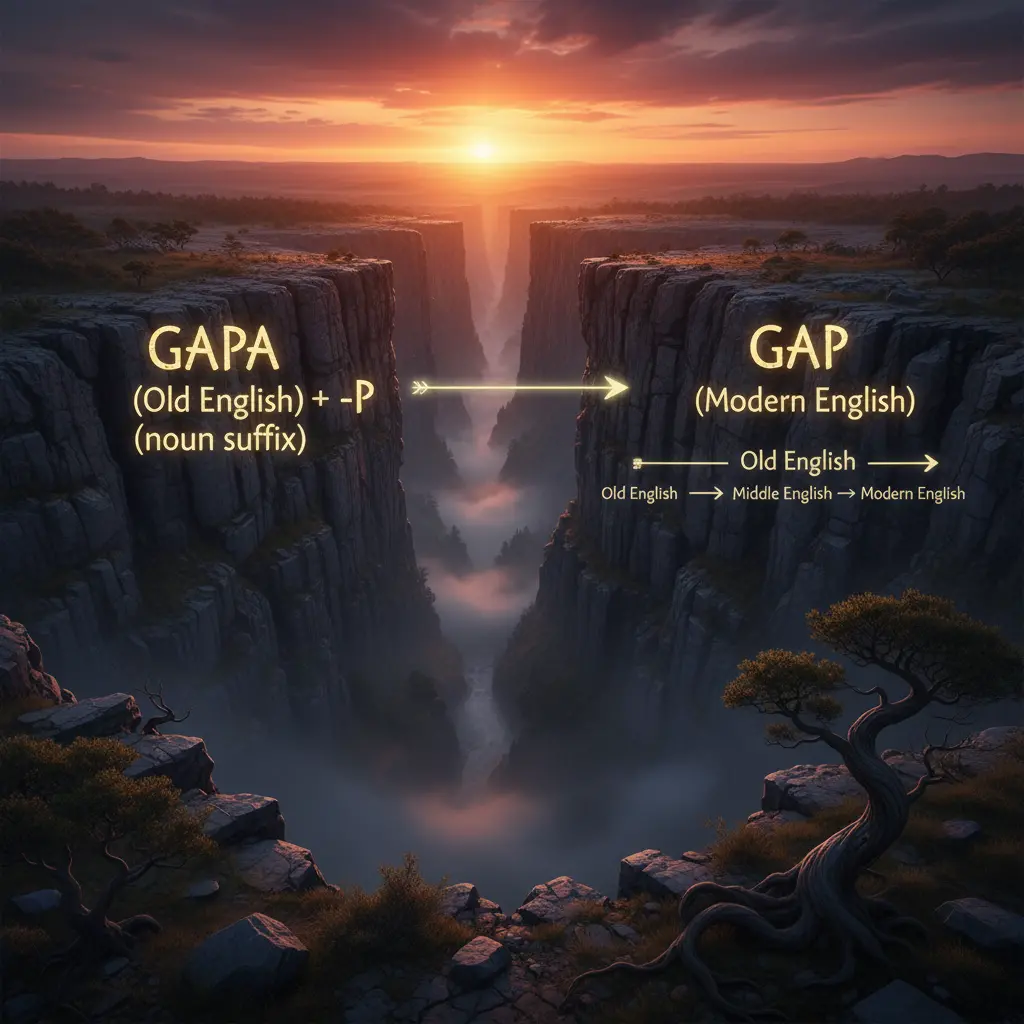
gap = gapa (Old English) + -p (noun suffix); Historical origin: Old English → Middle English → Modern English. Imagine a landscape with a wide chasm, representing the gap between two cliffs, helping you remember the concept of a significant space or break.
Note 1: These definitions and etymologies are not standard dictionary definitions, but extended explanations provided to help with memorization and understanding of the actual application of words. Through this background information, we strive to make words more vivid and easier to understand, and help you remember their meanings in real life.
Note 2: LexiTalk designs the learning flow around the linguistics principle of “Comprehensible Input.” When learners encounter material that is slightly above their level but still understandable from context, the brain naturally absorbs the language. That’s why we keep every word inside authentic contexts, using examples and associations to help you understand it and use it flexibly.
Read the FAQ explanation of Comprehensible InputI cup my hand around a book cluster and feel a shy space bubbling between them. I push one book a fraction, then pull it back to test the gap, watching it widen just enough. I adjust my grip, keep my eye on the line, and feel the moment shift as the opening sits neatly there. That small gap guides where I drop in a new title, turning clutter into order without saying a word.
Gap is a versatile word describing an opening between two things, a space where something could pass, or a missing amount that creates difference or distance. As a noun it can refer to the physical space between objects, such as the gap between two buildings or seats with space. It also denotes a disparity, as in a knowledge gap or a wage gap. As a verb phrase, to gap or to create a gap means to leave an opening or to break through a barrier. Visualizing a landscape with a wide chasm between cliffs helps you remember the core idea: a significant space or break that separates things.
Native English tends to treat gap as both a concrete space and a widely used metaphor (bridge the gap, gap in knowledge). Learners often overgeneralize to all openings as holes or confuse gap with opening in clothing.
What is the meaning of the word 'gap'?
How is the word 'gap' used in a sentence?
Which word is similar to 'gap'?
Which word is the opposite of 'gap'?
Can you provide a real-life context where you might encounter a gap?
English Learning Listening Content
Listen NowDownload LexiTalk app for personalized learning experience
Download AppCookies
We use cookies for essential site functions, analytics, and ads. You can accept, reject, or manage preferences. Privacy Policy