
genes - Master This Word
Master this word with our 5-step learning method – Learn English in English
Train English Through Brain Routes, Not Translation.
This page helps you stop memorizing isolated translations and start understanding a word through its shared mental image, native-style thinking, and practical training steps.
Master this word with our 5-step learning method – Learn English in English
Example sentences are the start of understanding. Don't rush to memorize. First feel how the word works in a sentence.
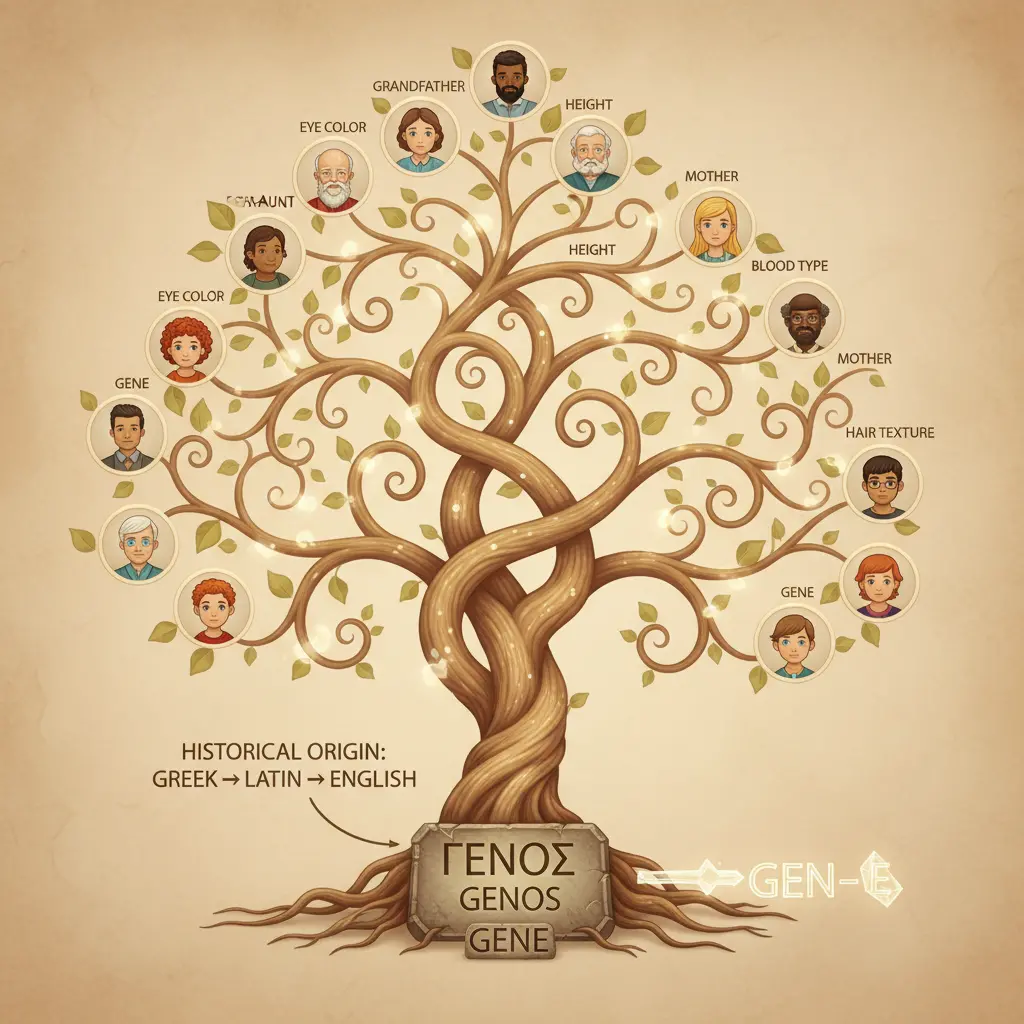
gene: from 'genos' (Greek) meaning 'family, race' + suffix '-e'. Historical origin: Greek → Latin → English. Memory image: Picture a family tree where each branch represents a different gene, connecting traits from ancestors to descendants.
Note 1: These definitions and etymologies are not standard dictionary definitions, but extended explanations provided to help with memorization and understanding of the actual application of words. Through this background information, we strive to make words more vivid and easier to understand, and help you remember their meanings in real life.
Note 2: LexiTalk designs the learning flow around the linguistics principle of “Comprehensible Input.” When learners encounter material that is slightly above their level but still understandable from context, the brain naturally absorbs the language. That’s why we keep every word inside authentic contexts, using examples and associations to help you understand it and use it flexibly.
Read the FAQ explanation of Comprehensible InputI cup a tiny seed in my palm and steady my grip as I move it into the soil. I push the dirt over and set the seed in place, watching the plant begin to change with time. I keep adjusting light and water, feeling the effort pull tight and the sense that something unseen is guiding growth. That feeling settles into a simple rhythm: the gene quietly pushes what shows up in the plant.
Genes are the basic units of heredity in living organisms. Each gene is a specific sequence of DNA that contains the instructions for making one or more proteins or for regulating when and how those proteins are produced. Genes influence physical traits such as eye color or height, as well as susceptibility to certain diseases and many aspects of behavior. They are located on chromosomes and can be inherited from parents, passed to offspring, and can be turned on or off in response to environmental factors. In everyday science and medicine, the term gene is used to describe both a hereditary unit and the functional DNA region that encodes a product.
In English, gene is treated as a concrete biological unit; learners often confuse it with genome or genetics and forget plural forms. Emphasize the distinction between a single gene and the whole genome, and practice common collocations like gene expression.
Download LexiTalk app for personalized learning experience
Download AppCookies
We use cookies for essential site functions, analytics, and ads. You can accept, reject, or manage preferences. Privacy Policy