
genocide - Master This Word
Master this word with our 5-step learning method – Learn English in English
Train English Through Brain Routes, Not Translation.
This page helps you stop memorizing isolated translations and start understanding a word through its shared mental image, native-style thinking, and practical training steps.
Master this word with our 5-step learning method – Learn English in English
Example sentences are the start of understanding. Don't rush to memorize. First feel how the word works in a sentence.
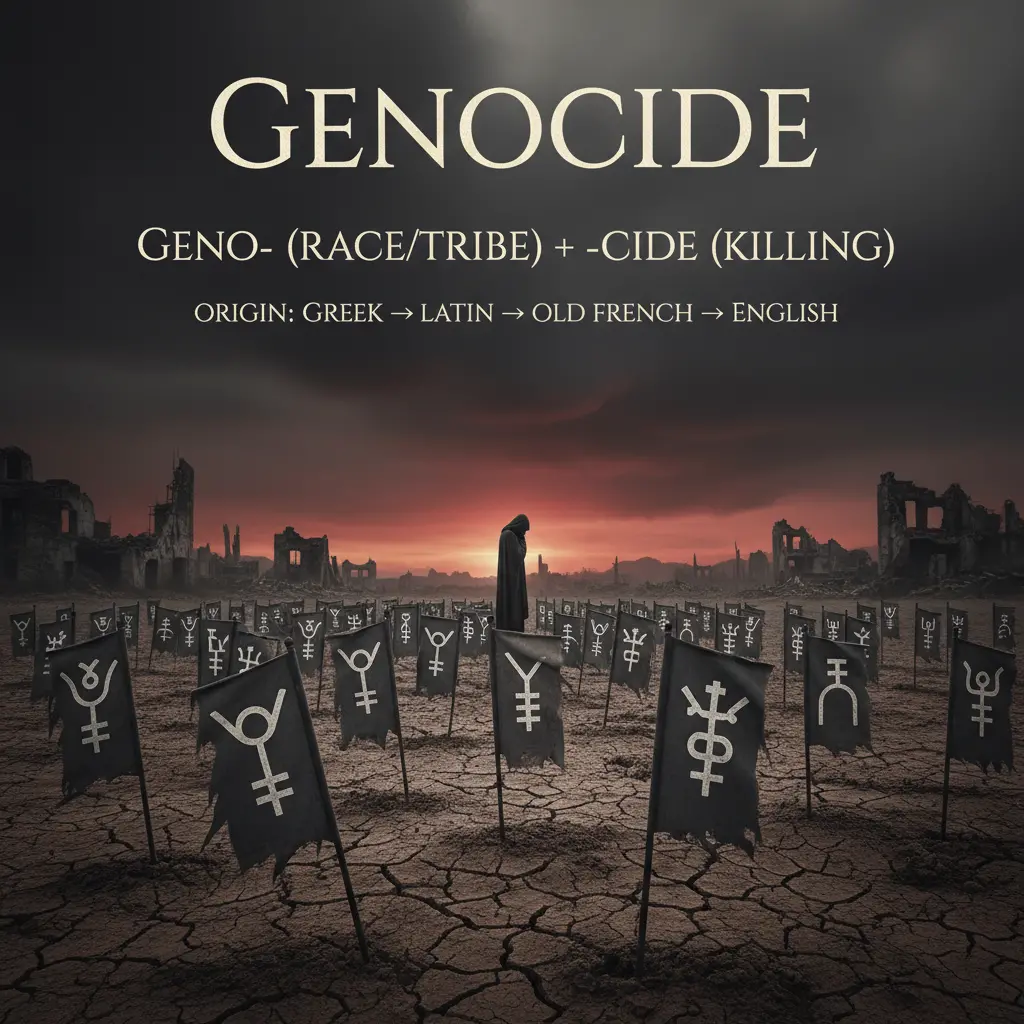
genocide = geno- (race) + cide (killing); Origin: Greek → French → English. Imagine a grim scene where people are targeted for extermination, emphasizing the destruction of a race, capturing the horror of this act.
Note 1: These definitions and etymologies are not standard dictionary definitions, but extended explanations provided to help with memorization and understanding of the actual application of words. Through this background information, we strive to make words more vivid and easier to understand, and help you remember their meanings in real life.
Note 2: LexiTalk designs the learning flow around the linguistics principle of “Comprehensible Input.” When learners encounter material that is slightly above their level but still understandable from context, the brain naturally absorbs the language. That’s why we keep every word inside authentic contexts, using examples and associations to help you understand it and use it flexibly.
Read the FAQ explanation of Comprehensible InputI rest my hand on a map and move a small bead along a circle of dots representing people. I adjust my grip and push the bead forward, watching how the circle tightens around some dots and leaves others out. It feels heavy, and I pause to sense the choices and consequences unfolding in the line I control. That weight travels into real life, shaping how I talk, think, and act toward groups before any action is taken.
Genocide refers to the deliberate, systematic destruction of a national, ethnic, racial, or religious group, often through mass killings, forced displacement, starvation, or other acts intended to erase that group’s existence. The term emphasizes intent and organization, highlighting planning, coordination, and policy-level support as factors that distinguish genocide from ordinary violence. Historical examples such as the Holocaust, the Armenian genocide, and other large-scale crimes against humanity demonstrate how state policy, propaganda, and social hierarchies can drive widespread harm against civilians. For learners, it is crucial to recognize the severity, the unique legal definitions in international law, and the moral gravity surrounding such acts.
English learners often separate genocide from other violence but may miss the legal criteria of intent, planning, and target-group destruction; emphasize the formal, global context and distinct terminology.
What is the meaning of 'genocide'?
In which sentence is 'genocide' used correctly?
What is a synonym for 'genocide'?
What is an antonym for 'genocide'?
In what real-life context would you find 'genocide'?
Download LexiTalk app for personalized learning experience
Download AppCookies
We use cookies for essential site functions, analytics, and ads. You can accept, reject, or manage preferences. Privacy Policy