giant - Master This Word
Master this word with our 5-step learning method – Learn English in English
Train English Through Brain Routes, Not Translation.
This page helps you stop memorizing isolated translations and start understanding a word through its shared mental image, native-style thinking, and practical training steps.
Master this word with our 5-step learning method – Learn English in English
Example sentences are the start of understanding. Don't rush to memorize. First feel how the word works in a sentence.
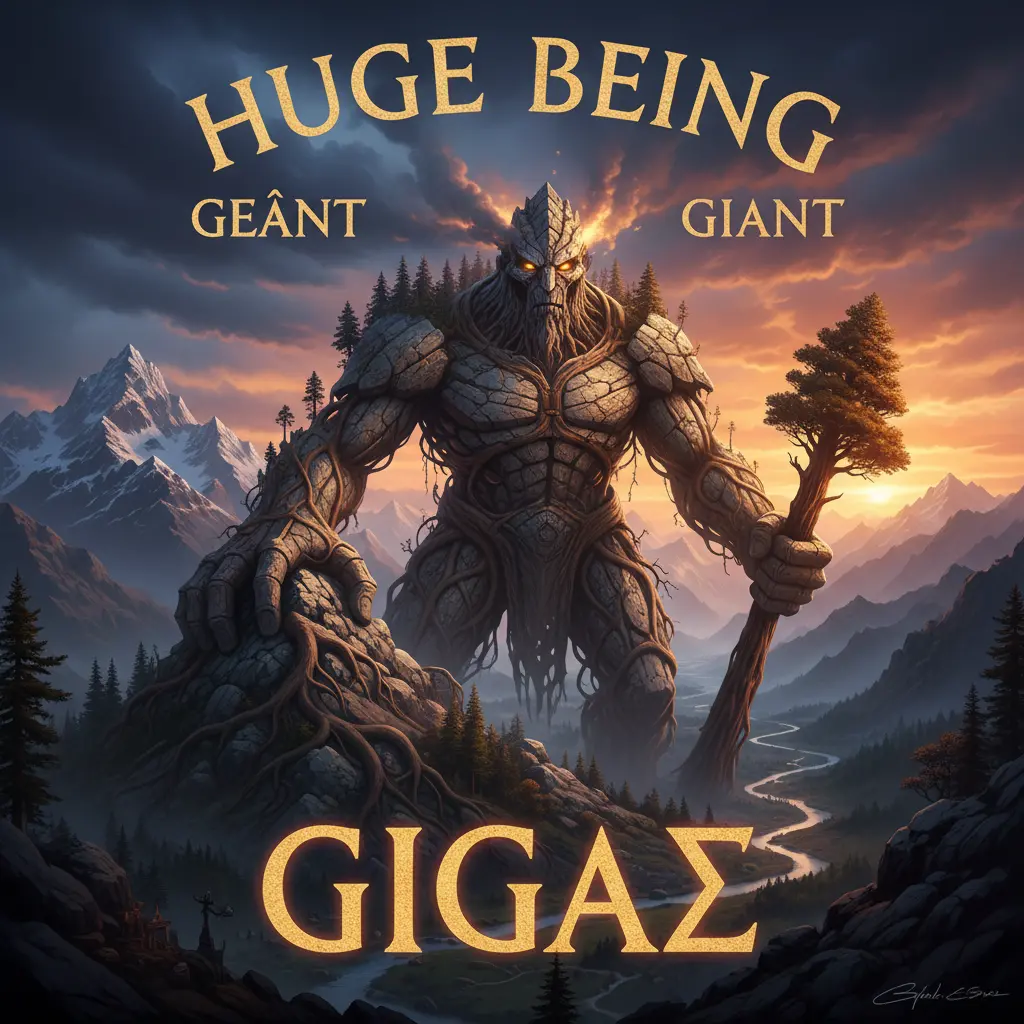
Origin: from 'giant' (Middle French 'geant', from Latin 'gigas', from Greek 'gigas' meaning 'huge being'). Memory image: picture a colossal being towering over mountains, representing extraordinary size and strength.
Note 1: These definitions and etymologies are not standard dictionary definitions, but extended explanations provided to help with memorization and understanding of the actual application of words. Through this background information, we strive to make words more vivid and easier to understand, and help you remember their meanings in real life.
Note 2: LexiTalk designs the learning flow around the linguistics principle of “Comprehensible Input.” When learners encounter material that is slightly above their level but still understandable from context, the brain naturally absorbs the language. That’s why we keep every word inside authentic contexts, using examples and associations to help you understand it and use it flexibly.
Read the FAQ explanation of Comprehensible InputFirst I set my hand on the door and push, feeling the latch give way. The room opens into a space that feels giant, bright and full of air. I shift my weight, adjust my stance, and keep the motion steady as I step inside. The moment the threshold yields, the word giant stops being about size and starts about the presence I have to navigate.
Giant is both a noun and an adjective. As a noun it refers to a very large person or creature, often found in myths, fairy tales, and fantasy stories. As an adjective it means extremely large, used to emphasize size, impact, or importance. In everyday speech you can say 'a giant of a building' or 'a giant step forward,' which conveys scale and significance without exaggeration. However, remember that 'giant' is not always literal—it can be metaphorical, as in 'giant strides' or 'a giant leap' in progress. When describing people, avoid dehumanizing language by adding specifics.
In English, giant is commonly used for dramatic emphasis and works flexibly across myths, everyday speech, and business. Learners often overuse it or mix it with gigantic. Be mindful of tone: describing a person with giant can feel grandiose or mythical in everyday conversation.
What is the meaning of the word 'giant'?
In which of the following sentences is 'giant' used correctly?
Which word is most similar to 'giant'?
What is the opposite of 'giant'?
In what context might you see a giant?
Download LexiTalk app for personalized learning experience
Download AppCookies
We use cookies for essential site functions, analytics, and ads. You can accept, reject, or manage preferences. Privacy Policy