giggle - Master This Word
Master this word with our 5-step learning method – Learn English in English
Train English Through Brain Routes, Not Translation.
This page helps you stop memorizing isolated translations and start understanding a word through its shared mental image, native-style thinking, and practical training steps.
Master this word with our 5-step learning method – Learn English in English
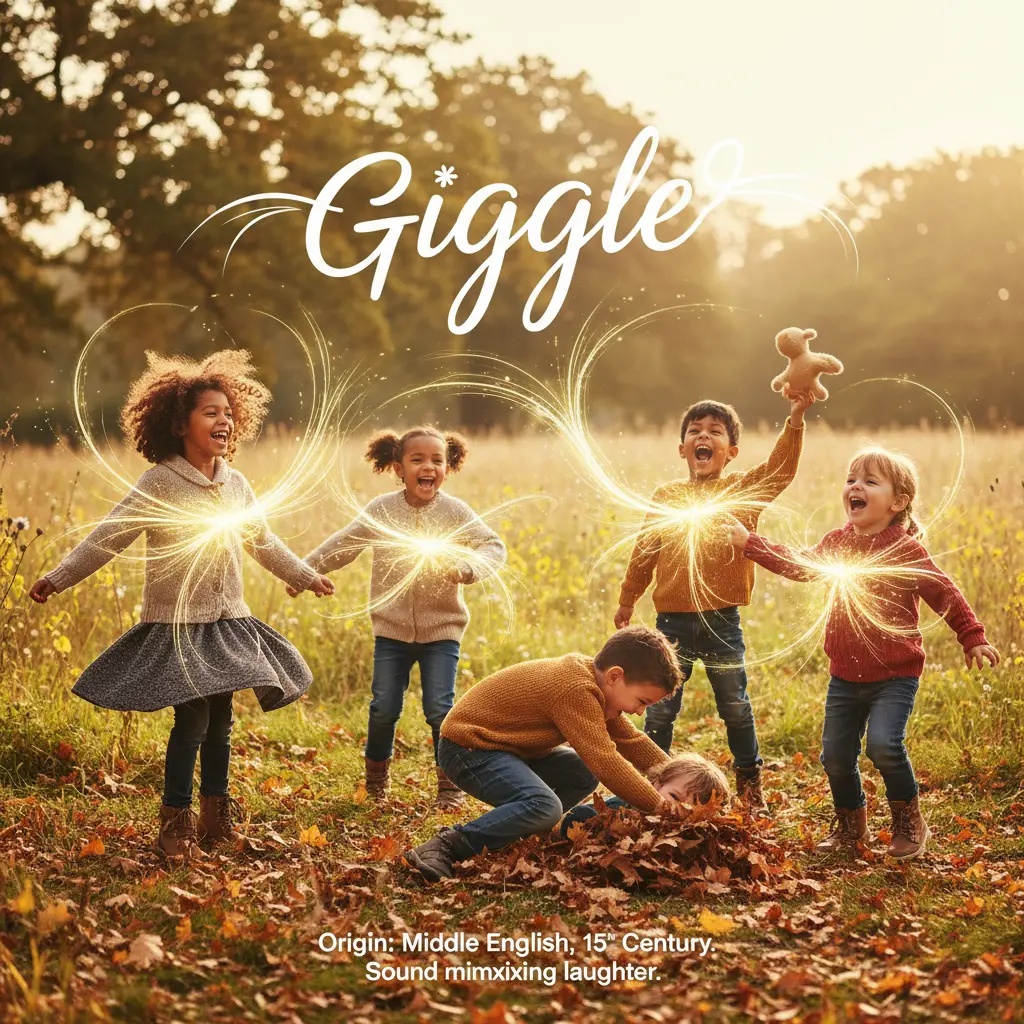
Example sentences are the start of understanding. Don't rush to memorize. First feel how the word works in a sentence.
giggle = ‘gig’ (to move in a playful way) + ‘gle’ (indicating a form of laughter). Originated from Middle English in the 15th century, possibly influenced by sound mimicking laughter. Picture a group of children playing and suddenly bursting into light, infectious laughter.
Note 1: These definitions and etymologies are not standard dictionary definitions, but extended explanations provided to help with memorization and understanding of the actual application of words. Through this background information, we strive to make words more vivid and easier to understand, and help you remember their meanings in real life.
Note 2: LexiTalk designs the learning flow around the linguistics principle of “Comprehensible Input.” When learners encounter material that is slightly above their level but still understandable from context, the brain naturally absorbs the language. That’s why we keep every word inside authentic contexts, using examples and associations to help you understand it and use it flexibly.
Read the FAQ explanation of Comprehensible InputGiggle is a light, quick laugh that often happens in groups or when something feels silly but not deeply funny. In English, it can function as both a verb and a noun: to giggle is to emit a series of small, high-pitched laughs, and a giggle is the sound itself. People giggle in social settings to show amusement or nervousness, and it can be contagious. The word carries a playful, informal tone and is common with children, friends, and casual conversation. Be mindful that giggling can be heard as immature in formal contexts.
Learners often imagine giggle as a tiny, purely cheerful sound; in many languages it carries additional shades like nervousness or playfulness. English often marks audience and context with choice of verb and tone, so students might overuse giggle in formal writing or underuse it in casual speech.
What does the word 'giggle' mean?
Which sentence uses 'giggle' correctly?
What is a synonym for 'giggle'?
What is an opposite word for 'giggle'?
When is a situation where someone might giggle?
Download LexiTalk app for personalized learning experience
Download AppCookies
We use cookies for essential site functions, analytics, and ads. You can accept, reject, or manage preferences. Privacy Policy