
gladiator - Master This Word
Master this word with our 5-step learning method – Learn English in English
Train English Through Brain Routes, Not Translation.
This page helps you stop memorizing isolated translations and start understanding a word through its shared mental image, native-style thinking, and practical training steps.
Master this word with our 5-step learning method – Learn English in English
Example sentences are the start of understanding. Don't rush to memorize. First feel how the word works in a sentence.
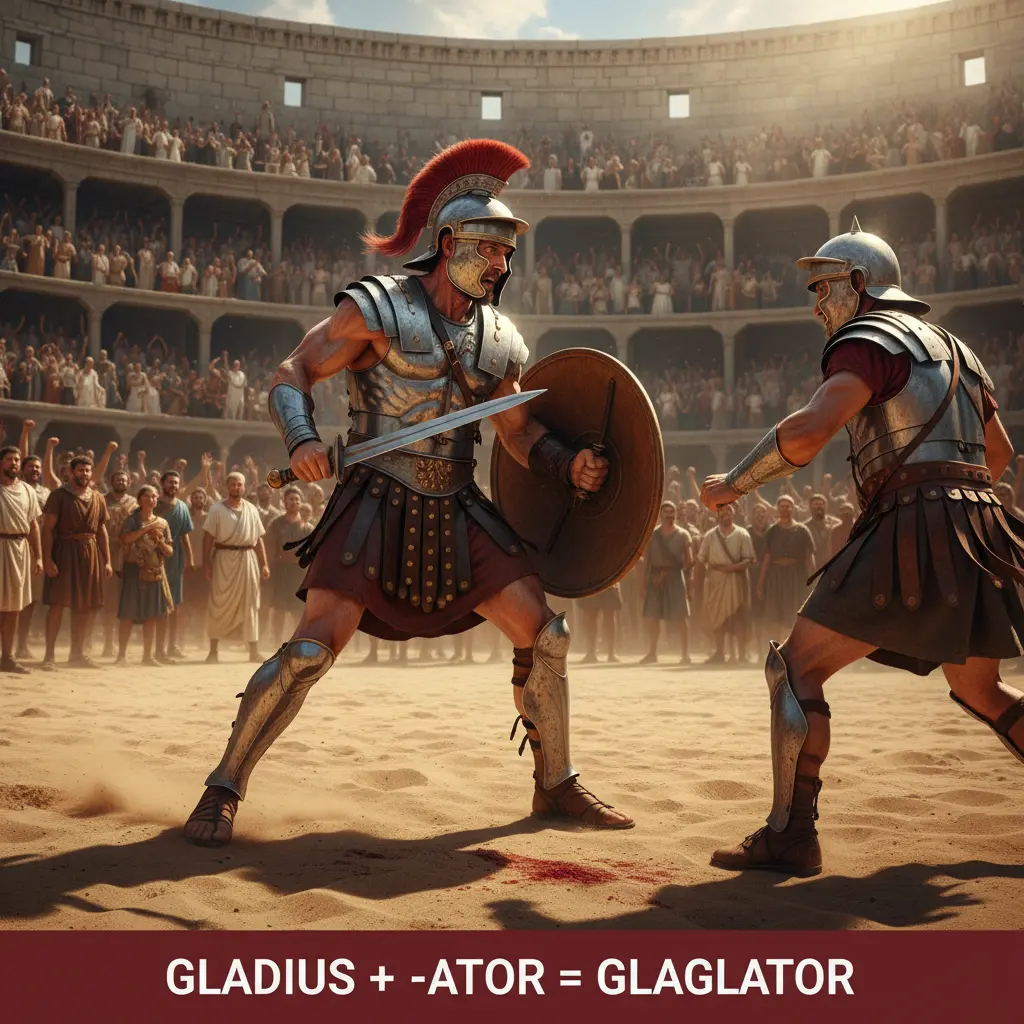
Root decomposition: 'gladius' (sword) + '-ator' (agent suffix). Historical origin: Latin → Old French → English. Memory image: Picture a Roman soldier in a sand-filled arena, fiercely battling opponents with a sword, entertaining thousands in the crowd.
Note 1: These definitions and etymologies are not standard dictionary definitions, but extended explanations provided to help with memorization and understanding of the actual application of words. Through this background information, we strive to make words more vivid and easier to understand, and help you remember their meanings in real life.
Note 2: LexiTalk designs the learning flow around the linguistics principle of “Comprehensible Input.” When learners encounter material that is slightly above their level but still understandable from context, the brain naturally absorbs the language. That’s why we keep every word inside authentic contexts, using examples and associations to help you understand it and use it flexibly.
Read the FAQ explanation of Comprehensible InputGladiator refers to a trained fighter who battled in ancient Rome, often in large public arenas, entertaining crowds with combat that could be lethal. These combatants were usually slaves, prisoners of war, or condemned criminals, though some volunteered for training and glory. They fought with a variety of weapons and styles, from heavy swords to nets and tridents, under the watch of emperors and spectators. Over time the word came to symbolize dramatic competition and warrior ethos, even outside the arena. In modern usage, calling someone a gladiator emphasizes persistence, courage, or a willingness to compete fiercely under pressure.
Gladiator is a historical noun with strong imagery of public combat; learners may think it always means a modern athlete or confuse it with generic fighting terms. Emphasize the Roman context and the use of the term in metaphor.
What does the word 'gladiator' mean?
Choose the sentence that uses 'gladiator' correctly.
Which word is most similar to 'gladiator'?
What is the opposite of 'gladiator'?
Can you think of a real-life context for a gladiator?
Download LexiTalk app for personalized learning experience
Download AppCookies
We use cookies for essential site functions, analytics, and ads. You can accept, reject, or manage preferences. Privacy Policy