
gullibly - Master This Word
Master this word with our 5-step learning method – Learn English in English
Train English Through Brain Routes, Not Translation.
This page helps you stop memorizing isolated translations and start understanding a word through its shared mental image, native-style thinking, and practical training steps.
Master this word with our 5-step learning method – Learn English in English
Example sentences are the start of understanding. Don't rush to memorize. First feel how the word works in a sentence.
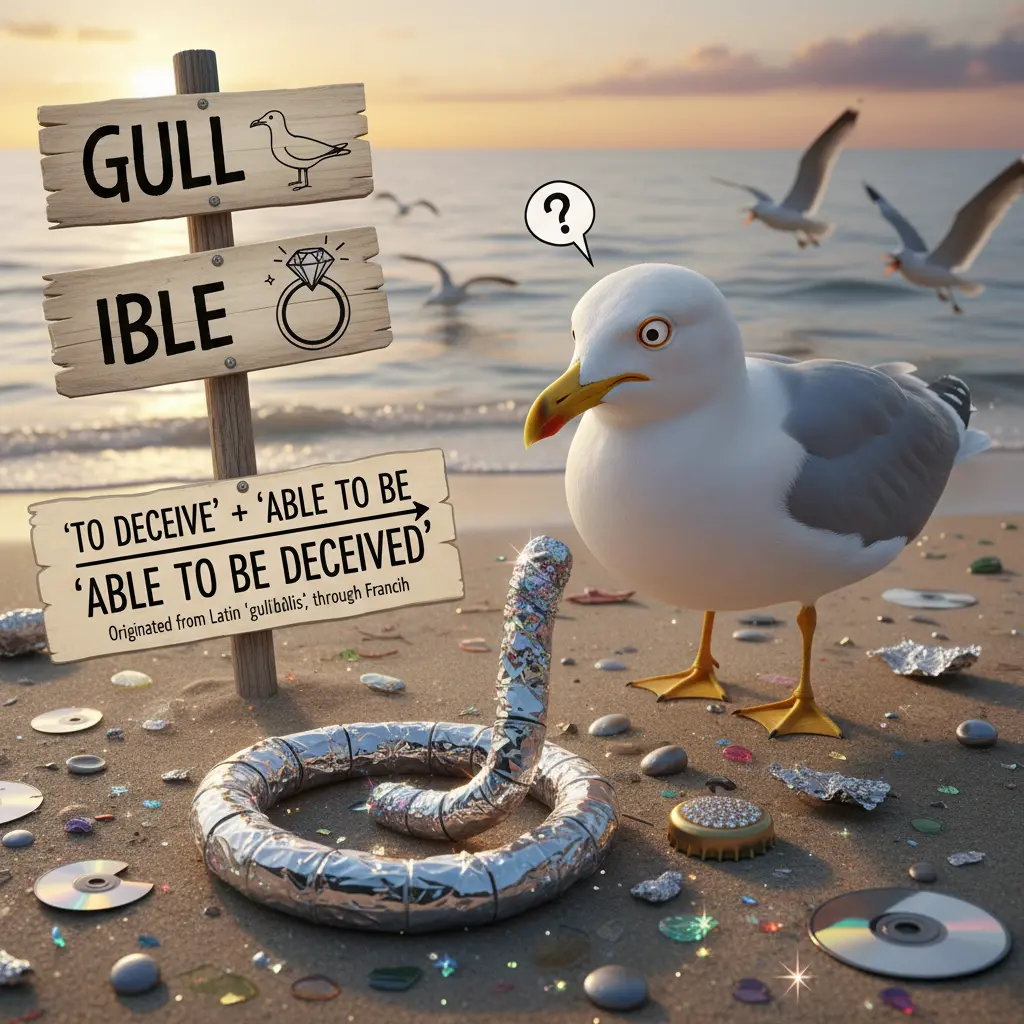
(gull) + (ible) = ‘to deceive’ + ‘able to be’, meaning 'able to be deceived'. Originated from Latin ‘gullibilis’, through Old French. Imagine a bird, the gull, that gets tricked by shiny objects, representing those easily fooled.
Note 1: These definitions and etymologies are not standard dictionary definitions, but extended explanations provided to help with memorization and understanding of the actual application of words. Through this background information, we strive to make words more vivid and easier to understand, and help you remember their meanings in real life.
Note 2: LexiTalk designs the learning flow around the linguistics principle of “Comprehensible Input.” When learners encounter material that is slightly above their level but still understandable from context, the brain naturally absorbs the language. That’s why we keep every word inside authentic contexts, using examples and associations to help you understand it and use it flexibly.
Read the FAQ explanation of Comprehensible InputGullible describes someone who is easily deceived or misled, often because they trust others readily or accept information at face value. In everyday speech it signals a mild reproach rather than a harsh insult, and it is common in telling anecdotes or offering cautionary lessons. The term can apply to various contexts, from consumer scams to social manipulation, so learners should understand that gullibility arises from trusting intentions combined with incomplete skepticism. Culturally, some societies prize openness and generosity of belief, which can blur lines between kindness and credulity; learners should also note common collocations like gullible enough to believe and avoid overreacting to skepticism.
Explain to an English speaker that gullible is a mild, informal label focusing on vulnerability to deception rather than a measure of intelligence; it often appears in stories and warnings.
What does the word 'gullibly' mean?
Which sentence uses 'gullibly' correctly?
Which word is most similar to 'gullibly'?
What is the opposite of 'gullibly'?
Can you think of a real-life context where someone might act in a gullible manner?
Download LexiTalk app for personalized learning experience
Download AppCookies
We use cookies for essential site functions, analytics, and ads. You can accept, reject, or manage preferences. Privacy Policy