
hackneyed - Master This Word
Master this word with our 5-step learning method – Learn English in English
Train English Through Brain Routes, Not Translation.
This page helps you stop memorizing isolated translations and start understanding a word through its shared mental image, native-style thinking, and practical training steps.
Master this word with our 5-step learning method – Learn English in English
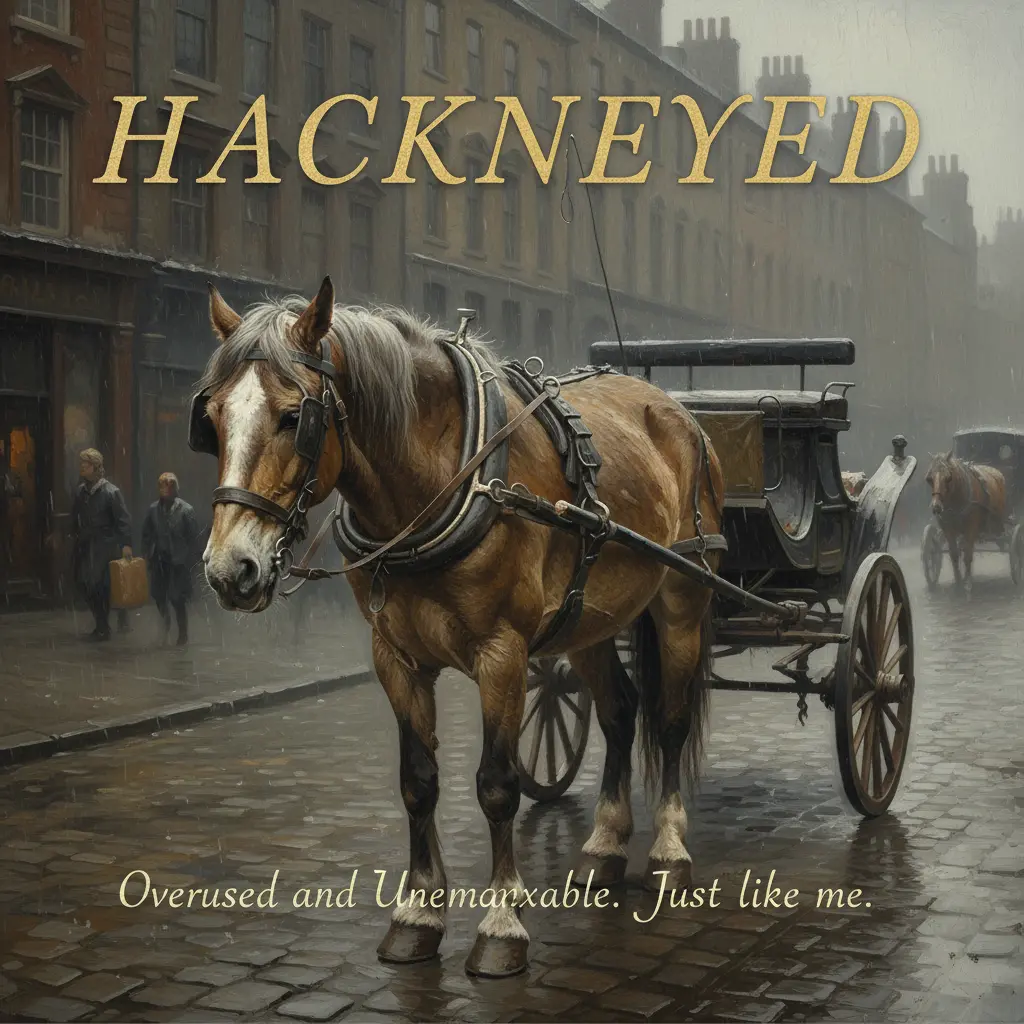
Example sentences are the start of understanding. Don't rush to memorize. First feel how the word works in a sentence.
hackneyed = hackney + ed; Origin: Middle English (from 'hackney') → Old French → English. Picture a tired horse that has been used so often for pulling carriages; it becomes unremarkable, just like overused phrases.
Note 1: These definitions and etymologies are not standard dictionary definitions, but extended explanations provided to help with memorization and understanding of the actual application of words. Through this background information, we strive to make words more vivid and easier to understand, and help you remember their meanings in real life.
Note 2: LexiTalk designs the learning flow around the linguistics principle of “Comprehensible Input.” When learners encounter material that is slightly above their level but still understandable from context, the brain naturally absorbs the language. That’s why we keep every word inside authentic contexts, using examples and associations to help you understand it and use it flexibly.
Read the FAQ explanation of Comprehensible InputHackneyed means overused and clichéd, lacking freshness or originality. It often describes phrases, ideas, jokes, plots, or slogans that have been repeated so many times that they feel dull and predictable. The word carries a negative tone, especially in formal writing or criticism. You might hear it in phrases like a hackneyed old trope or a hackneyed slogan, signaling that the speaker would benefit from fresh imagery or a sharper angle. When using hackneyed, choose a more precise descriptor: stale, trite, cliché, prosaic, or pedestrian, depending on what exactly is tired. Avoid sounding dismissive; use it judiciously to avoid over-naming ordinary things.
English speakers expect critique of wording and aesthetics; learners often overuse hackneyed terms and apply them to people or non-linguistic objects. Emphasize collocations with old, cliché, or trite to show nuance.
What is the meaning of 'hackneyed'?
In which sentence is 'hackneyed' used correctly?
Which word is most similar to 'hackneyed'?
What would be the opposite of 'hackneyed'?
How would you describe a hackneyed phrase in a real-life context?
Download LexiTalk app for personalized learning experience
Download AppCookies
We use cookies for essential site functions, analytics, and ads. You can accept, reject, or manage preferences. Privacy Policy