harvest - Master This Word
Master this word with our 5-step learning method – Learn English in English
Train English Through Brain Routes, Not Translation.
This page helps you stop memorizing isolated translations and start understanding a word through its shared mental image, native-style thinking, and practical training steps.
Master this word with our 5-step learning method – Learn English in English
Example sentences are the start of understanding. Don't rush to memorize. First feel how the word works in a sentence.
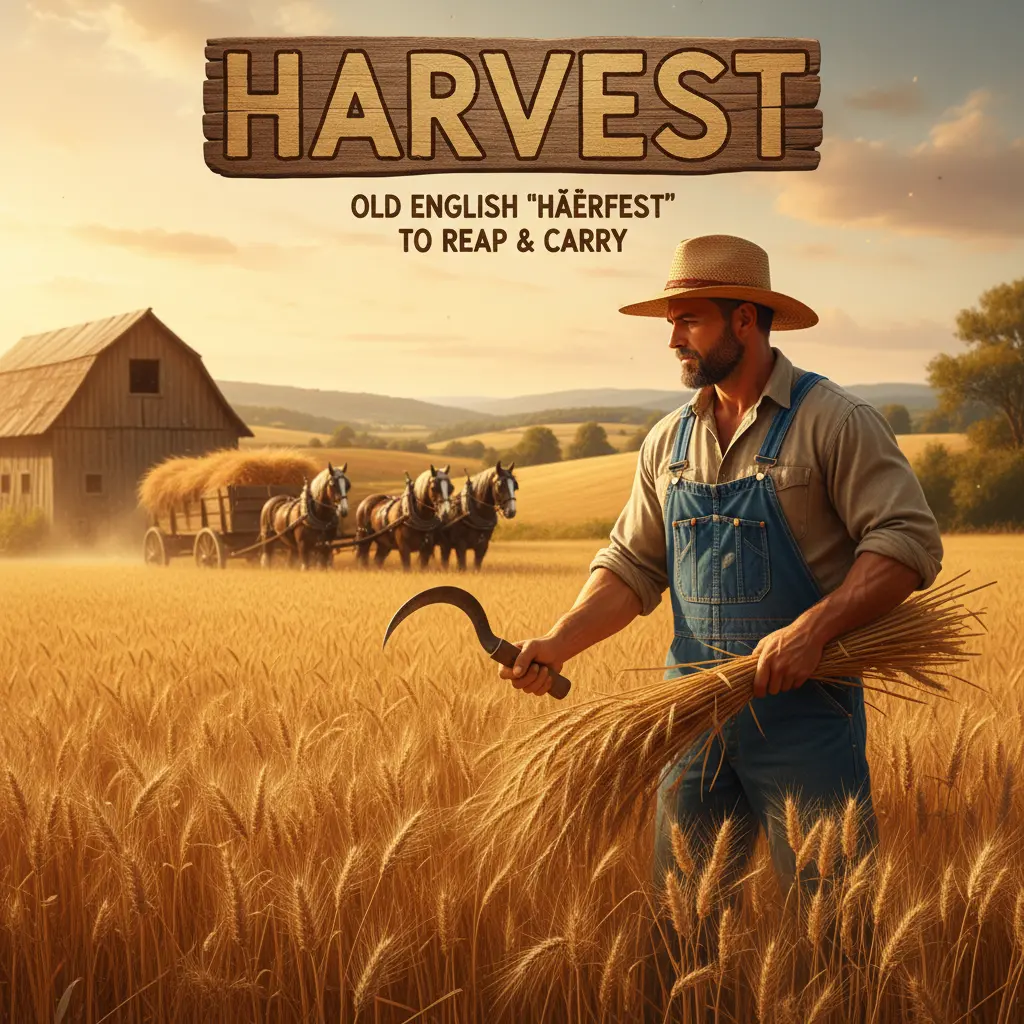
harvest: 'har' (to reap) + 'vest' (to carry); Origin: Old English 'hærfest', meaning autumn; Memory image: Picture a farmer with a sickle reaping golden wheat under a bright autumn sun.
Note 1: These definitions and etymologies are not standard dictionary definitions, but extended explanations provided to help with memorization and understanding of the actual application of words. Through this background information, we strive to make words more vivid and easier to understand, and help you remember their meanings in real life.
Note 2: LexiTalk designs the learning flow around the linguistics principle of “Comprehensible Input.” When learners encounter material that is slightly above their level but still understandable from context, the brain naturally absorbs the language. That’s why we keep every word inside authentic contexts, using examples and associations to help you understand it and use it flexibly.
Read the FAQ explanation of Comprehensible InputI bend down and wrap my fingers around a ripe stem, then move the basket closer. I pull the plant free and set it in the crate, feeling the soil fall away. The effort is steady, a push and a turn of my wrists as I harvest, letting light ride over the leaves. By dusk the gathered stems glow in a neat line, and I carry that small harvest back to the shed with a simple, quiet pride.
Harvest is both a noun and a verb in English. As a noun it refers to the act of gathering crops or other resources, or to the amount gathered at a particular time, such as a bumper harvest. As a verb, to harvest means to gather crops from the fields or to collect something produced by effort, such as data or ideas. It is common in farming contexts during autumn, but it also appears in business or science when describing the result of careful work. Learners should note the broader figurative uses and remember collocations like harvest season, harvest crops, and a harvest of information.
In English, harvest covers both the act and the result, and it easily takes on metaphorical senses. Learners often mix it with reap or overextend it to unrelated domains. English also favors set phrases like harvest season and be harvested.
What is the meaning of 'harvest'?
In which sentence is 'harvest' used correctly?
Which word is a synonym of 'harvest'?
Which word is an antonym of 'harvest'?
In what real-life context would you use the word 'harvest'?
Download LexiTalk app for personalized learning experience
Download AppCookies
We use cookies for essential site functions, analytics, and ads. You can accept, reject, or manage preferences. Privacy Policy