hate - Master This Word
Master this word with our 5-step learning method – Learn English in English
Train English Through Brain Routes, Not Translation.
This page helps you stop memorizing isolated translations and start understanding a word through its shared mental image, native-style thinking, and practical training steps.
Master this word with our 5-step learning method – Learn English in English
Example sentences are the start of understanding. Don't rush to memorize. First feel how the word works in a sentence.
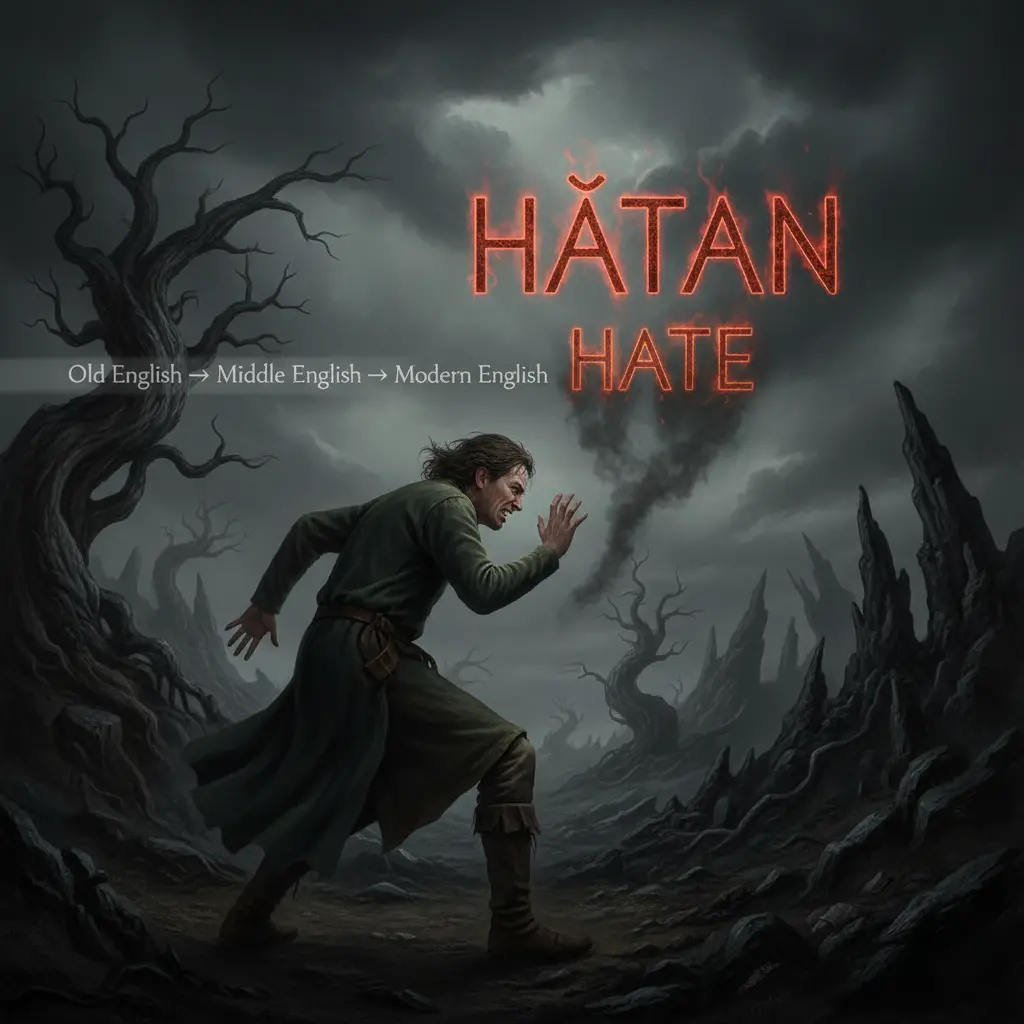
The word 'hate' is derived from the Old English 'hatan', which means 'to have a strong aversion.' Root: 'hāt' = 'angry'. Historical origin: Old English → Middle English → Modern English. Memory image: Imagine a person turning away in disgust, unable to bear the sight of something they deeply despise.
Note 1: These definitions and etymologies are not standard dictionary definitions, but extended explanations provided to help with memorization and understanding of the actual application of words. Through this background information, we strive to make words more vivid and easier to understand, and help you remember their meanings in real life.
Note 2: LexiTalk designs the learning flow around the linguistics principle of “Comprehensible Input.” When learners encounter material that is slightly above their level but still understandable from context, the brain naturally absorbs the language. That’s why we keep every word inside authentic contexts, using examples and associations to help you understand it and use it flexibly.
Read the FAQ explanation of Comprehensible InputI grip the edge of the desk and lean back, tightening my posture. I move my attention away from a person or idea that stings, turning my head to settle elsewhere. I breathe with effort, adjust the pace of my thoughts, and push away the impulse to lash out. In that quiet push and hold on myself, the feeling lands as a sharp aversion, a simple, real sense of hate that helps me keep my distance.
hate is a strong feeling that can work as both a verb and a noun: as a verb, it means to strongly dislike someone or something; as a noun, it denotes intense aversion or ill will. The word signals a higher level of emotion than merely disliking and can carry hostility depending on context. You might say I hate rainy days, or I hate cheating, or there is a lot of hate between rival groups. In conversation, some speakers soften it to dislike or not like, especially in polite settings, but in passionate speech hate can appear in phrases like hate to say it or hate doing this.
Think in English: hate is a strong, explicit emotion; avoid implying universal disgust; learners often overuse it when they mean 'dislike'.
What is the meaning of the word 'hate'?
Which sentence uses the word 'hate' correctly?
What is the most similar word to 'hate'?
What is the opposite of 'hate'?
Can you think of a real-life context where 'hate' would be used?
Download LexiTalk app for personalized learning experience
Download AppCookies
We use cookies for essential site functions, analytics, and ads. You can accept, reject, or manage preferences. Privacy Policy