
herder - Master This Word
Master this word with our 5-step learning method – Learn English in English
Train English Through Brain Routes, Not Translation.
This page helps you stop memorizing isolated translations and start understanding a word through its shared mental image, native-style thinking, and practical training steps.
Master this word with our 5-step learning method – Learn English in English
Example sentences are the start of understanding. Don't rush to memorize. First feel how the word works in a sentence.
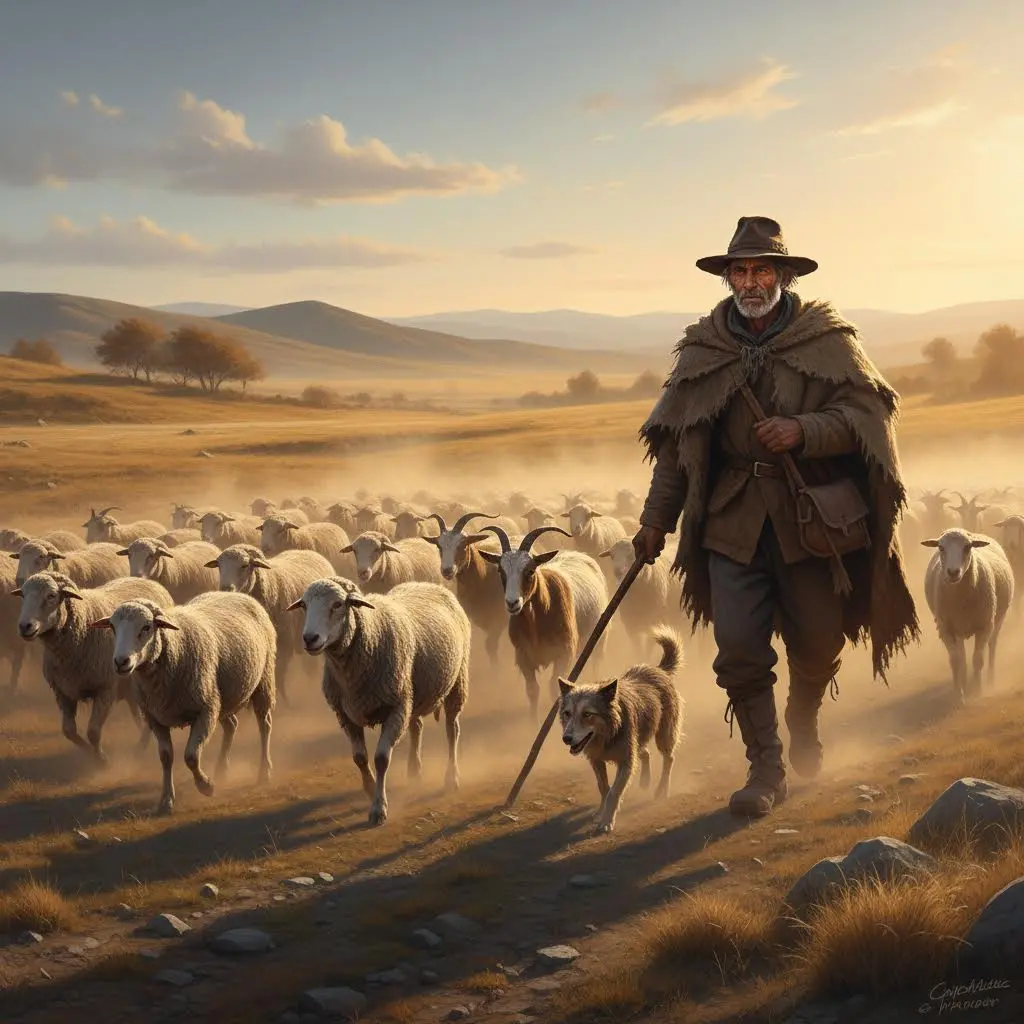
Root decomposition: herd + -er forms an agent noun. Historical origin: from Old English herd, related to Proto-Germanic roots for herd; the agent suffix -er comes from Old English. Memory image: picture a weathered herder guiding a flock across a sunlit plain.
Note 1: These definitions and etymologies are not standard dictionary definitions, but extended explanations provided to help with memorization and understanding of the actual application of words. Through this background information, we strive to make words more vivid and easier to understand, and help you remember their meanings in real life.
Note 2: LexiTalk designs the learning flow around the linguistics principle of “Comprehensible Input.” When learners encounter material that is slightly above their level but still understandable from context, the brain naturally absorbs the language. That’s why we keep every word inside authentic contexts, using examples and associations to help you understand it and use it flexibly.
Read the FAQ explanation of Comprehensible InputA herder is a person who tends to a herd of livestock, such as sheep or cattle, often moving with the animals across pastures. Traditionally, a herder watches for predators, helps the flock find food and water, and guides the animals from one grazing area to another. In nomadic or semi-nomadic contexts, a herder may accompany seasonal migrations, carrying supplies and working long hours in the elements. The term can also apply to someone who manages or leads a group of people or supporters, metaphorically acting as a caretaker or organizer. The word comes from Old English herd with the agent suffix -er, a simple, durable label for “one who tends.”
English regularly uses agent-noun forms like -er to name a person who performs an action; learners often mix up shepherd with herder and may overgeneralize to all pastoral roles.
What is the meaning of 'herder'?
Select the correct usage of 'herder' in a sentence.
Which word is most similar to 'herder'?
What is the opposite of 'herder'?
Can you think of a real-life context where 'herder' would be used?
Download LexiTalk app for personalized learning experience
Download AppCookies
We use cookies for essential site functions, analytics, and ads. You can accept, reject, or manage preferences. Privacy Policy