
hypocritical - Master This Word
Master this word with our 5-step learning method – Learn English in English
Train English Through Brain Routes, Not Translation.
This page helps you stop memorizing isolated translations and start understanding a word through its shared mental image, native-style thinking, and practical training steps.
Master this word with our 5-step learning method – Learn English in English
Example sentences are the start of understanding. Don't rush to memorize. First feel how the word works in a sentence.
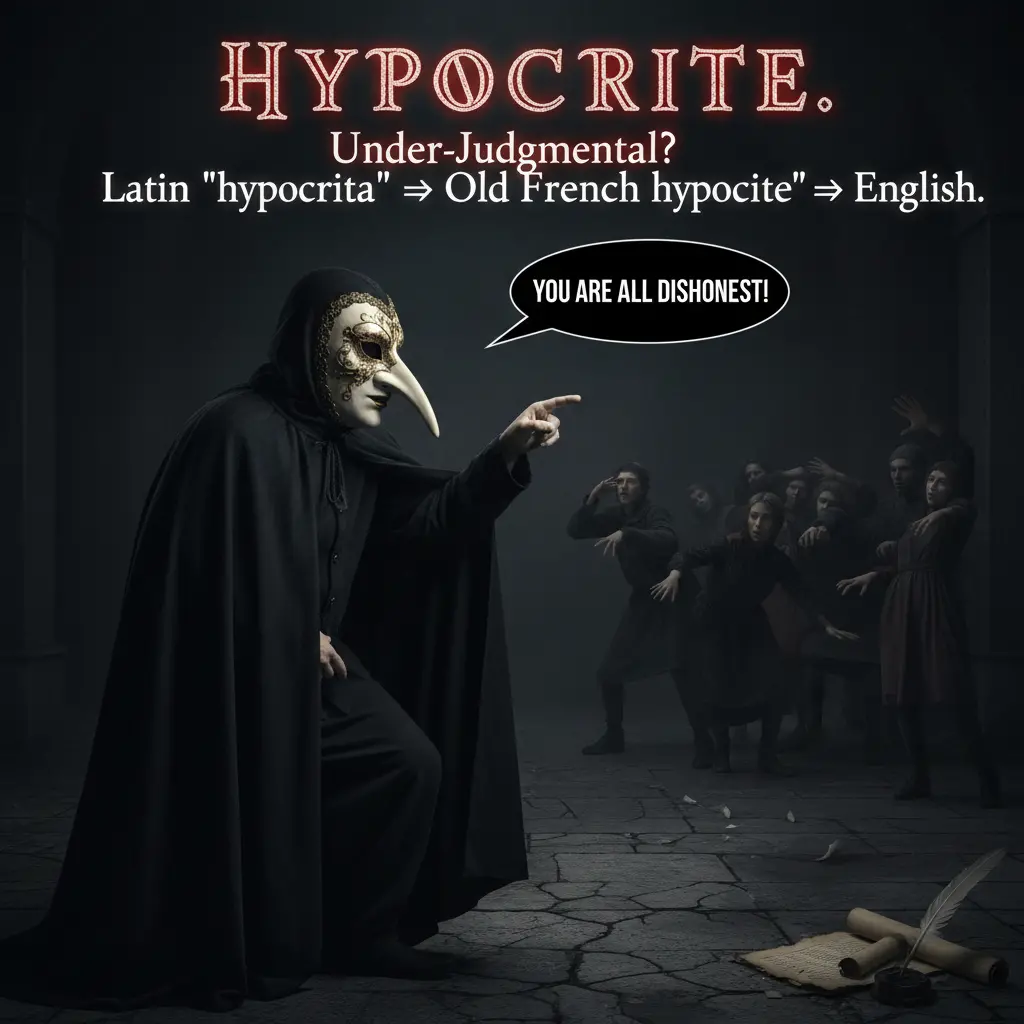
hypo- = under, critical = judgmental; Latin 'hypocrita' → Old French 'hypocrite' → English. Imagine someone wearing a mask while accusing others of not being honest.
Note 1: These definitions and etymologies are not standard dictionary definitions, but extended explanations provided to help with memorization and understanding of the actual application of words. Through this background information, we strive to make words more vivid and easier to understand, and help you remember their meanings in real life.
Note 2: LexiTalk designs the learning flow around the linguistics principle of “Comprehensible Input.” When learners encounter material that is slightly above their level but still understandable from context, the brain naturally absorbs the language. That’s why we keep every word inside authentic contexts, using examples and associations to help you understand it and use it flexibly.
Read the FAQ explanation of Comprehensible InputHypocritical means pretending to have virtues or beliefs that you do not truly hold, or acting in a way that contradicts what you say you stand for. In everyday English, it often describes people who strongly criticize others for faults they themselves commit, or who present a moral front while secretly behaving badly. The nuance is not simply inconsistency; it implies a deliberate display of virtue for appearances, not a genuine commitment. Learners sometimes confuse it with a similar word, or with being overly harsh about moral judgments. A common mistake is using it for minor, everyday contradictions rather than clear double standards. Use it for situations that reveal repeated, intentional hypocrisy.
In English, hypocrisy is often framed around public moral posturing versus private behavior. Culture tends to value candor but also recognizes political rhetoric, so learners must distinguish sincere belief from performative virtue. Errors often involve treating a single inconsistency as hypocrisy or over-applying the term to minor slips.
What is the meaning of 'hypocritical'?
In which sentence is 'hypocritical' used correctly?
Which word is an antonym of 'hypocritical'?
In what real-life situation would someone be considered hypocritical?
Reflect on a time when you witnessed someone being hypocritical.
Download LexiTalk app for personalized learning experience
Download AppCookies
We use cookies for essential site functions, analytics, and ads. You can accept, reject, or manage preferences. Privacy Policy