identities - Master This Word
Master this word with our 5-step learning method – Learn English in English
Train English Through Brain Routes, Not Translation.
This page helps you stop memorizing isolated translations and start understanding a word through its shared mental image, native-style thinking, and practical training steps.
Master this word with our 5-step learning method – Learn English in English
Example sentences are the start of understanding. Don't rush to memorize. First feel how the word works in a sentence.
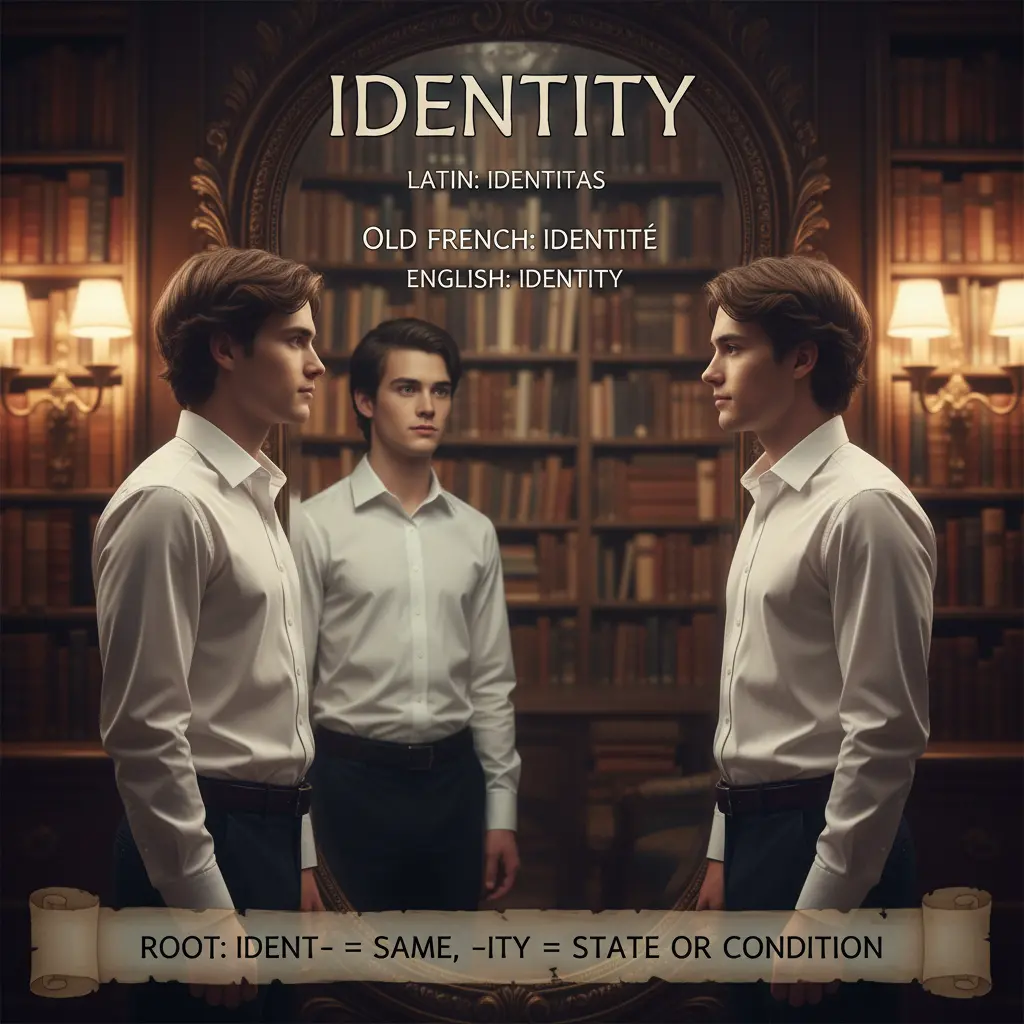
Root: ident- = same, -ity = state or condition. Historical origin: Latin 'identitas' → Old French 'identité' → English 'identity'. Memory image: Imagine two identical twins looking into a mirror, symbolizing their shared identity.
Note 1: These definitions and etymologies are not standard dictionary definitions, but extended explanations provided to help with memorization and understanding of the actual application of words. Through this background information, we strive to make words more vivid and easier to understand, and help you remember their meanings in real life.
Note 2: LexiTalk designs the learning flow around the linguistics principle of “Comprehensible Input.” When learners encounter material that is slightly above their level but still understandable from context, the brain naturally absorbs the language. That’s why we keep every word inside authentic contexts, using examples and associations to help you understand it and use it flexibly.
Read the FAQ explanation of Comprehensible InputI press my palm to the cool edge of the mirror and move my gaze along the face reflected back. I straighten my shoulders, turn my neck slowly, and feel the line between who I am and who I might be shift. I adjust my posture and keep the grip on the moment, letting the image respond to my small choices. In that quick, quiet act of looking, identity emerges as something I decide to keep becoming.
Identity is the concept that defines who you are: the sense of being the same person across time, and the combination of traits, memories, and choices that make you you. It also refers to the qualities or characteristics that other people use to group you, such as nationality, profession, or culture. At the core, identity involves both personal and social aspects: your internal sense of self and your external roles in a community. In everyday speech you encounter phrases like identity, identity theft, or changing your public identity online. Understanding identity helps with self-awareness, respectful communication, and clear discussion of differences and similarities with others.
For English speakers, identity covers both personal self and social identity; learners often mix it up with ID (identification) or think of identity as a fixed label like a name. Practice discussing self-description and group membership to keep meanings distinct.
What is the definition of the word 'identities'?
Which sentence uses the word 'identities' correctly?
Which word is most similar to 'identities'?
What is the opposite of the word 'identities'?
Can you give an example of a real-life scenario involving multiple identities?
Banking Basics
Listen NowDownload LexiTalk app for personalized learning experience
Download AppCookies
We use cookies for essential site functions, analytics, and ads. You can accept, reject, or manage preferences. Privacy Policy