
imaginary - Master This Word
Master this word with our 5-step learning method – Learn English in English
Train English Through Brain Routes, Not Translation.
This page helps you stop memorizing isolated translations and start understanding a word through its shared mental image, native-style thinking, and practical training steps.
Master this word with our 5-step learning method – Learn English in English
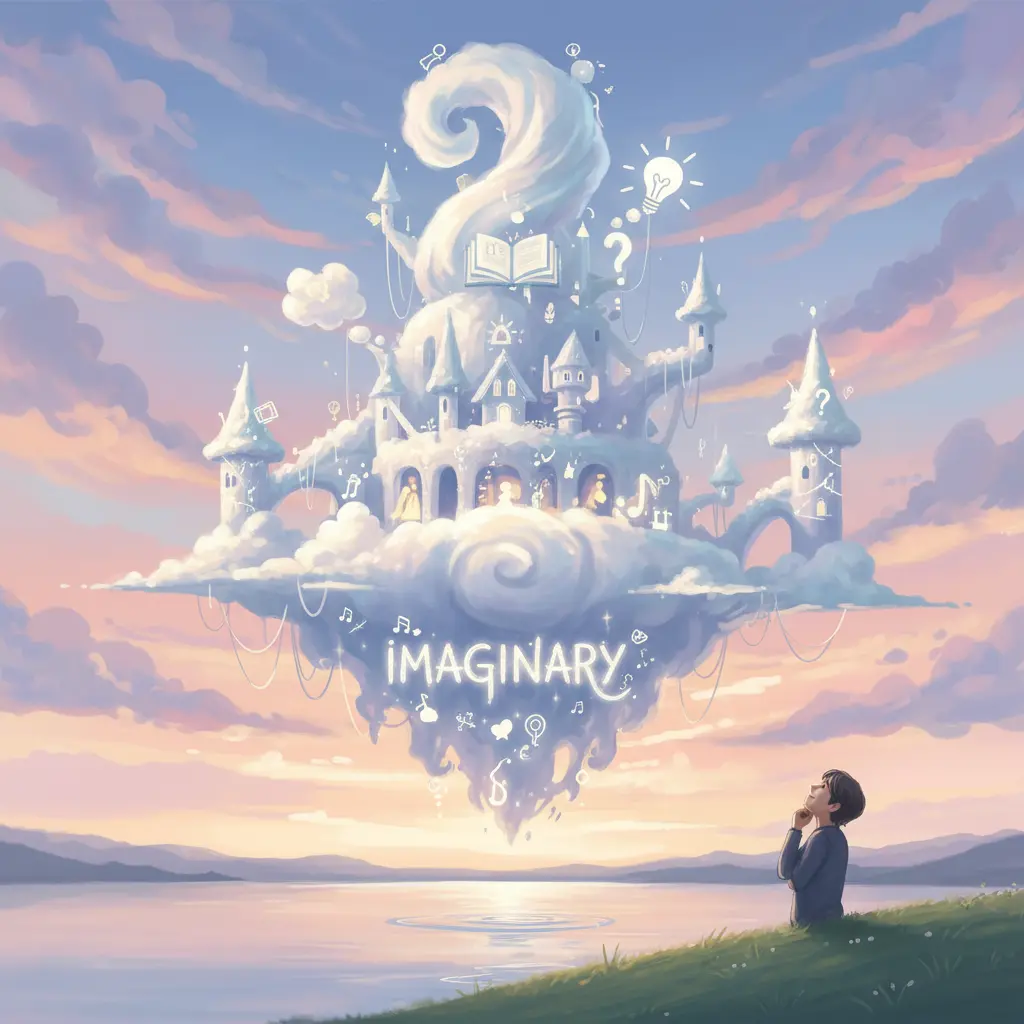
Example sentences are the start of understanding. Don't rush to memorize. First feel how the word works in a sentence.
imagin- = image + -ary = relating to. Originated from Latin 'imaginarius', through Old French to English. Picture a whimsical castle built from clouds, representing ideas conjured up in your mind.
Note 1: These definitions and etymologies are not standard dictionary definitions, but extended explanations provided to help with memorization and understanding of the actual application of words. Through this background information, we strive to make words more vivid and easier to understand, and help you remember their meanings in real life.
Note 2: LexiTalk designs the learning flow around the linguistics principle of “Comprehensible Input.” When learners encounter material that is slightly above their level but still understandable from context, the brain naturally absorbs the language. That’s why we keep every word inside authentic contexts, using examples and associations to help you understand it and use it flexibly.
Read the FAQ explanation of Comprehensible InputClose your eyes and cup your hands in your lap, then push the air forward as if you are pulling a scene into the room. A little image flickers, and you watch it shift like a light on a wall, colors turning where there is no street or chair. You adjust your focus, tilt your head a beat, and keep the scene steady as you set little rules: what can happen, what can't, and what you want to be true. The scene is not real yet, but the more you hold it gently, the more it seems to exist, until you can set it aside or bring it forward into a real conversation.
Imaginary describes things that do not exist in the real world, or that only appear in our minds. It can refer to something envisioned or invented, often with a sense of being unreal or fantastical rather than practical or factual. In everyday use, imaginary is common when talking about ideas, friends or fears that are not physically present, or about stories and places that exist only in fiction. The word invites creativity, but it sometimes carries a subtle dismissiveness, implying that a notion is not as trustworthy as something tangible. Writers frequently exploit imaginary settings to explore possibilities beyond ordinary experience.
Imaginary is often tied to creativity and fantasy in English, while many languages emphasize emotion, narrative purpose, or cultural storytelling when describing non-real things; learners may over-literalize it as simply 'not real' and miss nuanced uses like imaginary friends, worlds, or scenarios in fiction.
What is the meaning of the word 'imaginary'?
In which sentence is 'imaginary' used correctly?
Which word is an antonym of 'imaginary'?
How is the word 'imaginary' relevant to childhood activities?
Can you provide an example of something that is purely 'imaginary'?
Download LexiTalk app for personalized learning experience
Download AppCookies
We use cookies for essential site functions, analytics, and ads. You can accept, reject, or manage preferences. Privacy Policy