impression - Master This Word
Master this word with our 5-step learning method – Learn English in English
Train English Through Brain Routes, Not Translation.
This page helps you stop memorizing isolated translations and start understanding a word through its shared mental image, native-style thinking, and practical training steps.
Master this word with our 5-step learning method – Learn English in English
Example sentences are the start of understanding. Don't rush to memorize. First feel how the word works in a sentence.
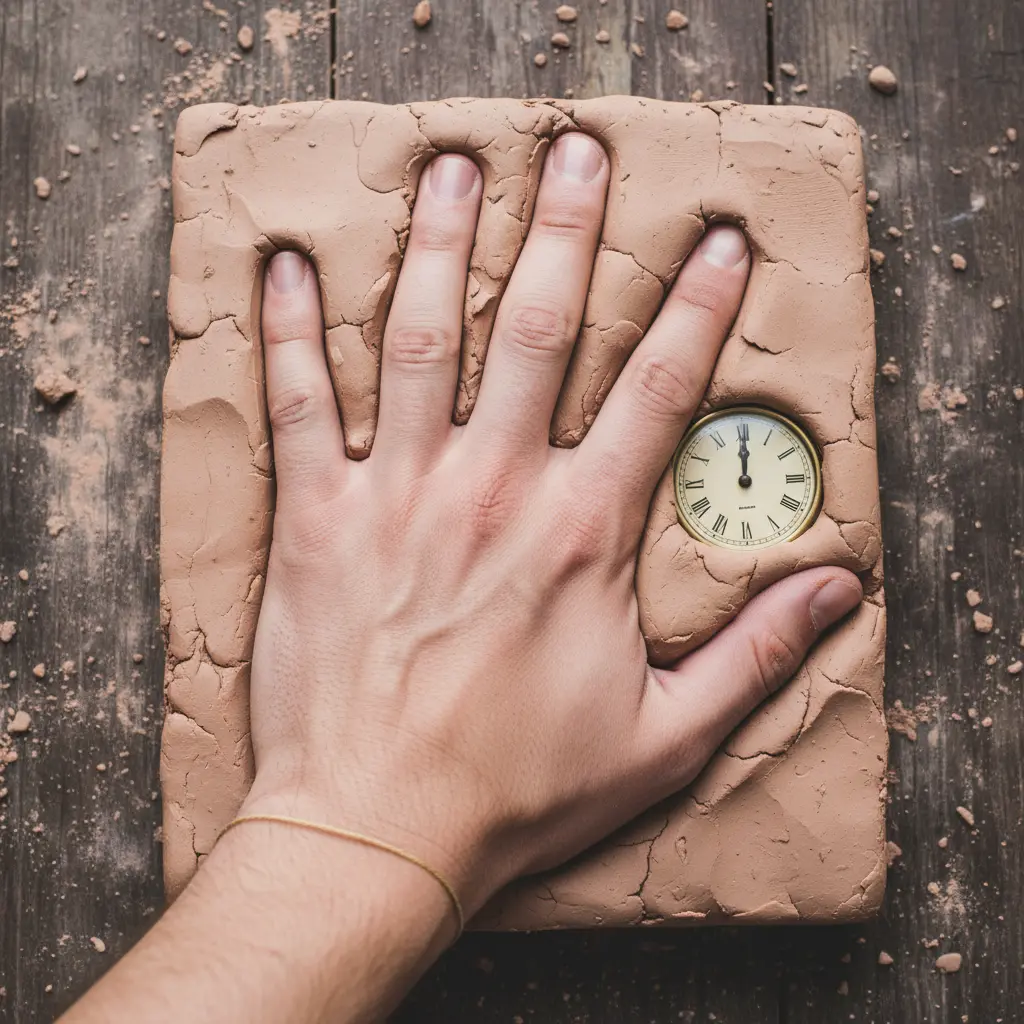
impression = im- (in, on) + press (to push). Latin → Old French → English. Imagine a hand pressing down and leaving a clear mark in soft clay, capturing a moment in time.
Note 1: These definitions and etymologies are not standard dictionary definitions, but extended explanations provided to help with memorization and understanding of the actual application of words. Through this background information, we strive to make words more vivid and easier to understand, and help you remember their meanings in real life.
Note 2: LexiTalk designs the learning flow around the linguistics principle of “Comprehensible Input.” When learners encounter material that is slightly above their level but still understandable from context, the brain naturally absorbs the language. That’s why we keep every word inside authentic contexts, using examples and associations to help you understand it and use it flexibly.
Read the FAQ explanation of Comprehensible Inputi place my hand on the warm clay and push, then shift my fingers to carve a circle. the surface holds an impression that waits there, quiet and clear. i adjust my grip, keep the pressure steady, and decide when to pull away. that small trace becomes part of how i see the object, a real impression left by my own touch.
Impression can refer to a physical mark made by pressure, such as the imprint a stamp leaves on soft clay, or to a strong effect or feeling caused by something. It also describes a first or basic idea we form about something or someone, like the impression of a new product after a quick look or the impression a speech leaves on an audience. In everyday use, native speakers distinguish between the concrete sense (an impression in clay) and the abstract sense (to make a good impression). The phrase first impression and lasting impression are common, as are constructions like leave an impression and create an impression.
In English, impression often travels between the tangible (a mark) and the intangible (an effect or perception). Learners frequently blur the two, or default to one sense in all contexts. Pay attention to collocations like first impression and make a good impression to cue the right meaning.
What is the best definition of the word 'impression'?
Which sentence uses the word 'impression' correctly?
Which word is most similar in meaning to 'impression'?
Which word is the best opposite of 'impression'?
Can you think of a real-life context where someone might express an opinion formed from an initial meeting?
Download LexiTalk app for personalized learning experience
Download AppCookies
We use cookies for essential site functions, analytics, and ads. You can accept, reject, or manage preferences. Privacy Policy