
inequality - Master This Word
Master this word with our 5-step learning method – Learn English in English
Train English Through Brain Routes, Not Translation.
This page helps you stop memorizing isolated translations and start understanding a word through its shared mental image, native-style thinking, and practical training steps.
Master this word with our 5-step learning method – Learn English in English
Example sentences are the start of understanding. Don't rush to memorize. First feel how the word works in a sentence.
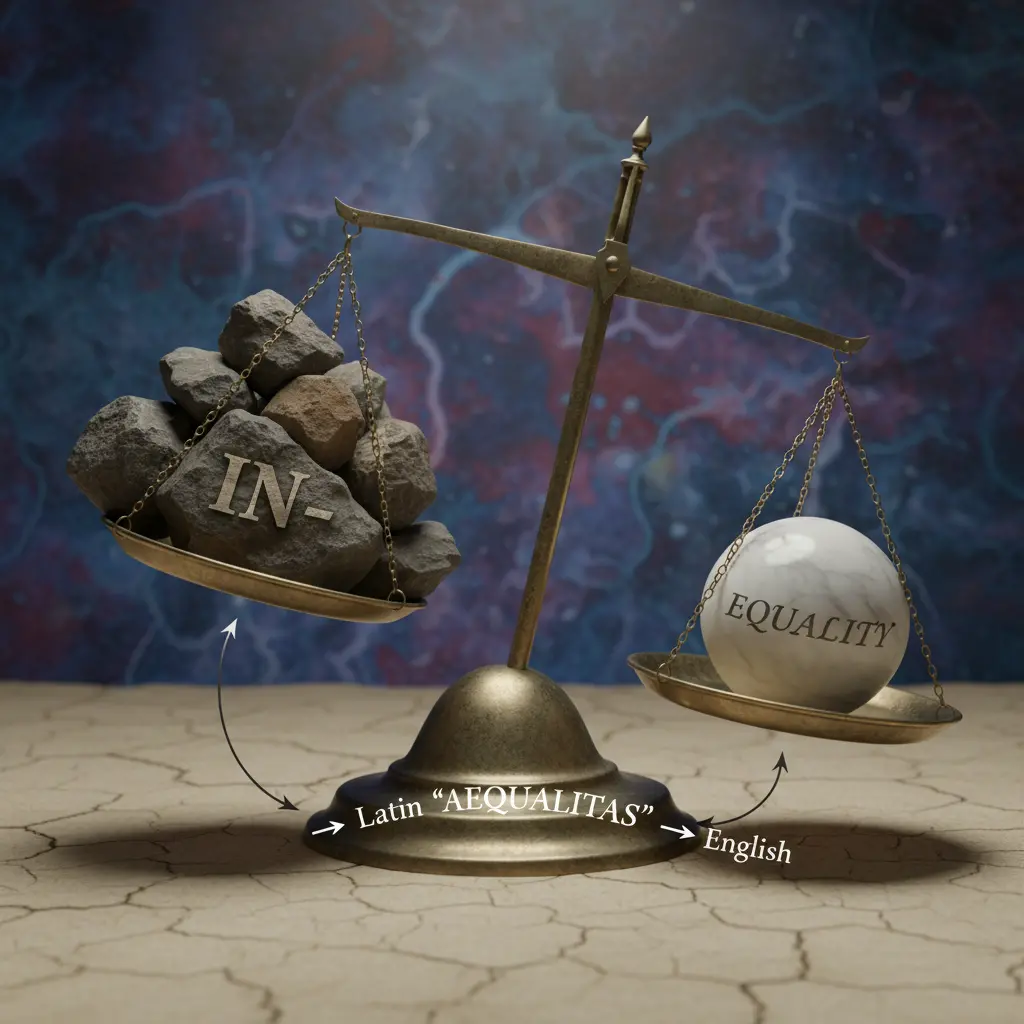
in- (not) + equality (being equal) → from Latin 'aequalitas' → English. Picture a balanced scale tipped to one side, representing disparity.
Note 1: These definitions and etymologies are not standard dictionary definitions, but extended explanations provided to help with memorization and understanding of the actual application of words. Through this background information, we strive to make words more vivid and easier to understand, and help you remember their meanings in real life.
Note 2: LexiTalk designs the learning flow around the linguistics principle of “Comprehensible Input.” When learners encounter material that is slightly above their level but still understandable from context, the brain naturally absorbs the language. That’s why we keep every word inside authentic contexts, using examples and associations to help you understand it and use it flexibly.
Read the FAQ explanation of Comprehensible InputI set two objects on a table and push one a little farther than the other. I shift the focus from the surface to the space between them, watching the gap appear and wobble. The effort to adjust keeps my hands busy and my mind deciding where to stop, where to keep the balance. Inequality starts to feel real, not as a label, but as a tug in the room that makes some things easier to reach than others.
Inequality describes a condition in which people are not treated as equals or do not have the same access to resources, opportunities, and rights. It can appear as economic gaps, educational disparities, or unequal social treatment, and it often persists across generations. In many countries, policy debates focus on reducing income gaps, expanding access to health care, housing, and education, and ensuring fair procedures in the workplace and courts. While equality means sameness in treatment, inequality reflects real differences in outcomes that may arise from history, policy choices, or discrimination. Understanding inequality involves looking at both individual circumstances and systemic structures that shape opportunity.
Explain to an English speaker: focus on the distinction between equality and inequality, and show how policy, history, and institutions create unequal outcomes.
What is the meaning of 'inequality'?
In which sentence is 'inequality' used correctly?
Which word is a synonym of 'inequality'?
In what context might 'inequality' be discussed?
Can you think of a real-life example of 'inequality'?
Download LexiTalk app for personalized learning experience
Download AppCookies
We use cookies for essential site functions, analytics, and ads. You can accept, reject, or manage preferences. Privacy Policy