
infernal - Master This Word
Master this word with our 5-step learning method – Learn English in English
Train English Through Brain Routes, Not Translation.
This page helps you stop memorizing isolated translations and start understanding a word through its shared mental image, native-style thinking, and practical training steps.
Master this word with our 5-step learning method – Learn English in English
Example sentences are the start of understanding. Don't rush to memorize. First feel how the word works in a sentence.
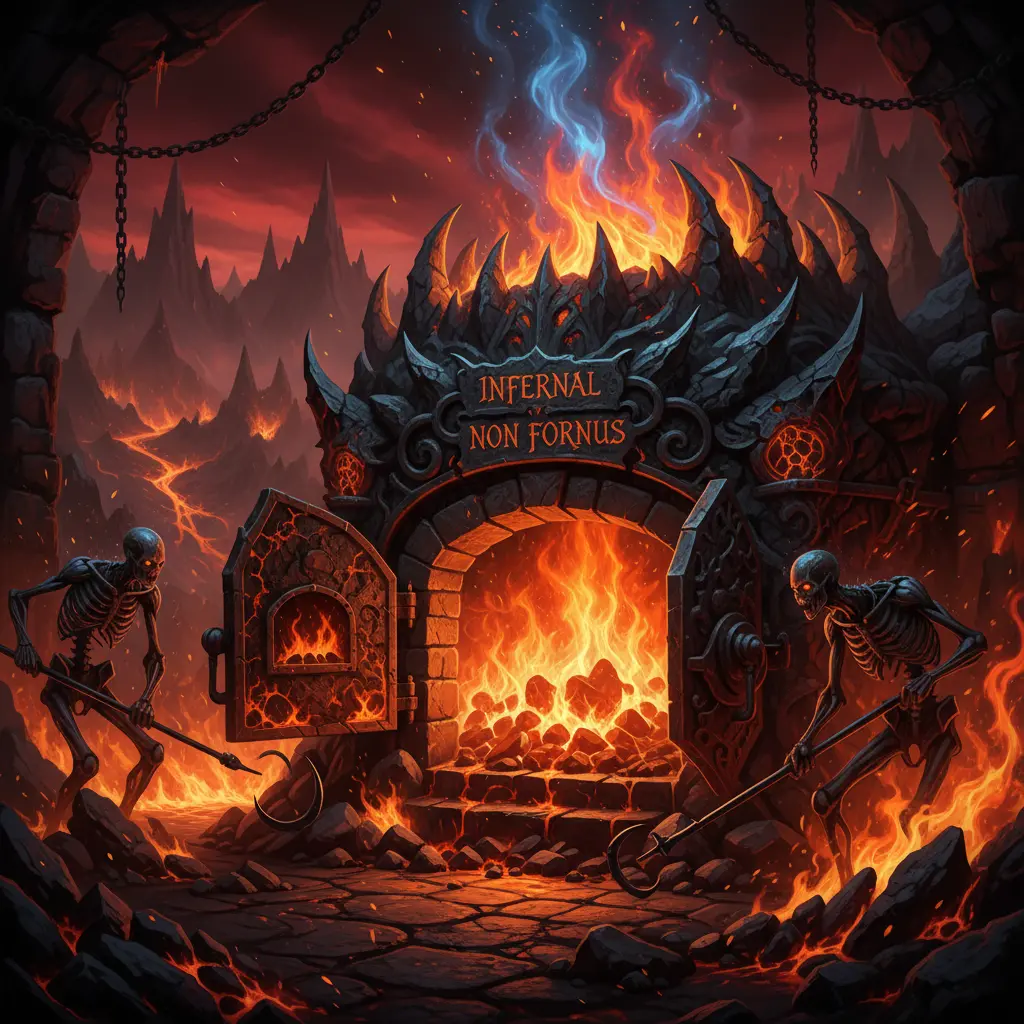
infernal: in- = not + fernus = oven; Latin → Old French → English. Picture a fiery oven in hell, where flames continuously burn and create an intense heat.
Note 1: These definitions and etymologies are not standard dictionary definitions, but extended explanations provided to help with memorization and understanding of the actual application of words. Through this background information, we strive to make words more vivid and easier to understand, and help you remember their meanings in real life.
Note 2: LexiTalk designs the learning flow around the linguistics principle of “Comprehensible Input.” When learners encounter material that is slightly above their level but still understandable from context, the brain naturally absorbs the language. That’s why we keep every word inside authentic contexts, using examples and associations to help you understand it and use it flexibly.
Read the FAQ explanation of Comprehensible InputInfernal is a strong, somewhat archaic adjective that paints something as hellish or demonic, but it can also describe extreme heat or a situation that feels hopelessly wicked. You might hear it used for an extremely hot room, a loud carnival racket, or a villain whose actions are unbearably cruel. In literature and film, infernal imagery evokes the underworld and punishment, often with vivid fire and chains. While it originates from Latin for “not earthly” and passed through Old French, in modern English it can be playful or hyperbolic when used with humor. Be careful—infernal carries moral weight and can read melodramatic in casual conversation.
Infernal is a strong, slightly archaic term; English learners should reserve it for dramatic, morally charged descriptions rather than everyday facts.
What is the meaning of the word 'infernal'?
Which sentence uses 'infernal' correctly?
What is a synonym for 'infernal'?
What is an opposite of 'infernal'?
In what context would you most likely use the word 'infernal'?
Download LexiTalk app for personalized learning experience
Download AppCookies
We use cookies for essential site functions, analytics, and ads. You can accept, reject, or manage preferences. Privacy Policy