
inflation - Master This Word
Master this word with our 5-step learning method – Learn English in English
Train English Through Brain Routes, Not Translation.
This page helps you stop memorizing isolated translations and start understanding a word through its shared mental image, native-style thinking, and practical training steps.
Master this word with our 5-step learning method – Learn English in English
Example sentences are the start of understanding. Don't rush to memorize. First feel how the word works in a sentence.
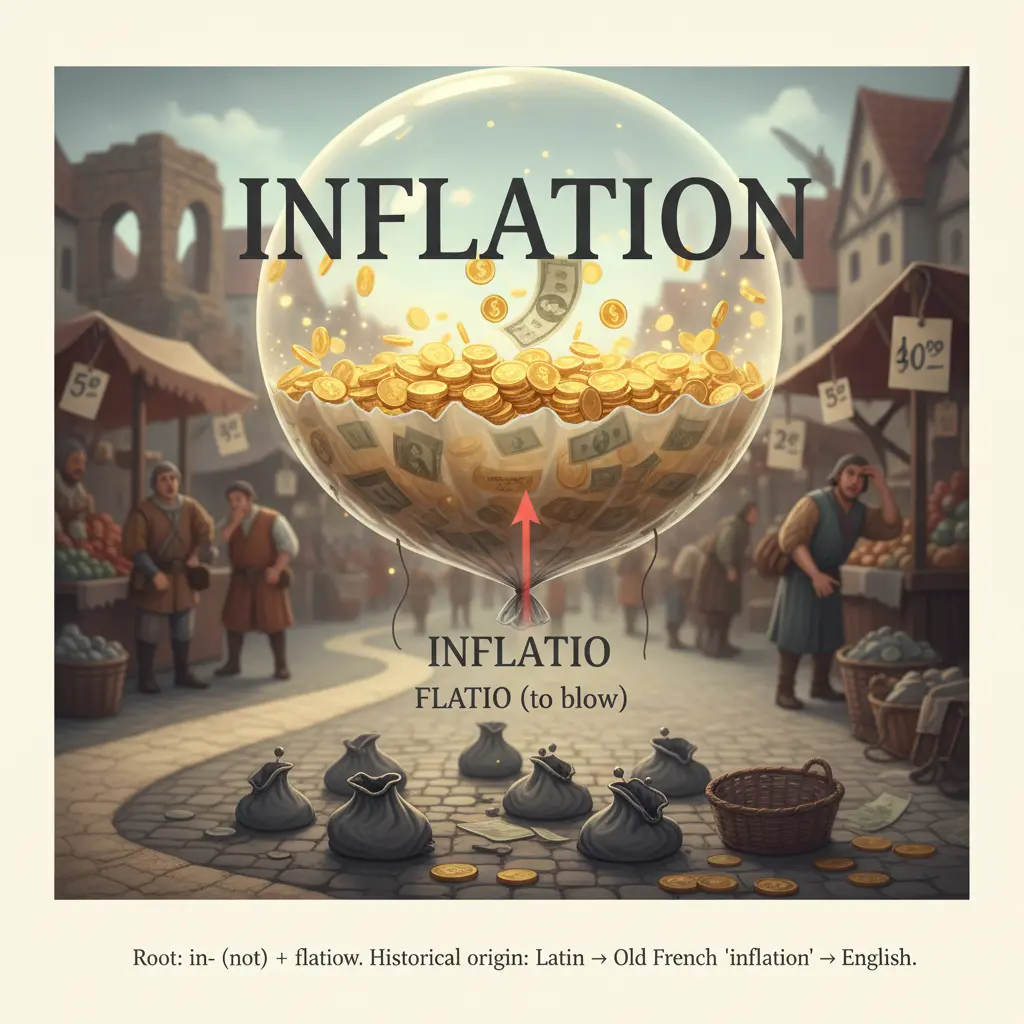
Root: in- (not) + flatio (to blow). Historical origin: Latin 'inflatio' → Old French 'inflation' → English. Memory image: Imagine a balloon being inflated, symbolizing the concept of prices rising while retaining a deflated value.
Note 1: These definitions and etymologies are not standard dictionary definitions, but extended explanations provided to help with memorization and understanding of the actual application of words. Through this background information, we strive to make words more vivid and easier to understand, and help you remember their meanings in real life.
Note 2: LexiTalk designs the learning flow around the linguistics principle of “Comprehensible Input.” When learners encounter material that is slightly above their level but still understandable from context, the brain naturally absorbs the language. That’s why we keep every word inside authentic contexts, using examples and associations to help you understand it and use it flexibly.
Read the FAQ explanation of Comprehensible InputI grip a price tag and move it a notch higher, watching the digits creep up. The total in my cart climbs, and I feel my wallet thinning as I add things. There’s a push-pull inside me—want more, budget less—as I sense money losing value with each new price. I adjust what I place in the basket and keep a tighter plan, letting prices guide my shopping today and next week.
Inflation is a word with several closely related meanings. It can describe a general rise in prices and a corresponding fall in the purchasing power of money, as economists explain when they discuss everyday living costs. It also refers to the act of inflating something, such as a tire or balloon. In economics, inflation is sometimes used to describe a period characterized by rising price levels and uncertainty. This page clarifies these senses, contrasts them with related terms like deflation and price gouging, and provides examples to help learners choose the right meaning in context and pronounce the word correctly.
English speakers often picture inflation as rising prices over time and may overlook that it also involves changes in money’s purchasing power and macroeconomic uncertainty.
What is the definition of 'inflation'?
Which sentence uses 'inflation' correctly?
Which word is a synonym for 'inflation'?
What is an antonym of 'inflation'?
In what kind of scenario could 'inflation' occur?
Download LexiTalk app for personalized learning experience
Download AppCookies
We use cookies for essential site functions, analytics, and ads. You can accept, reject, or manage preferences. Privacy Policy