
inveigle - Master This Word
Master this word with our 5-step learning method – Learn English in English
Train English Through Brain Routes, Not Translation.
This page helps you stop memorizing isolated translations and start understanding a word through its shared mental image, native-style thinking, and practical training steps.
Master this word with our 5-step learning method – Learn English in English
Example sentences are the start of understanding. Don't rush to memorize. First feel how the word works in a sentence.
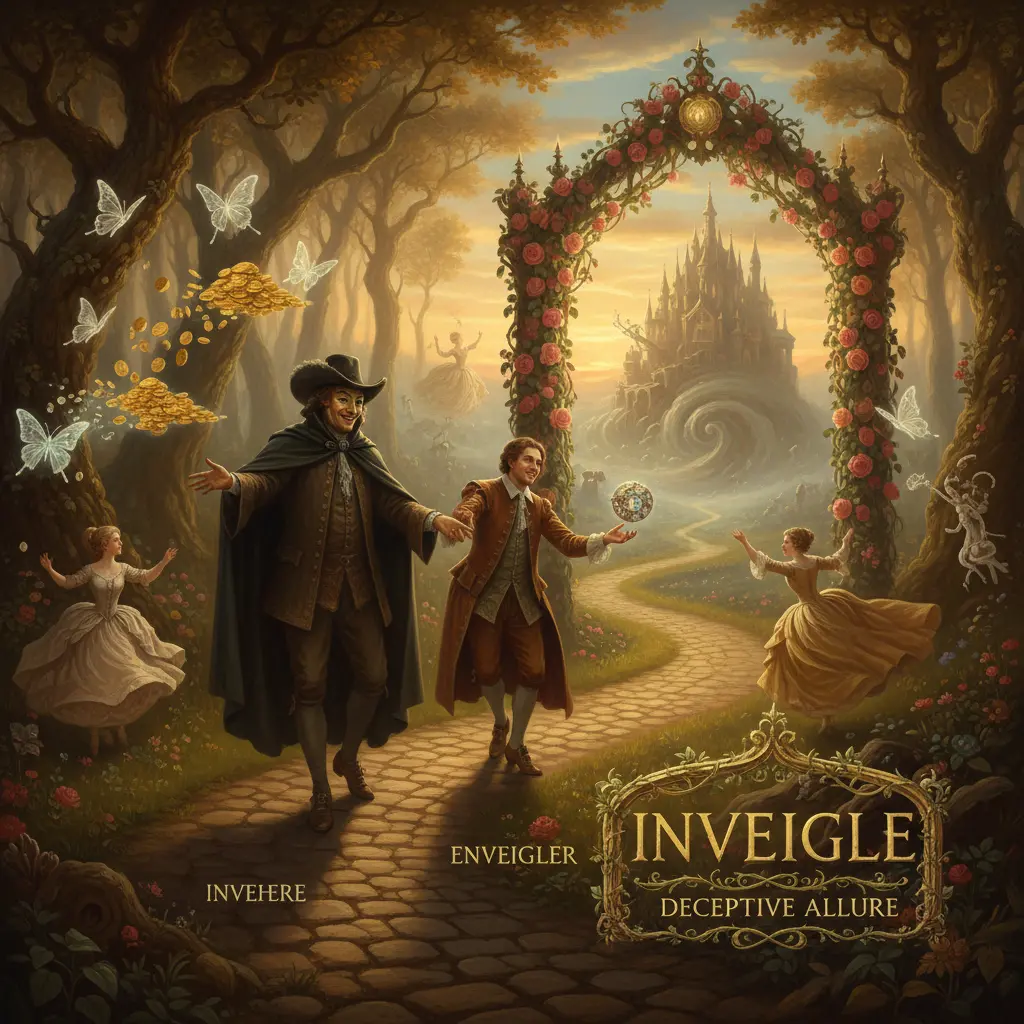
in- (not) + veigle (to lead) = to lead someone in a deceptive manner. Historical origin: Latin 'invehere' → Old French 'enveigler' → English. Memory image: Imagine a person leading another along a winding path filled with illusions and charming distractions, showcasing the act of deceiving with allure.
Note 1: These definitions and etymologies are not standard dictionary definitions, but extended explanations provided to help with memorization and understanding of the actual application of words. Through this background information, we strive to make words more vivid and easier to understand, and help you remember their meanings in real life.
Note 2: LexiTalk designs the learning flow around the linguistics principle of “Comprehensible Input.” When learners encounter material that is slightly above their level but still understandable from context, the brain naturally absorbs the language. That’s why we keep every word inside authentic contexts, using examples and associations to help you understand it and use it flexibly.
Read the FAQ explanation of Comprehensible InputInveigle means to persuade someone to do something by deception or flattery; to entice or lure; or to acquire something through clever, often misleading, persuasion. The term carries a negative charge and suggests manipulation more than ordinary influence. It captures a situation where charm is used as a tool to mislead rather than guide honestly. Etymology points to in- (not) plus veigle (to lead) and evokes a leader drawing another toward a deceptive path. Learners should differentiate inveigle from more neutral words like persuade, entice, or attract; use it when deception or elaborate charm is central to the act rather than mere encouragement.
For English learners, inveigle is a stronger, more morally charged verb than persuade; it signals manipulation via charm. Learners often confuse it with entice or attract, but those lack the deceitful, coercive sense. Remember the into construction and its literary flavor.
What is the meaning of 'inveigle'?
Which of the following sentences uses 'inveigle' correctly?
What is a synonym for 'inveigle'?
What is an antonym for 'inveigle'?
How can someone use 'inveigle' in a real-life situation?
Download LexiTalk app for personalized learning experience
Download AppCookies
We use cookies for essential site functions, analytics, and ads. You can accept, reject, or manage preferences. Privacy Policy