
irony - Master This Word
Master this word with our 5-step learning method – Learn English in English
Train English Through Brain Routes, Not Translation.
This page helps you stop memorizing isolated translations and start understanding a word through its shared mental image, native-style thinking, and practical training steps.
Master this word with our 5-step learning method – Learn English in English
Example sentences are the start of understanding. Don't rush to memorize. First feel how the word works in a sentence.
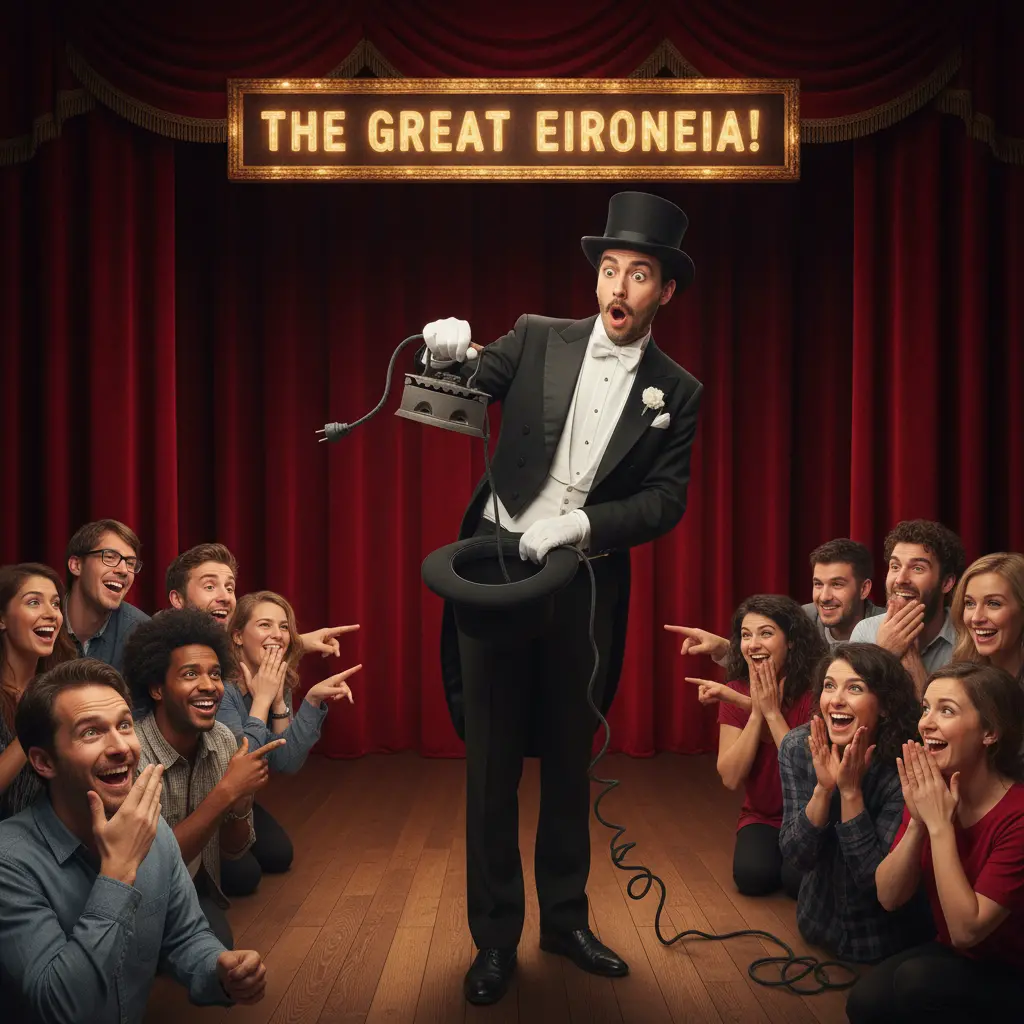
iron + -y = relating to conditions of being ironical. Originated from Greek 'eironeia' meaning 'dissimulation’. A vivid image to remember: Imagine a magician pulling a rabbit out of a hat, representing the unexpected reality versus the expectation of something else.
Note 1: These definitions and etymologies are not standard dictionary definitions, but extended explanations provided to help with memorization and understanding of the actual application of words. Through this background information, we strive to make words more vivid and easier to understand, and help you remember their meanings in real life.
Note 2: LexiTalk designs the learning flow around the linguistics principle of “Comprehensible Input.” When learners encounter material that is slightly above their level but still understandable from context, the brain naturally absorbs the language. That’s why we keep every word inside authentic contexts, using examples and associations to help you understand it and use it flexibly.
Read the FAQ explanation of Comprehensible InputYou nudge the curtain aside, eyeing the street as if calibrating a tiny mechanism. Then a scene becomes a move you don’t expect, the plan you had for the day shifting in the opposite direction. You hold your breath a moment, adjust your posture, and let the feeling land softly. In ordinary talk, you keep the rhythm steady and let the opposite meaning slip through the sentence like a wink in a conversation.
Irony is a subtle figure of speech where the outcome is the opposite of what is expected, often creating humor or critique. It can describe a situation that feels purposefully funny because events unfold in an unexpected way, or the tone of what someone says that means the opposite of their literal words. In everyday use, irony hinges on contrast between appearance and reality, or between what people say and what they mean. There are several kinds, from simple verbal irony to more elaborate situational irony and satirical irony. Learners should look for context cues like contrast, tone, and intention to recognize it correctly.
English often treats irony as a sharp, contextual contrast between what is said and what is meant or between expectation and outcome. Learners may assume irony always sounds obvious or negative, missing subtle or positive ironies and situational contrasts in media or conversation.
What is the meaning of the word 'irony'?
Which sentence uses the word 'irony' correctly?
Which word is most similar to 'irony'?
What is the opposite of 'irony'?
Can you give an example of a real-life scenario of 'irony'?
Download LexiTalk app for personalized learning experience
Download AppCookies
We use cookies for essential site functions, analytics, and ads. You can accept, reject, or manage preferences. Privacy Policy