justice - Master This Word
Master this word with our 5-step learning method – Learn English in English
Train English Through Brain Routes, Not Translation.
This page helps you stop memorizing isolated translations and start understanding a word through its shared mental image, native-style thinking, and practical training steps.
Master this word with our 5-step learning method – Learn English in English
Example sentences are the start of understanding. Don't rush to memorize. First feel how the word works in a sentence.
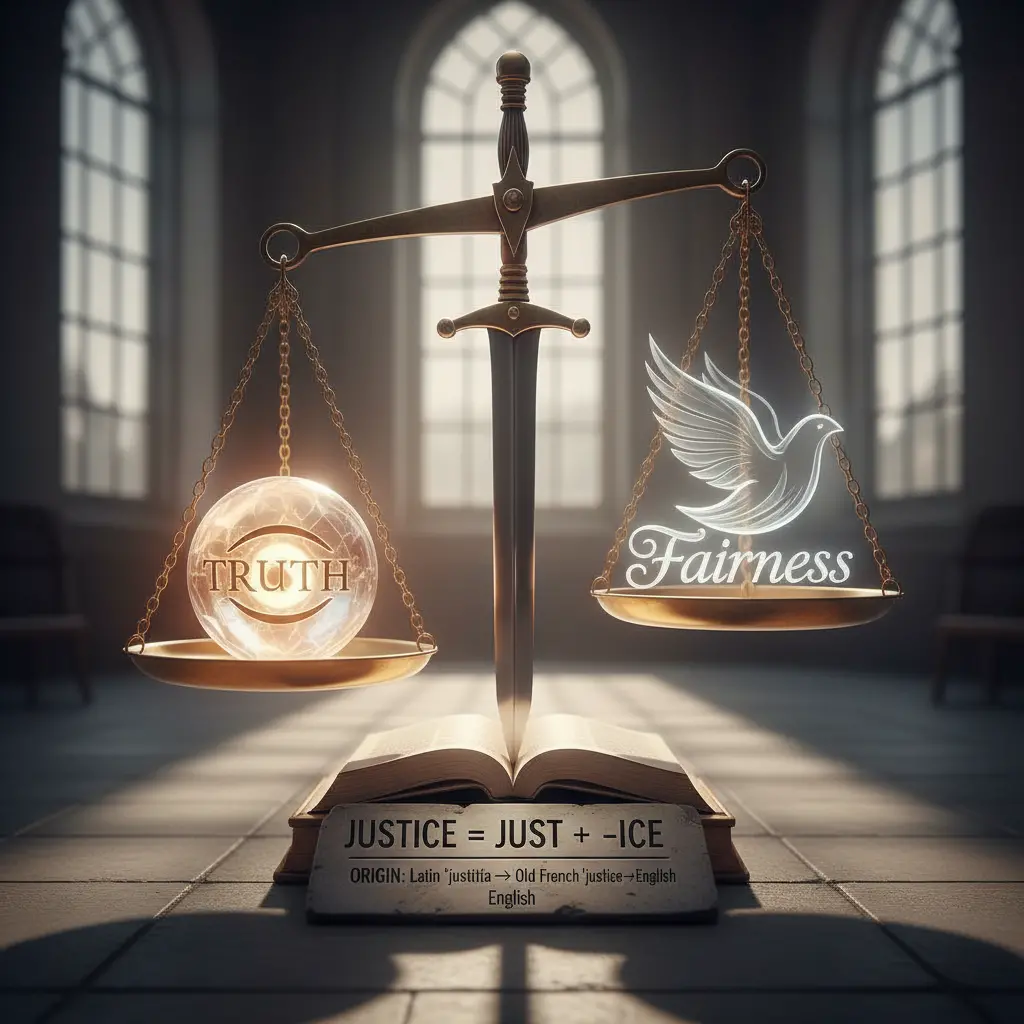
justice = just + -ice; Origin: Latin 'justitia' → Old French 'justice' → English. Imagine a scale balancing truth and fairness, representing justice being served.
Note 1: These definitions and etymologies are not standard dictionary definitions, but extended explanations provided to help with memorization and understanding of the actual application of words. Through this background information, we strive to make words more vivid and easier to understand, and help you remember their meanings in real life.
Note 2: LexiTalk designs the learning flow around the linguistics principle of “Comprehensible Input.” When learners encounter material that is slightly above their level but still understandable from context, the brain naturally absorbs the language. That’s why we keep every word inside authentic contexts, using examples and associations to help you understand it and use it flexibly.
Read the FAQ explanation of Comprehensible InputFirst I shift my stance, pull open a file, and narrow my focus to what is fair. I push through the jumble of facts, listening to voices from every side, and watch the room calm as questions settle. The effort feels like balancing on a thin beam, every small adjustment keeping the weight even. When I act with care for people and rules, justice begins to reveal itself in the choices I make and the responsibility I keep in place.
Justice means fair treatment under the law, impartial courts, and due process. It blends legal fairness with a moral ideal that people should receive what they deserve. Some speakers differentiate legal justice, which governs procedures and evidence, from moral justice, which concerns right and wrong beyond written rules. In everyday life we hope for justice when someone is treated unfairly, when a mistake is corrected, or when a culprit is held accountable. Learners should distinguish justice from vengeance, which is personal retaliation rather than principled fairness.
In English, justice blends legal fairness with moral rightness; learners often mix up due process with fairness and may assume justice equals punishment. Emphasize formal terms like due process, impartial, system, and rights to avoid confusion.
What is the meaning of the word 'justice'?
In which of the following situations is 'justice' most likely to be sought after?
Which of the following words is similar to 'justice'?
What is the opposite of 'justice'?
How is the concept of 'justice' portrayed in legal systems around the world?
Download LexiTalk app for personalized learning experience
Download AppCookies
We use cookies for essential site functions, analytics, and ads. You can accept, reject, or manage preferences. Privacy Policy