kilometres - Master This Word
Master this word with our 5-step learning method – Learn English in English
Train English Through Brain Routes, Not Translation.
This page helps you stop memorizing isolated translations and start understanding a word through its shared mental image, native-style thinking, and practical training steps.
Master this word with our 5-step learning method – Learn English in English
Example sentences are the start of understanding. Don't rush to memorize. First feel how the word works in a sentence.
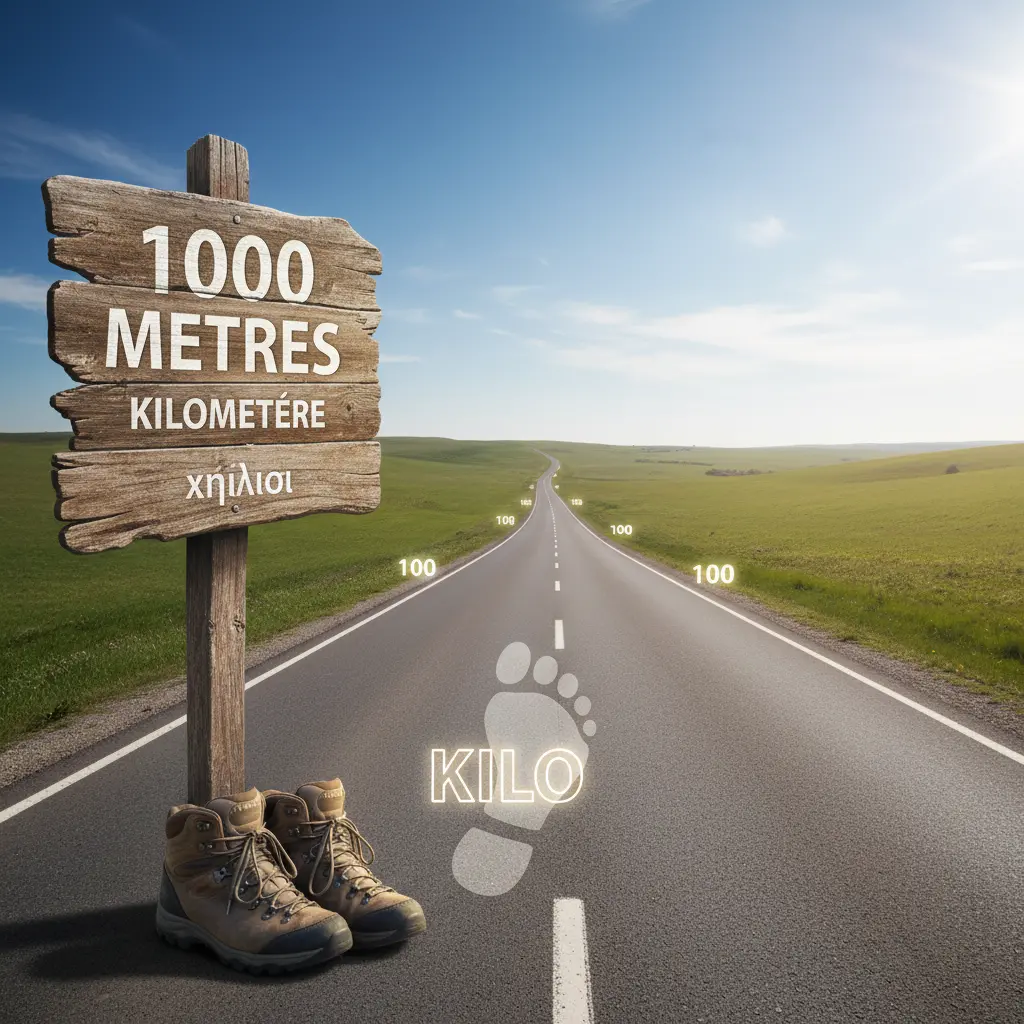
Root decomposition: 'kilo-' (thousand) + 'metre' (measure). Historical origin: from Greek 'khilioi' (thousand) → Latin 'kilometres' → English. Memory image: Imagine a road stretching a thousand meters—each step is a reminder of the 'kilo' in kilometre.
Note 1: These definitions and etymologies are not standard dictionary definitions, but extended explanations provided to help with memorization and understanding of the actual application of words. Through this background information, we strive to make words more vivid and easier to understand, and help you remember their meanings in real life.
Note 2: LexiTalk designs the learning flow around the linguistics principle of “Comprehensible Input.” When learners encounter material that is slightly above their level but still understandable from context, the brain naturally absorbs the language. That’s why we keep every word inside authentic contexts, using examples and associations to help you understand it and use it flexibly.
Read the FAQ explanation of Comprehensible InputFirst I lace up my shoes, set a map on the bench, and take a steady breath. I start to move along the street, counting a kilometre as I go. Each step pushes me a little farther and I adjust my pace to stay on track, keeping the rhythm. By the time the kilometre tally grows, the word kilometre feels less like a number and more like a path I walk.
Kilometre is the metric unit of length equal to 1,000 metres. It is the standard distance measure for most everyday travel in countries that use the metric system, appearing on road signs, maps, and speed limits. Learners often mistake kilometre for kilometer (the American spelling) or miss the fact that 1 kilometre contains 1,000 metres. The word combines kilo- meaning thousand with metre, reflecting its Greek and Latin roots and the way English formed scientific terms. A simple memory cue is to imagine a road that stretches for a thousand metres, giving a tangible sense of the distance a kilometre describes.
British and Commonwealth usage frames distance with kilometres as a standard long-distance measure; learners often must adjust to UK spelling and the plural form when discussing multiple distances.
Download LexiTalk app for personalized learning experience
Download AppCookies
We use cookies for essential site functions, analytics, and ads. You can accept, reject, or manage preferences. Privacy Policy