lands - Master This Word
Master this word with our 5-step learning method – Learn English in English
Train English Through Brain Routes, Not Translation.
This page helps you stop memorizing isolated translations and start understanding a word through its shared mental image, native-style thinking, and practical training steps.
Master this word with our 5-step learning method – Learn English in English
Example sentences are the start of understanding. Don't rush to memorize. First feel how the word works in a sentence.
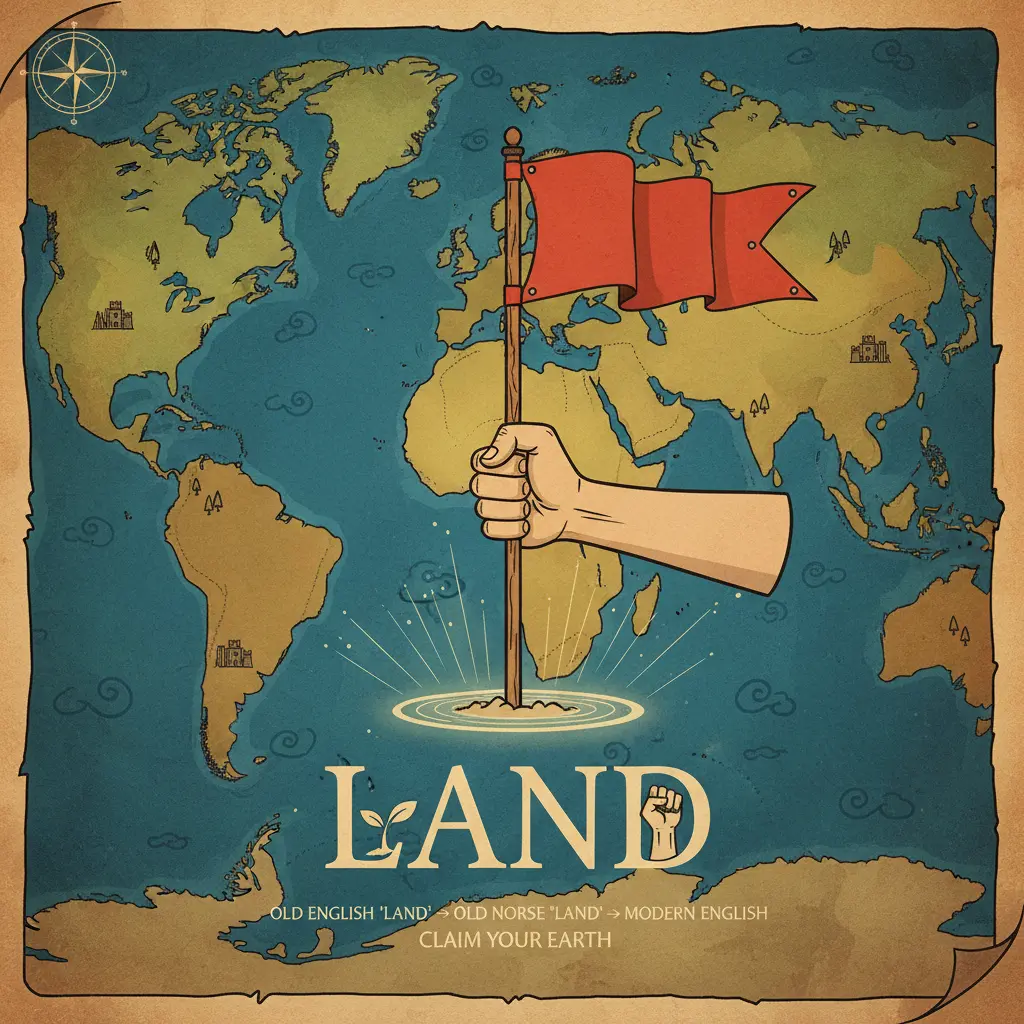
land = land (noun) + (verb). Historical origin: Old English 'land' → Old Norse 'land' → Modern English. Memory image: Imagine a map where solid territories are marked, and think of planting a flag to claim your own piece of earth.
Note 1: These definitions and etymologies are not standard dictionary definitions, but extended explanations provided to help with memorization and understanding of the actual application of words. Through this background information, we strive to make words more vivid and easier to understand, and help you remember their meanings in real life.
Note 2: LexiTalk designs the learning flow around the linguistics principle of “Comprehensible Input.” When learners encounter material that is slightly above their level but still understandable from context, the brain naturally absorbs the language. That’s why we keep every word inside authentic contexts, using examples and associations to help you understand it and use it flexibly.
Read the FAQ explanation of Comprehensible InputI crouch, push off the ground, and move through the air until my feet land softly on the grass. The moment the dust settles, I feel the shift from flight to footing, a small change in my balance. I adjust my stance, keep my center, and decide how to set down my pack, how to place my next step. In that quiet landing, the word land starts to feel like a doorway you can use to begin any task.
Land is a compact, versatile word that functions as both a noun and a verb. As a noun, it refers to the solid surface of the earth and can mean a parcel of property, a country, or a broad area of terrain. As a verb, land means to arrive on the ground from the air or sea, or to secure something through effort or negotiation, such as landing a job or landing a contract. Learners should note how land pairs with prepositions (land on, land in, land in) and how it contrasts with similar words like ground or dirt in everyday speech.
English often distinguishes physical land from ownership and uses many collocations with get, secure, or acquire; learners may mix up 'land' with 'ground' or overgeneralize its use in possessive phrases.
Download LexiTalk app for personalized learning experience
Download AppCookies
We use cookies for essential site functions, analytics, and ads. You can accept, reject, or manage preferences. Privacy Policy