locate - Master This Word
Master this word with our 5-step learning method – Learn English in English
Train English Through Brain Routes, Not Translation.
This page helps you stop memorizing isolated translations and start understanding a word through its shared mental image, native-style thinking, and practical training steps.
Master this word with our 5-step learning method – Learn English in English
Example sentences are the start of understanding. Don't rush to memorize. First feel how the word works in a sentence.
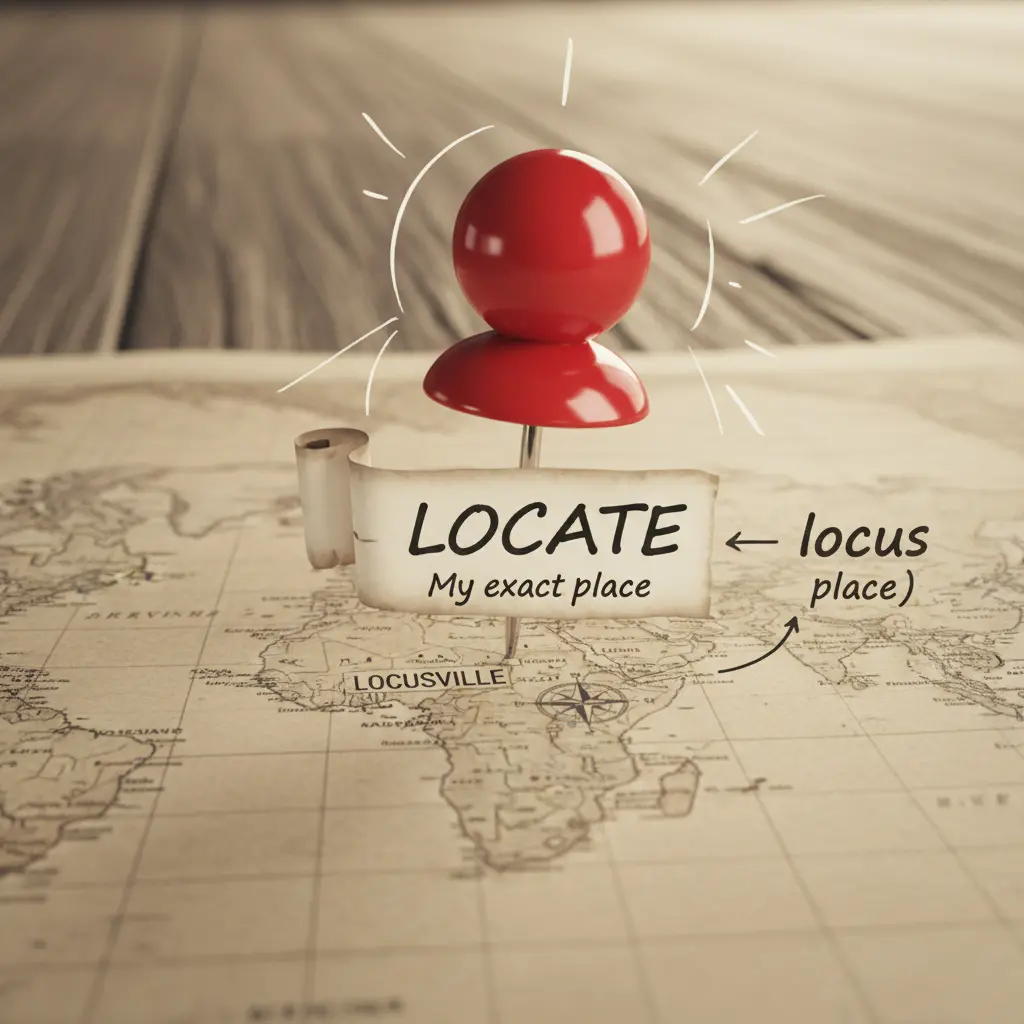
locate: loco- (from Latin 'locus' meaning 'place') + -ate (suffix forming verbs). Origin: Latin → Old French → English. Imagine a map with a pin marking the exact spot where you stand, helping you remember where you're located.
Note 1: These definitions and etymologies are not standard dictionary definitions, but extended explanations provided to help with memorization and understanding of the actual application of words. Through this background information, we strive to make words more vivid and easier to understand, and help you remember their meanings in real life.
Note 2: LexiTalk designs the learning flow around the linguistics principle of “Comprehensible Input.” When learners encounter material that is slightly above their level but still understandable from context, the brain naturally absorbs the language. That’s why we keep every word inside authentic contexts, using examples and associations to help you understand it and use it flexibly.
Read the FAQ explanation of Comprehensible InputI lean over a map, hold the edge with one finger, and move it to match the skyline. I shift labels, push aside a coffee cup, and scan the grid until a point catches my eye. My focus tightens as I adjust the tilt and tense my shoulders, watching the space between streets tighten with effort. When I set the pin and it sits where I expect, I locate it on the map and feel a small, clear win.
Locating something means more than simply finding it; it emphasizes determining its exact position and often involves tools like a map, GPS, or coordinates. You might locate a missing phone, locate the source of a noise, or locate your own position on a trail. The verb is transitive: you locate something, you locate yourself, you locate the origin. The nuance is precision and the act of establishing a known place, which you report, record, or use for navigation, planning, or investigation. In everyday use, people often locate items by describing a landmark or a grid reference rather than just saying 'found it.' When teaching, pair locate with location and location-based collocations to reinforce the spatial sense.
In English, locate stresses active, purposeful finding of a precise place often tied to navigation or investigation. Learners may default to find for any discovery, or use be located without a clear agent. Remember the object after locate and when to use be located for states of position.
What is the meaning of the word 'locate'?
How is 'locate' used in a sentence?
Which word is similar to 'locate'?
What is the opposite of 'locate'?
In what real-life context would you use the word 'locate'?
Download LexiTalk app for personalized learning experience
Download AppCookies
We use cookies for essential site functions, analytics, and ads. You can accept, reject, or manage preferences. Privacy Policy