
lung - Master This Word
Master this word with our 5-step learning method – Learn English in English
Train English Through Brain Routes, Not Translation.
This page helps you stop memorizing isolated translations and start understanding a word through its shared mental image, native-style thinking, and practical training steps.
Master this word with our 5-step learning method – Learn English in English
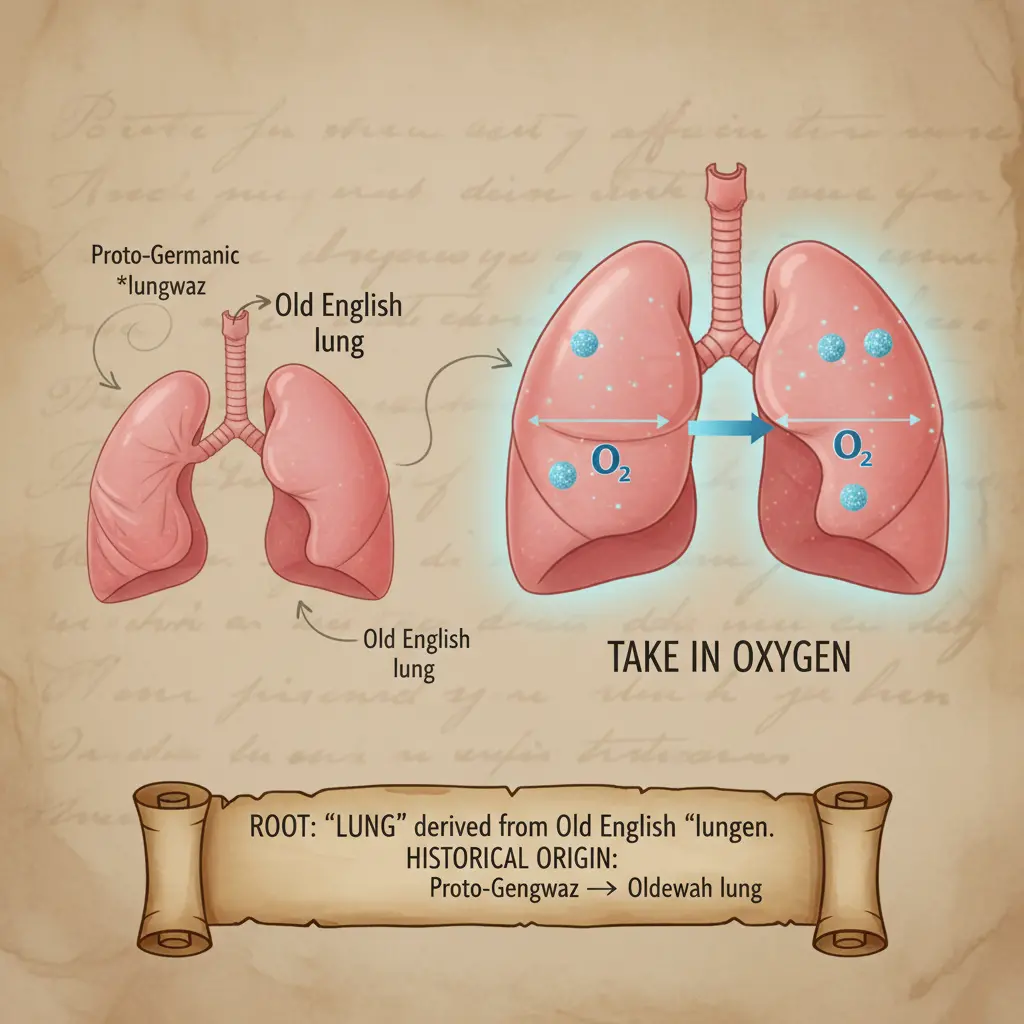
Example sentences are the start of understanding. Don't rush to memorize. First feel how the word works in a sentence.
Root: 'lung' likely derived from Old English 'lungen'. Historical origin: Proto-Germanic *lungwaz → Old English lung. Memory image: Imagine two balloons filled with air, representing the lungs expanding and contracting to take in oxygen.
Note 1: These definitions and etymologies are not standard dictionary definitions, but extended explanations provided to help with memorization and understanding of the actual application of words. Through this background information, we strive to make words more vivid and easier to understand, and help you remember their meanings in real life.
Note 2: LexiTalk designs the learning flow around the linguistics principle of “Comprehensible Input.” When learners encounter material that is slightly above their level but still understandable from context, the brain naturally absorbs the language. That’s why we keep every word inside authentic contexts, using examples and associations to help you understand it and use it flexibly.
Read the FAQ explanation of Comprehensible InputI place a hand on my chest and breathe slowly, watching my lungs move with each inhale. I feel the air push in, then pull back as the body settles into a quiet rhythm. I adjust my pace when I want a deeper sigh, keeping the chest steady and the shoulders loose. With every exhale, the breath reminds me of the lung's quiet work behind every moment of life.
The word lung refers to the pair of organs inside the chest that let you breathe. They are the primary organs of respiration, taking in air, extracting oxygen, and expelling carbon dioxide. The lungs surround the heart and are protected by the rib cage. You can describe breath as a sign of health: stronger lungs often mean better endurance, while damaged lungs can limit activity. In everyday speech you might say someone has 'a big lung capacity' or that smoking harms the lungs. Learning this word helps you discuss anatomy, fitness, medicine, and everyday health topics clearly in English.
Explain to an English speaker: English often treats 'lung' as a concrete organ in anatomy, while many learners assume it also stands for breath or air; learners should keep straight between 'lung' (organ) and 'breathing' (process) to avoid miscommunication.
What is the meaning of the word 'lung'?
How is the word 'lung' used in a sentence?
Which of the following words is similar to 'lung'?
What is the opposite meaning of 'lung'?
In what real-life context would you hear the word 'lung'?
Download LexiTalk app for personalized learning experience
Download AppCookies
We use cookies for essential site functions, analytics, and ads. You can accept, reject, or manage preferences. Privacy Policy