macrophages - Master This Word
Master this word with our 5-step learning method – Learn English in English
Train English Through Brain Routes, Not Translation.
This page helps you stop memorizing isolated translations and start understanding a word through its shared mental image, native-style thinking, and practical training steps.
Master this word with our 5-step learning method – Learn English in English
Example sentences are the start of understanding. Don't rush to memorize. First feel how the word works in a sentence.
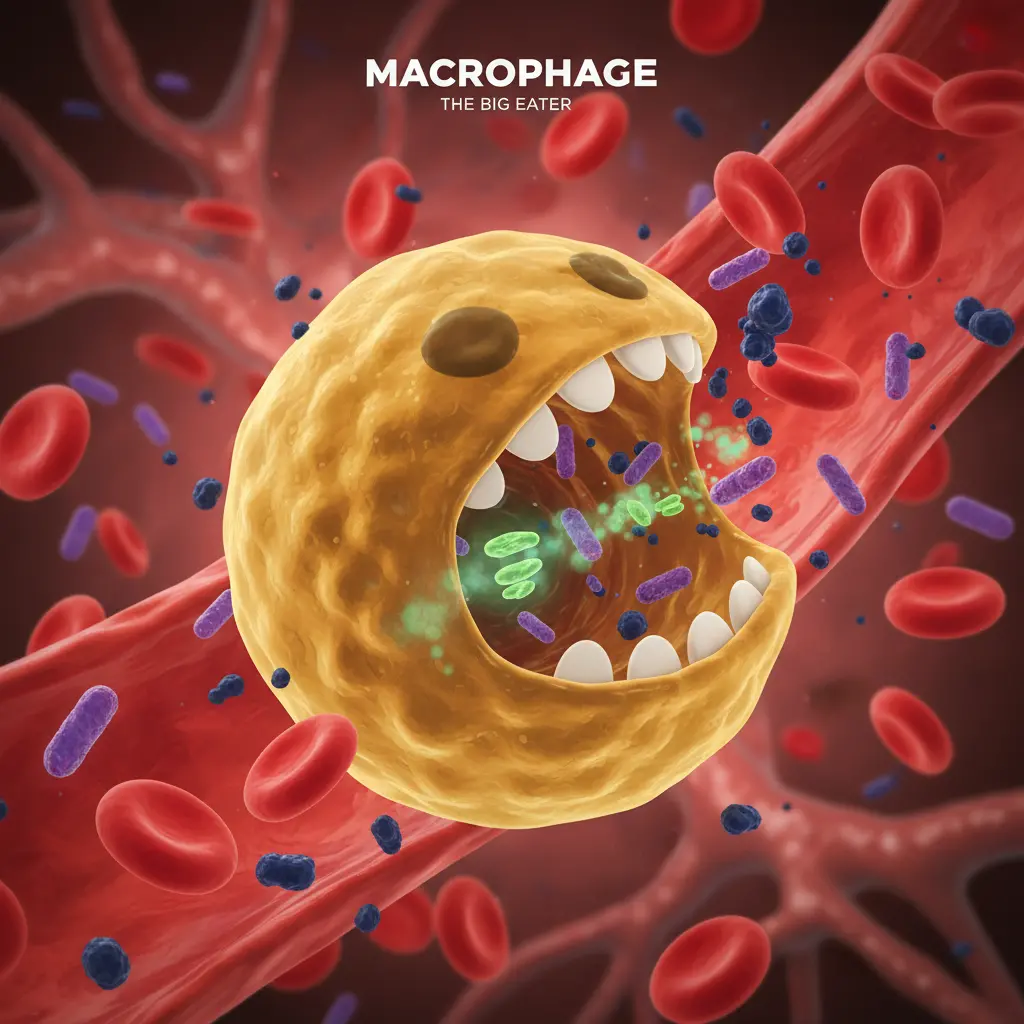
The word 'macrophage' comes from the Greek roots 'makros' meaning 'large' and 'phagein' meaning 'to eat'. The term was introduced in the late 19th century as the scientific understanding of the immune system developed. Imagine a giant cell, like a pac-man, roaming through the bloodstream, devouring bacteria and debris, keeping the body clean and healthy.
Note 1: These definitions and etymologies are not standard dictionary definitions, but extended explanations provided to help with memorization and understanding of the actual application of words. Through this background information, we strive to make words more vivid and easier to understand, and help you remember their meanings in real life.
Note 2: LexiTalk designs the learning flow around the linguistics principle of “Comprehensible Input.” When learners encounter material that is slightly above their level but still understandable from context, the brain naturally absorbs the language. That’s why we keep every word inside authentic contexts, using examples and associations to help you understand it and use it flexibly.
Read the FAQ explanation of Comprehensible InputMacrophage is a type of white blood cell that patrols the body looking for trouble. It engulfs and digests bacteria, dead cells, and other debris, helping to clean tissues and start the healing process. Macrophages are large, mobile cells that can change their behavior depending on signals from their environment. They play a central role in both innate immunity and the later adaptive response by presenting pieces of the material they have eaten to other immune cells. Their activities help prevent infections, support tissue repair, and regulate inflammation, making them essential keepers of health in nearly every organ.
Explain to an English speaker (meta, keep short)
Download LexiTalk app for personalized learning experience
Download AppCookies
We use cookies for essential site functions, analytics, and ads. You can accept, reject, or manage preferences. Privacy Policy