
madrigals - Master This Word
Master this word with our 5-step learning method – Learn English in English
Train English Through Brain Routes, Not Translation.
This page helps you stop memorizing isolated translations and start understanding a word through its shared mental image, native-style thinking, and practical training steps.
Master this word with our 5-step learning method – Learn English in English
Example sentences are the start of understanding. Don't rush to memorize. First feel how the word works in a sentence.
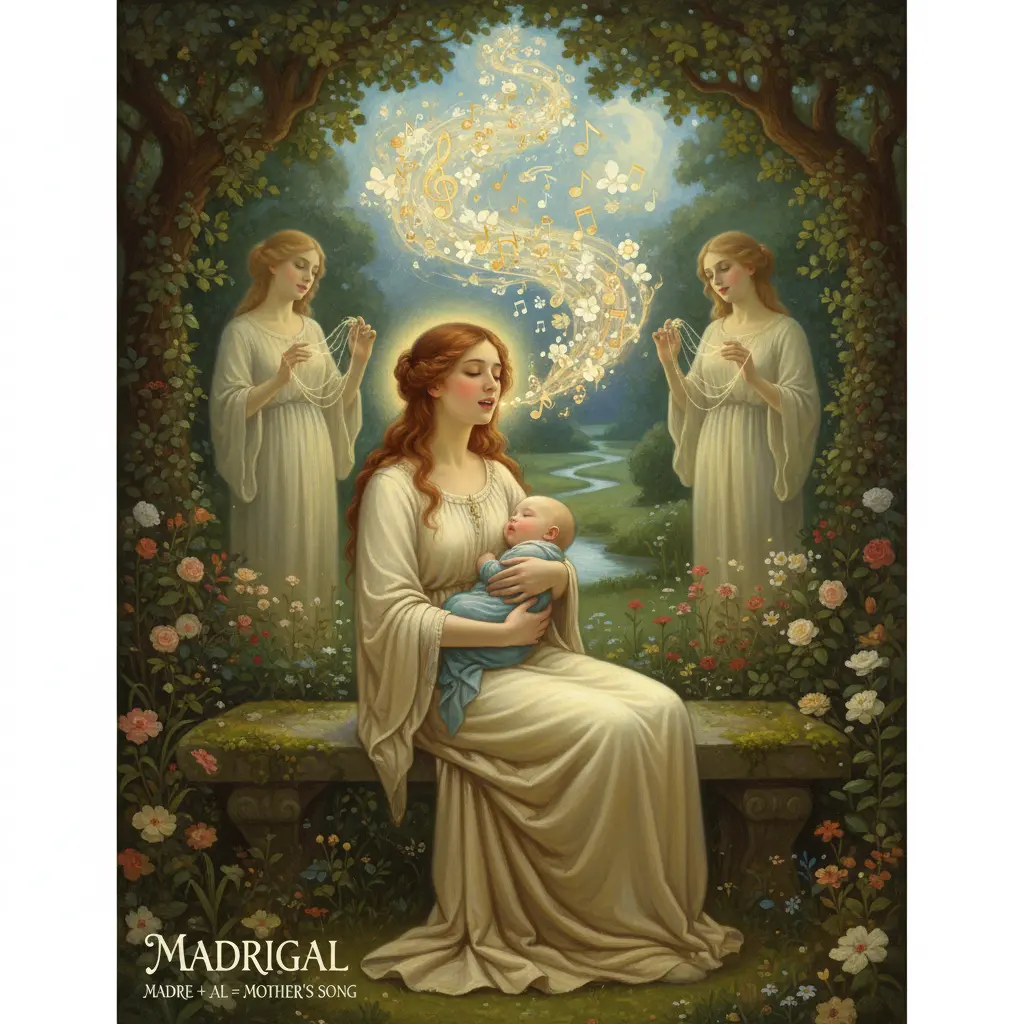
Root: 'madrigal' → made of 'madre' (mother) + 'al' (relating to). Origin: Middle French 'madrigal' → English. Memory image: Imagine a mother singing a lullaby with gentle harmonies to her child, embodying the nurturing and melodic essence of madrigals, often associated with love and nature themes.
Note 1: These definitions and etymologies are not standard dictionary definitions, but extended explanations provided to help with memorization and understanding of the actual application of words. Through this background information, we strive to make words more vivid and easier to understand, and help you remember their meanings in real life.
Note 2: LexiTalk designs the learning flow around the linguistics principle of “Comprehensible Input.” When learners encounter material that is slightly above their level but still understandable from context, the brain naturally absorbs the language. That’s why we keep every word inside authentic contexts, using examples and associations to help you understand it and use it flexibly.
Read the FAQ explanation of Comprehensible InputMadrigal is a Renaissance secular vocal music form that flourished in courts and literary circles. It is typically a short piece for three to six voices, sung without instrumental accompaniment or with a light continuo. The texture is often polyphonic, weaving independent lines to create bright, intimate harmony. Lyrics are usually poems about love, nature, or playful scenes, and the music often mirrors the mood of the text through word painting and rhythmic contrasts. The form also extended to short lyric poems set to music, and to multi-voice vocal ensembles. Today the word evokes refined social culture as well as craftsmanship in vocal writing, rather than sacred ritual.
English learners can treat madrigal as a fixed historical term, so they may overstate its form or try to apply it to modern pop choral styles. In English discourse, madrigal signals Renaissance context and polyphonic texture; learners should avoid generic 'song about love' labels and stay specific about era, texture, and function.
Download LexiTalk app for personalized learning experience
Download AppCookies
We use cookies for essential site functions, analytics, and ads. You can accept, reject, or manage preferences. Privacy Policy