
marsupials - Master This Word
Master this word with our 5-step learning method – Learn English in English
Train English Through Brain Routes, Not Translation.
This page helps you stop memorizing isolated translations and start understanding a word through its shared mental image, native-style thinking, and practical training steps.
Master this word with our 5-step learning method – Learn English in English
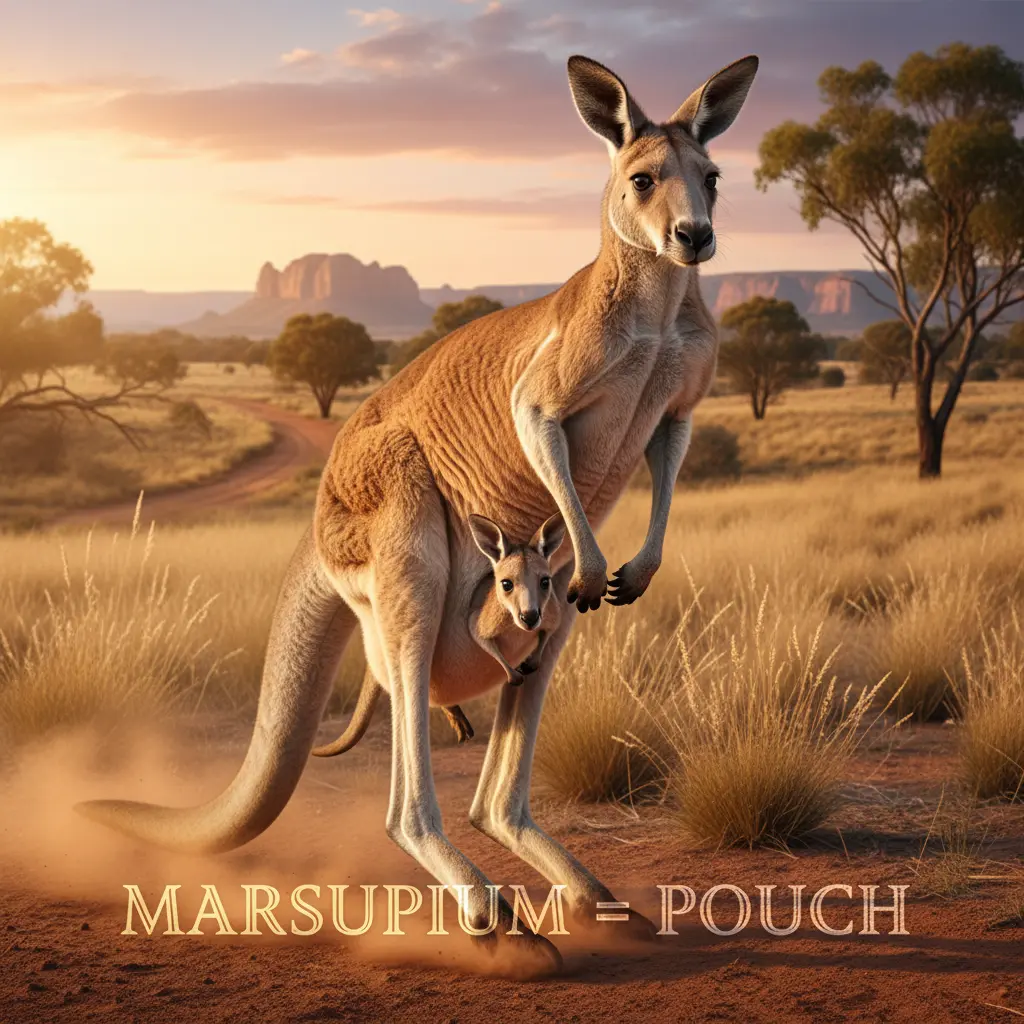
Example sentences are the start of understanding. Don't rush to memorize. First feel how the word works in a sentence.
Root decomposition: 'marsupium' (Latin for pouch) + '-al' (adjective suffix). Historical origin: Latin 'marsupialis' → Old French → English 'marsupial'. Memory image: Imagine a kangaroo hopping around with a big pouch, showcasing its young, which helps you remember the connection to the term 'pouch'.
Note 1: These definitions and etymologies are not standard dictionary definitions, but extended explanations provided to help with memorization and understanding of the actual application of words. Through this background information, we strive to make words more vivid and easier to understand, and help you remember their meanings in real life.
Note 2: LexiTalk designs the learning flow around the linguistics principle of “Comprehensible Input.” When learners encounter material that is slightly above their level but still understandable from context, the brain naturally absorbs the language. That’s why we keep every word inside authentic contexts, using examples and associations to help you understand it and use it flexibly.
Read the FAQ explanation of Comprehensible InputMarsupials are a distinct group of mammals defined by their reproductive strategy: after a relatively short gestation, their young are born underdeveloped and continue growing in a pouch on the mother's belly or back. The most familiar examples are kangaroos, koalas, and wallabies, native to Australia, though a few species also occur in the Americas. After birth, the joey attaches to a teat inside the pouch and nurses for several months, gradually gaining strength. This contrasts with placental mammals, which carry their young inside the womb until more developed. The term itself comes from the Latin marsupium, meaning pouch, a helpful mental cue you can associate with the animals’ iconic pouches.
English learners tend to treat marsupial as a fixed animal name rather than a broader mammal category; they may mix up with 'pouch' when describing other creatures or misunderstand the noun/adjective usage.
Download LexiTalk app for personalized learning experience
Download AppCookies
We use cookies for essential site functions, analytics, and ads. You can accept, reject, or manage preferences. Privacy Policy