meals - Master This Word
Master this word with our 5-step learning method – Learn English in English
Train English Through Brain Routes, Not Translation.
This page helps you stop memorizing isolated translations and start understanding a word through its shared mental image, native-style thinking, and practical training steps.
Master this word with our 5-step learning method – Learn English in English
Example sentences are the start of understanding. Don't rush to memorize. First feel how the word works in a sentence.
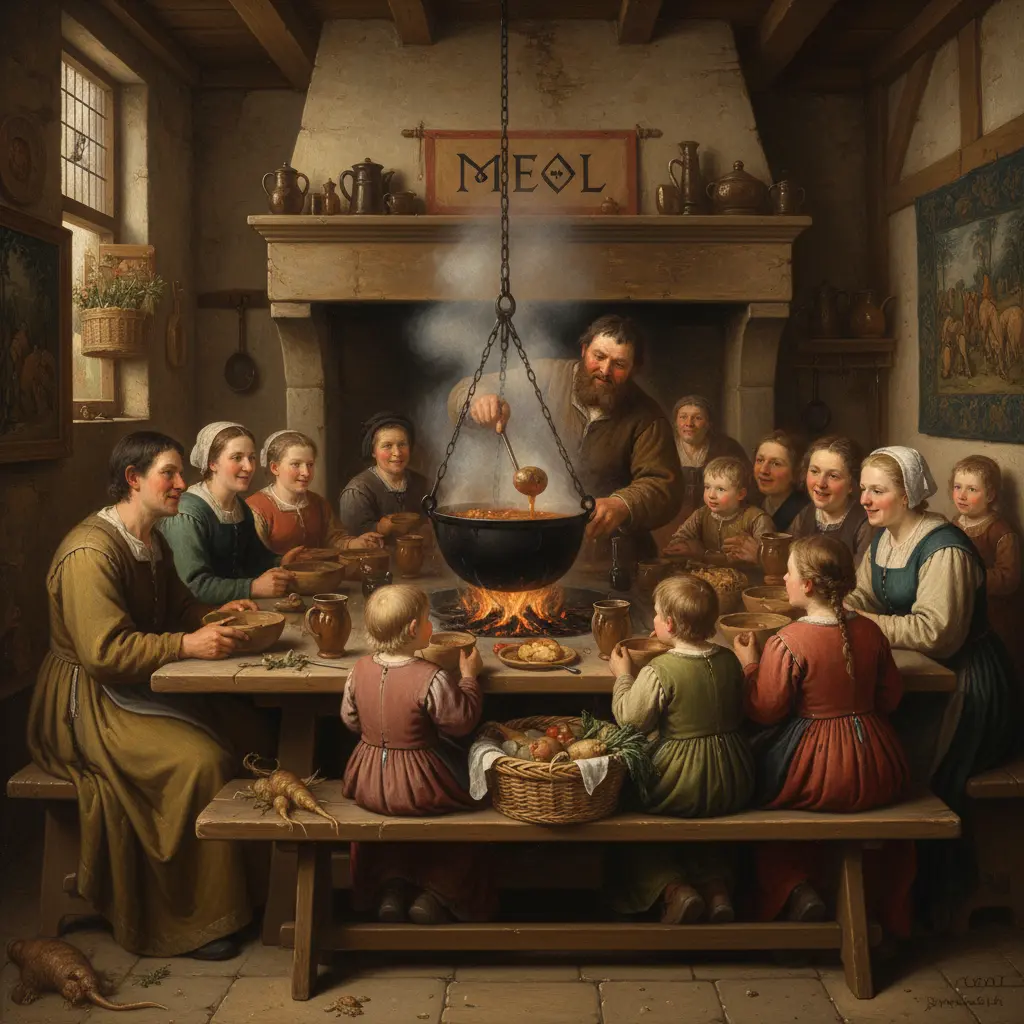
Meal = meol (from Old English) meaning 'a portion of food'. Historical origin: Old English → Middle English → Modern English. Memory image: A strong family gathering around a table with a steaming pot, sharing a 'meal' together symbolizes nourishment and togetherness.
Note 1: These definitions and etymologies are not standard dictionary definitions, but extended explanations provided to help with memorization and understanding of the actual application of words. Through this background information, we strive to make words more vivid and easier to understand, and help you remember their meanings in real life.
Note 2: LexiTalk designs the learning flow around the linguistics principle of “Comprehensible Input.” When learners encounter material that is slightly above their level but still understandable from context, the brain naturally absorbs the language. That’s why we keep every word inside authentic contexts, using examples and associations to help you understand it and use it flexibly.
Read the FAQ explanation of Comprehensible InputFirst I move the plate toward the edge of the table and set the lid aside just a touch. I hold the napkin, then push the first bite forward with careful attention and feel a small shift in hunger. I adjust my pace, keep the conversation light, and decide which bite to take next. This tiny ritual builds into a meal, a moment when simple food and the day rise and settle together.
Meal is more than the food on your plate; it's a moment when people come together to eat. In English, we use meal to refer to a portion of food eaten at one sitting, such as a 'large meal' or 'a light meal.' It also covers the occasion itself, for example 'we had a meal with friends' or 'the meal was prepared for a celebration.' You can describe what's on the table by saying 'The meal looks ready' or 'We enjoyed a hearty meal.' The word describes both the food and the act of eating at a particular time, and it often carries social or cultural meanings—sharing a meal expresses hospitality, care, and connection across many communities.
English often treats meal as a flexible unit that can refer to the food itself, the time of eating, or the social occasion. learners tend to over-generalize to single dishes or to use meal as a synonym for food in all contexts.
What is the meaning of the word 'meals'?
Which sentence uses the word 'meals' correctly?
Which word is most similar to 'meals'?
What is the opposite of the word 'meals'?
Can you think of a real-life context where the word 'meals' is relevant?
Download LexiTalk app for personalized learning experience
Download AppCookies
We use cookies for essential site functions, analytics, and ads. You can accept, reject, or manage preferences. Privacy Policy