measures - Master This Word
Master this word with our 5-step learning method – Learn English in English
Train English Through Brain Routes, Not Translation.
This page helps you stop memorizing isolated translations and start understanding a word through its shared mental image, native-style thinking, and practical training steps.
Master this word with our 5-step learning method – Learn English in English
Example sentences are the start of understanding. Don't rush to memorize. First feel how the word works in a sentence.
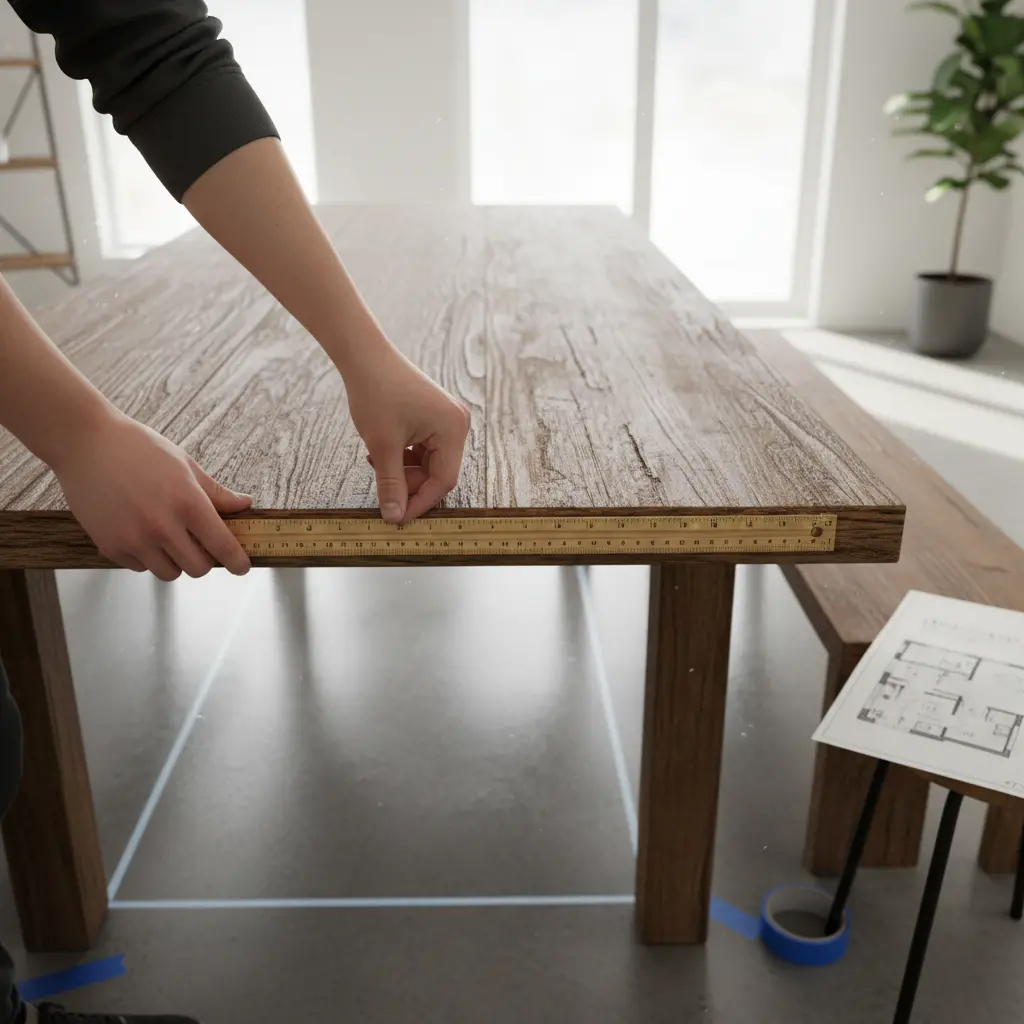
Root: mea- = to measure; Historical origin: Latin 'metiri' → Old French 'mesurer' → English 'measure'. Memory image: Imagine holding a ruler and measuring the length of a table, ensuring it fits perfectly in a room.
Note 1: These definitions and etymologies are not standard dictionary definitions, but extended explanations provided to help with memorization and understanding of the actual application of words. Through this background information, we strive to make words more vivid and easier to understand, and help you remember their meanings in real life.
Note 2: LexiTalk designs the learning flow around the linguistics principle of “Comprehensible Input.” When learners encounter material that is slightly above their level but still understandable from context, the brain naturally absorbs the language. That’s why we keep every word inside authentic contexts, using examples and associations to help you understand it and use it flexibly.
Read the FAQ explanation of Comprehensible InputFirst I set a cup on the counter and hold it steady. I move a marker along a ruler, watching the space unfold as I measure the amount. I feel my wrist tighten, adjust my grip, and push a bit to fine tune before I pull back if it’s too much. When I stop, the balance settles and the act of keeping control spills over into real use.
Measure as a verb covers several related ideas. To determine the size or quantity of something using a tool or standard, to assess the extent of a condition or a trend, and to evaluate or gauge something in a careful, deliberate way. In everyday use you might measure a room with a tape, measure progress against a goal, or measure a response from others. The nuances include precision, judgment, and comparison. Learners often confuse measure with decide or estimate, and they may miss the idea of comparing to a standard. Yet measuring usually implies a concrete act or a formal judgment.
In English, measure often emphasizes a concrete action tied to a standard or tool, and can apply to both physical sizes and abstract progress. Learners may overgeneralize to situations without a clear standard.
What is the definition of the word 'measures'?
Which sentence correctly uses the word 'measures'?
Which word is most similar to 'measures'?
What is the opposite of 'measures'?
Can you give an example of a real-life scenario involving measures?
Download LexiTalk app for personalized learning experience
Download AppCookies
We use cookies for essential site functions, analytics, and ads. You can accept, reject, or manage preferences. Privacy Policy