media - Master This Word
Master this word with our 5-step learning method – Learn English in English
Train English Through Brain Routes, Not Translation.
This page helps you stop memorizing isolated translations and start understanding a word through its shared mental image, native-style thinking, and practical training steps.
Master this word with our 5-step learning method – Learn English in English
Example sentences are the start of understanding. Don't rush to memorize. First feel how the word works in a sentence.
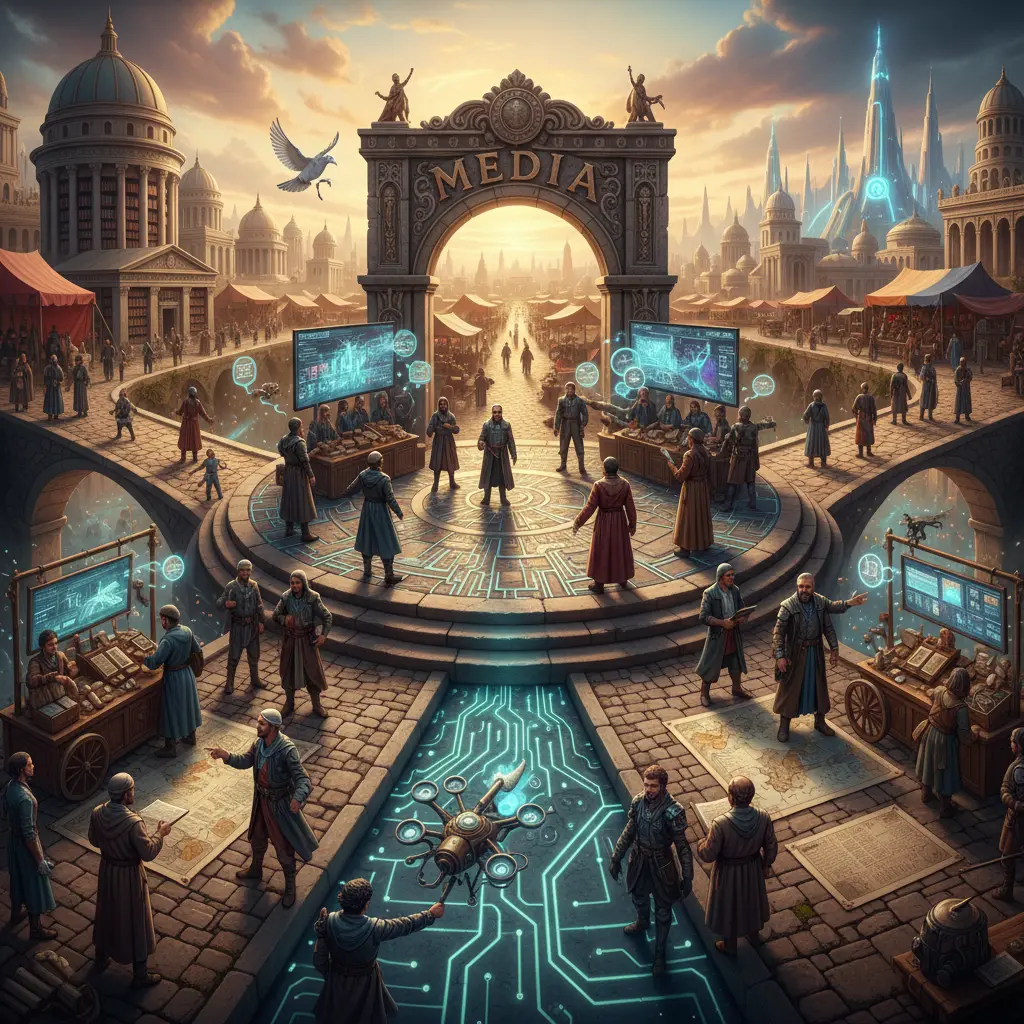
Root decomposition: 'med' (middle) + 'ia' (plural suffix). Historical origin: Latin 'media' (plural of 'medium') → Old French → English. Memory image: Imagine a middle ground where different information connects, like a vibrant marketplace bustling with exchange.
Note 1: These definitions and etymologies are not standard dictionary definitions, but extended explanations provided to help with memorization and understanding of the actual application of words. Through this background information, we strive to make words more vivid and easier to understand, and help you remember their meanings in real life.
Note 2: LexiTalk designs the learning flow around the linguistics principle of “Comprehensible Input.” When learners encounter material that is slightly above their level but still understandable from context, the brain naturally absorbs the language. That’s why we keep every word inside authentic contexts, using examples and associations to help you understand it and use it flexibly.
Read the FAQ explanation of Comprehensible InputI reach for the remote, push a button, and the screen lights up. The picture moves across the room and voices rise, and I feel a steady pull toward whatever it offers. I adjust the volume, shift to a different channel, and keep watching as the space seems to tilt toward the stream. The moment I let myself ride that flow, I sense how media carries voices, pictures, and stories into my day.
Media is the plural form of medium and refers to the various channels used to convey information to the public, such as television, newspapers, radio, and online platforms. The term can also mean the physical tools and materials used to transmit information, like cameras, microphones, and printing presses. In modern English, media is often treated as a collective noun describing news organizations and entertainment outlets that shape how people learn about events. People use the word to discuss reporting, bias, and media literacy. When learning, note that 'media' requires verbs like 'are' in formal contexts and 'is' in some recent, casual uses.
In English, media is usually plural (the media are …), but casual speech often treats it as singular (the media is …). Learners often struggle with verb agreement and with the broad sense of media covering many channels, not just news. Remember that media can also mean physical equipment or materials in some contexts.
What is the meaning of the word 'media'?
How is the word 'media' used in a sentence?
Which word is similar to 'media'?
Which word is the opposite of 'media'?
In what real-life context would you encounter the word 'media'?
Download LexiTalk app for personalized learning experience
Download AppCookies
We use cookies for essential site functions, analytics, and ads. You can accept, reject, or manage preferences. Privacy Policy