mess - Master This Word
Master this word with our 5-step learning method – Learn English in English
Train English Through Brain Routes, Not Translation.
This page helps you stop memorizing isolated translations and start understanding a word through its shared mental image, native-style thinking, and practical training steps.
Master this word with our 5-step learning method – Learn English in English
Example sentences are the start of understanding. Don't rush to memorize. First feel how the word works in a sentence.
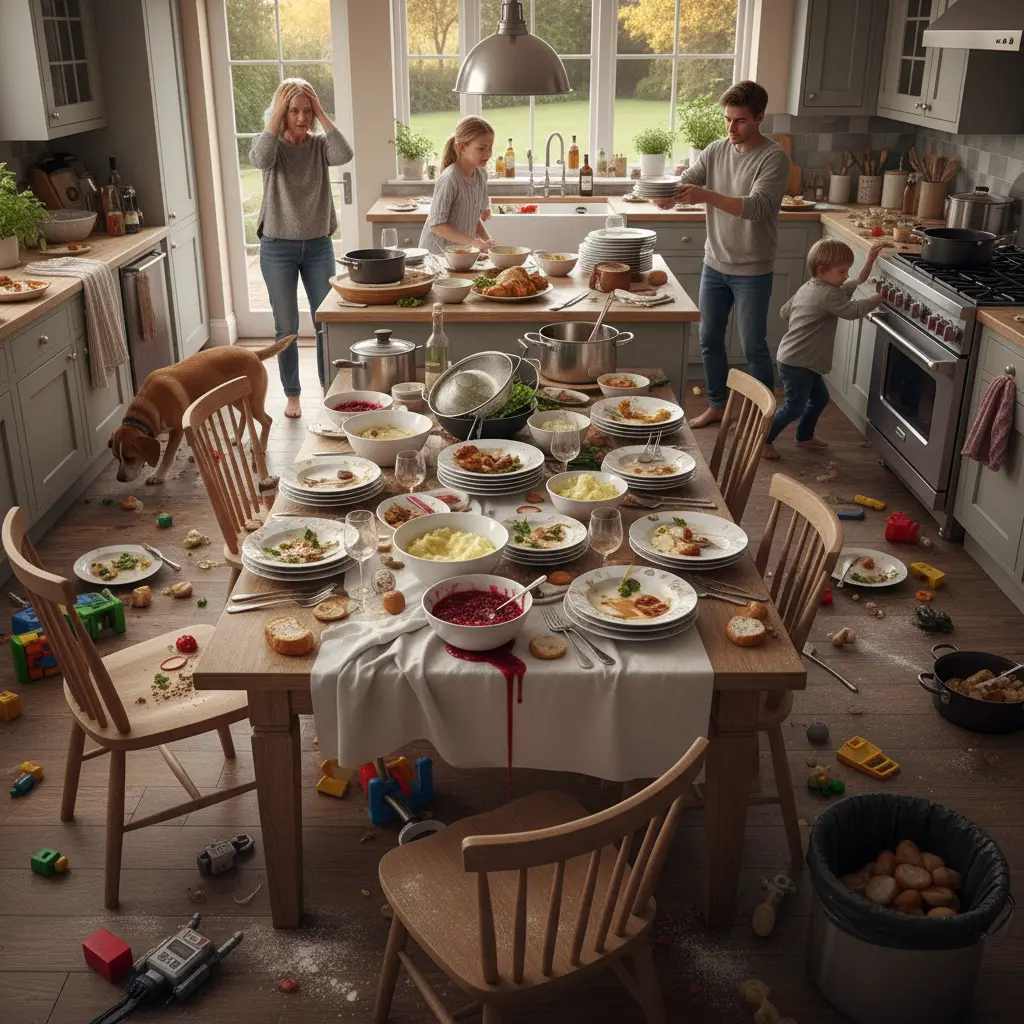
From Old French 'mes' (a mess) from the Vulgar Latin 'missa' (a letting go) which aligns with the idea of things being let go into disarray. Picture a kitchen after a big family feast: plates everywhere, food spills, and confusion reigns, capturing the essence of 'mess' as both a state and an action.
Note 1: These definitions and etymologies are not standard dictionary definitions, but extended explanations provided to help with memorization and understanding of the actual application of words. Through this background information, we strive to make words more vivid and easier to understand, and help you remember their meanings in real life.
Note 2: LexiTalk designs the learning flow around the linguistics principle of “Comprehensible Input.” When learners encounter material that is slightly above their level but still understandable from context, the brain naturally absorbs the language. That’s why we keep every word inside authentic contexts, using examples and associations to help you understand it and use it flexibly.
Read the FAQ explanation of Comprehensible InputFirst I pick up a mug and move it aside, then I set down a pile of papers and watch them shift into a neat line. The room feels crowded as I pull items out one by one and adjust their places, a small turn of the wrist and a stubborn push against clutter. It takes effort to decide what to keep and what to let go, a careful balance of control and patience. By the end, the space breathes again, and the messy moment becomes a plan I can work with rather than a problem that owns me.
Mess can be a noun meaning a dirty or untidy state, a chaotic condition, or a situation that is confused or full of problems. As a verb it means to make something dirty, disordered, or difficult to manage. In everyday English we speak of a messy room, a mess at work, or a plan that has become a mess. We often say make a mess or mess things up, but we rarely call a person a mess unless jokingly as a hot mess. The term also appears in phrases like the mess hall or lead a life in a mess in older texts. Understanding the noun and verb senses, common collocations, and polite usage helps learners avoid false friends and misinterpretations.
English uses mess to cover both a physical untidiness and a figurative problem, with flexible verb phrases like mess up and make a mess; learners often mix up noun vs verb and worry about insulting people by calling them a mess.
What is the meaning of the word 'mess'?
In which of the following sentences is 'mess' used correctly?
Which word is similar to 'mess'?
Which word is the opposite of 'mess'?
In what situation might you use the word 'mess'?
Download LexiTalk app for personalized learning experience
Download AppCookies
We use cookies for essential site functions, analytics, and ads. You can accept, reject, or manage preferences. Privacy Policy