metals - Master This Word
Master this word with our 5-step learning method – Learn English in English
Train English Through Brain Routes, Not Translation.
This page helps you stop memorizing isolated translations and start understanding a word through its shared mental image, native-style thinking, and practical training steps.
Master this word with our 5-step learning method – Learn English in English
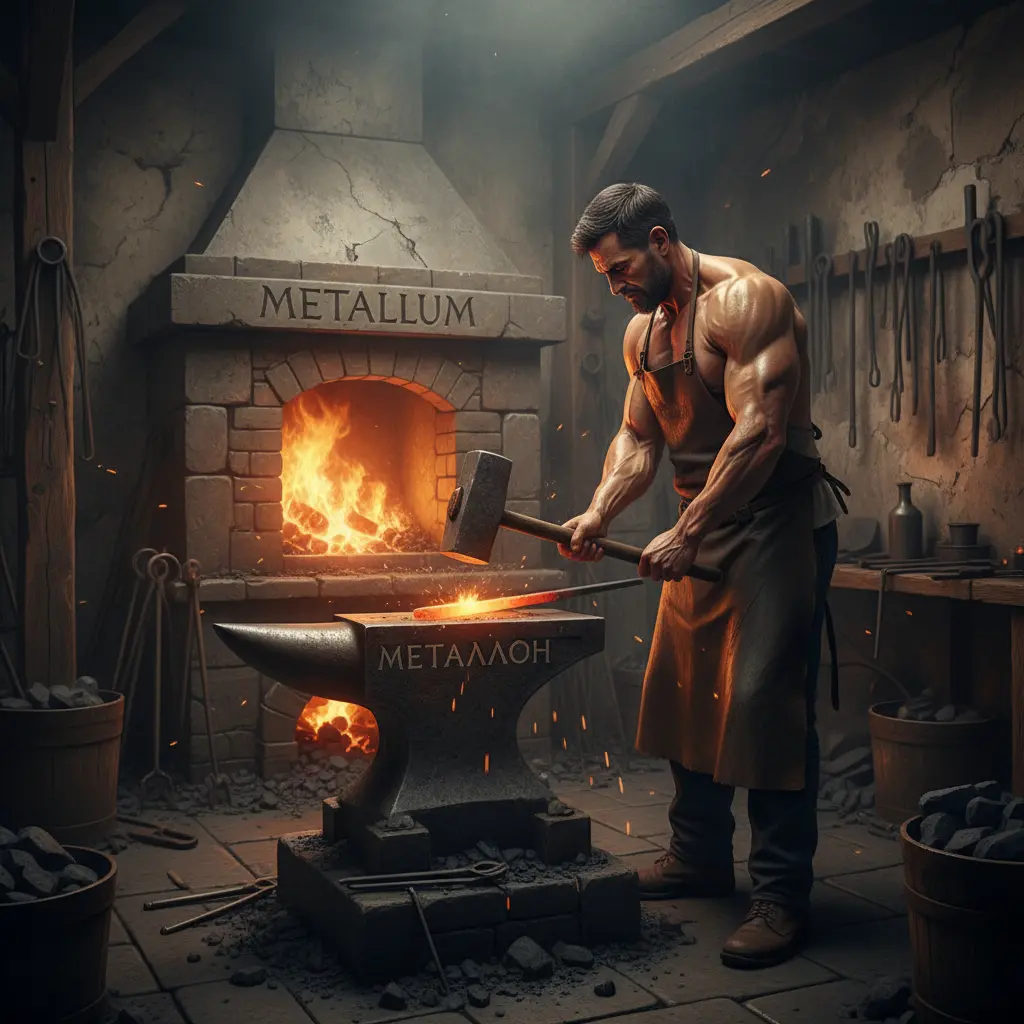
Example sentences are the start of understanding. Don't rush to memorize. First feel how the word works in a sentence.
From Latin 'metallum' (mineral, metal), derived from Greek 'metallon' (mine, metal). Picture an ancient blacksmith forging metal with a hammer in a fiery furnace.
Note 1: These definitions and etymologies are not standard dictionary definitions, but extended explanations provided to help with memorization and understanding of the actual application of words. Through this background information, we strive to make words more vivid and easier to understand, and help you remember their meanings in real life.
Note 2: LexiTalk designs the learning flow around the linguistics principle of “Comprehensible Input.” When learners encounter material that is slightly above their level but still understandable from context, the brain naturally absorbs the language. That’s why we keep every word inside authentic contexts, using examples and associations to help you understand it and use it flexibly.
Read the FAQ explanation of Comprehensible InputI hold a cold piece of metal in my palm and slowly turn it, letting the edge catch the light. I push and pull, adjust my grip, and feel the weight shift in my fingers. This small effort sharpens my sense of angle as I set the wrist to a better position. That flow of sensation travels into real tasks, like tightening a screw or guiding a tool, where metal becomes part of the action.
Metal is a solid material that is usually hard, dense, and shiny, forming the backbone of countless tools, buildings, and machines. It includes many types, from iron and steel to aluminum and copper alloys, each with specific properties like strength, malleability, and corrosion resistance. A key feature is that metals conduct heat and electricity well, which explains their use in cookware, wiring, and motors. The word metal can also refer to a category of music known as metal, or be used in idioms to mean strength or resilience. Etymology traces metal to Latin metallum, from Greek metallon, originally meaning mine or mineral.
Metal in English covers a wide material category and a musical genre; learners must distinguish material senses from abstract or cultural uses and beware homonyms with similar words (mettle, metal music).
What is the definition of 'metals'?
Choose the sentence that correctly uses the word 'metals'.
Which word is most similar to 'metals'?
What is the opposite of 'metals'?
Can you think of a real-life context where 'metals' are important?
Download LexiTalk app for personalized learning experience
Download AppCookies
We use cookies for essential site functions, analytics, and ads. You can accept, reject, or manage preferences. Privacy Policy