meteorology - Master This Word
Master this word with our 5-step learning method – Learn English in English
Train English Through Brain Routes, Not Translation.
This page helps you stop memorizing isolated translations and start understanding a word through its shared mental image, native-style thinking, and practical training steps.
Master this word with our 5-step learning method – Learn English in English
Example sentences are the start of understanding. Don't rush to memorize. First feel how the word works in a sentence.
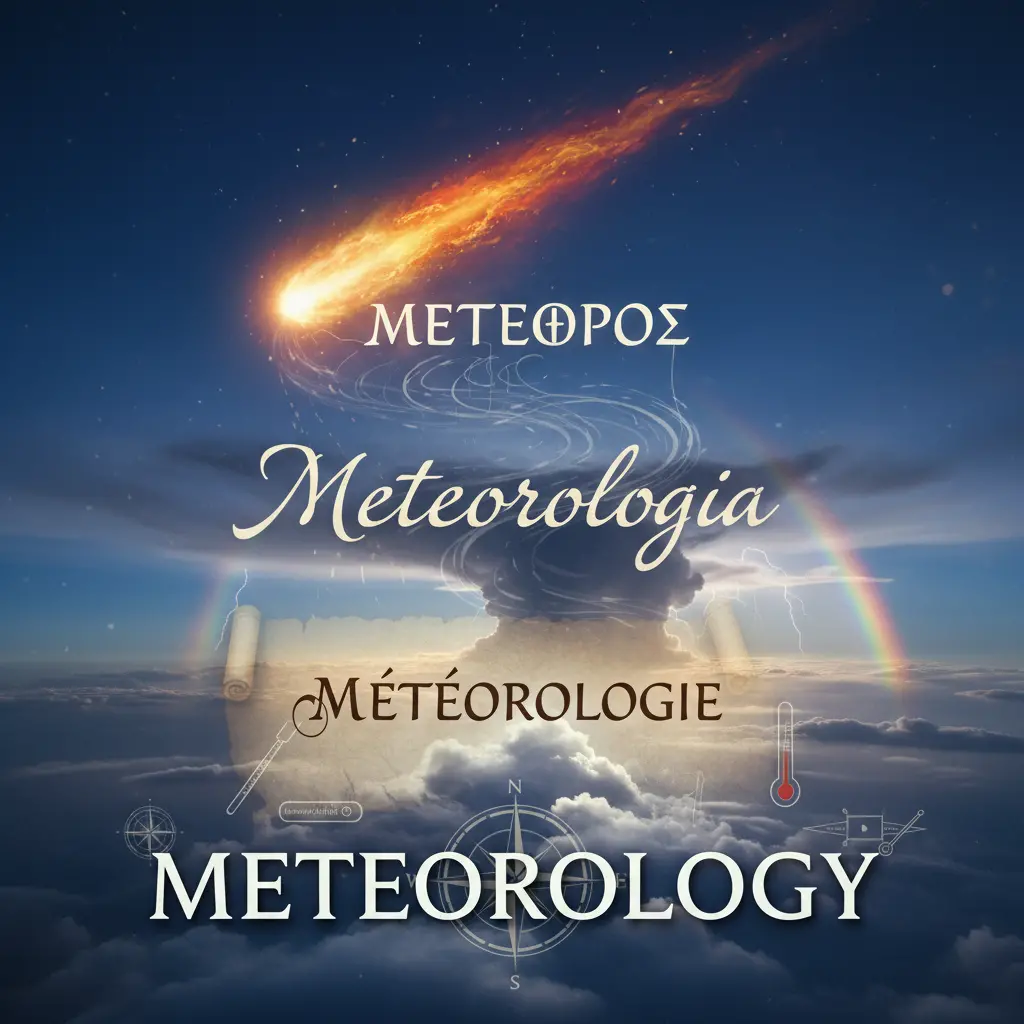
Root decomposition: 'meteor-' (from Greek 'meteoros', meaning 'high, lofty') + '-logy' (from Greek 'logia', meaning 'study of'). Historical origin: From Greek to Latin to Old French before entering English. Memory image: Picture a meteor high in the sky, representing the lofty science of studying atmospheric phenomena.
Note 1: These definitions and etymologies are not standard dictionary definitions, but extended explanations provided to help with memorization and understanding of the actual application of words. Through this background information, we strive to make words more vivid and easier to understand, and help you remember their meanings in real life.
Note 2: LexiTalk designs the learning flow around the linguistics principle of “Comprehensible Input.” When learners encounter material that is slightly above their level but still understandable from context, the brain naturally absorbs the language. That’s why we keep every word inside authentic contexts, using examples and associations to help you understand it and use it flexibly.
Read the FAQ explanation of Comprehensible InputMeteorology is the scientific study of the atmosphere and the processes that produce weather and climate. It covers everything from cloud formation and precipitation to wind, temperature, and severe storms. Meteorologists use observations, instruments, computer models, and statistics to analyze atmospheric conditions, forecast short-term weather, and understand long-term climate trends. The field blends physics, chemistry, and data analysis to explain how heat, moisture, and air masses move and interact around the planet. When you picture a meteor high in the sky, you can remember the word's lofty sense and the idea of studying the sky.
Meteorology is a formal field name; English learners often misread it as related to meteors and may struggle with the -logy suffix and proper article usage.
What is the definition of 'meteorology'?
Which sentence uses 'meteorology' correctly?
Which word is most similar to 'meteorology'?
What is the opposite of 'meteorology'?
Can you think of a real-life context where we discuss weather patterns?
Download LexiTalk app for personalized learning experience
Download AppCookies
We use cookies for essential site functions, analytics, and ads. You can accept, reject, or manage preferences. Privacy Policy