metres - Master This Word
Master this word with our 5-step learning method – Learn English in English
Train English Through Brain Routes, Not Translation.
This page helps you stop memorizing isolated translations and start understanding a word through its shared mental image, native-style thinking, and practical training steps.
Master this word with our 5-step learning method – Learn English in English
Example sentences are the start of understanding. Don't rush to memorize. First feel how the word works in a sentence.
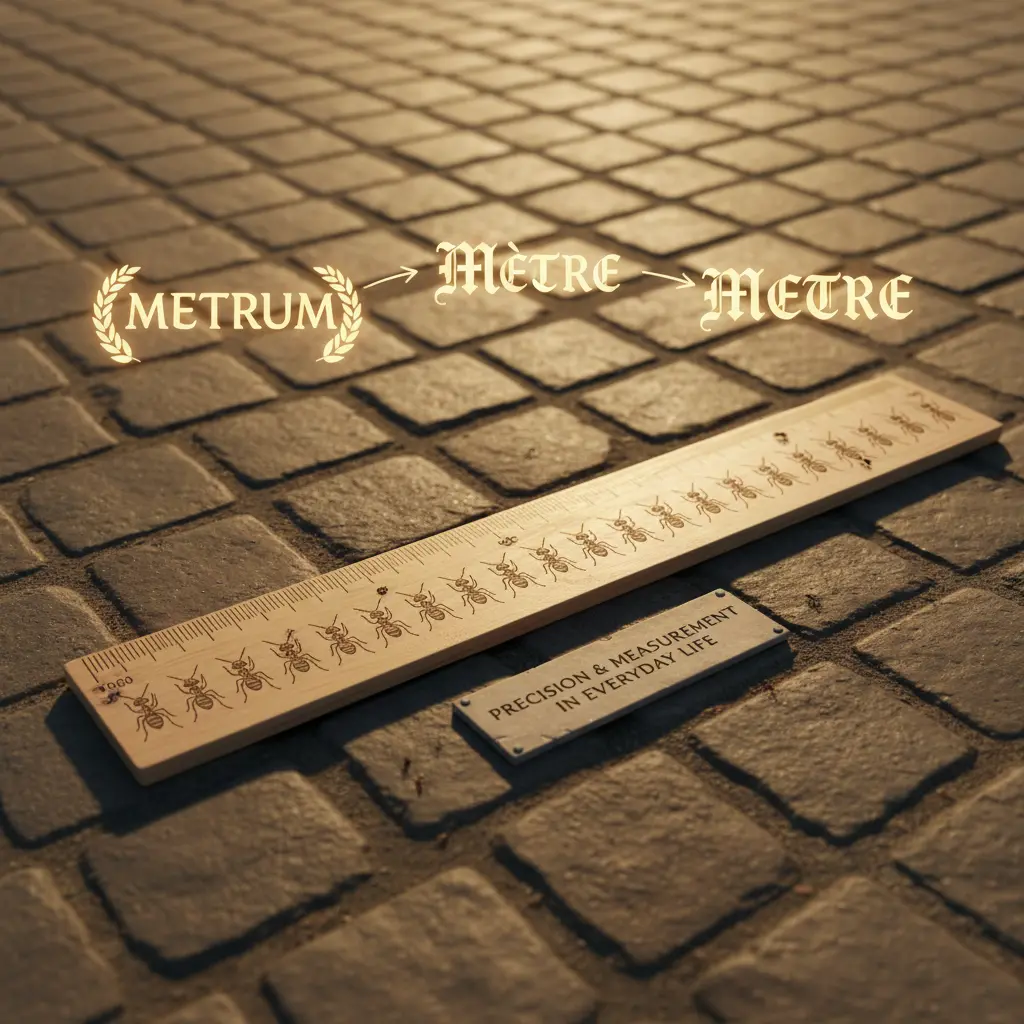
Root decomposition: 'metre' comes from 'metrum' (Greek) via 'mètre' (French). Historical origin: Greek through Latin and Old French to English. Memory image: Imagine a ruler that measures out exactly one hundred ants, illustrating precision and measurement in everyday life.
Note 1: These definitions and etymologies are not standard dictionary definitions, but extended explanations provided to help with memorization and understanding of the actual application of words. Through this background information, we strive to make words more vivid and easier to understand, and help you remember their meanings in real life.
Note 2: LexiTalk designs the learning flow around the linguistics principle of “Comprehensible Input.” When learners encounter material that is slightly above their level but still understandable from context, the brain naturally absorbs the language. That’s why we keep every word inside authentic contexts, using examples and associations to help you understand it and use it flexibly.
Read the FAQ explanation of Comprehensible InputI grip the tape, move it along the desk, and let the edge click at a metre. I hold the line steady, adjust my grip, and push a little to keep it true. The soft ticks of the clock keep time as I feel the attention shift from hand to breath, like tuning a rhythm. That quiet length—the metre—seems to flow into a line of poetry, turning measurement into music you can carry in your head.
Metre is a versatile noun in English. The standard metric unit of length is metre, equal to one hundred centimeters, used in science, engineering, and everyday measurement in most of the world outside the United States. It also appears as metre in poetry, where it refers to the rhythmic structure or pattern of stressed and unstressed syllables; poets often discuss iambic or trochaic metres. In everyday language, people might refer to an object's length in metres, for example the room is 5 metres long. Note the British spelling metre vs American meter, and the two senses can be confused; remember both the unit and the rhythm sense share the same word with different contexts.
Metre in English gives two clear ideas to learners: a length unit and a poetic rhythm. Learners often mix the two, or assume poetry requires a fixed pattern for every poem. Emphasize context to distinguish measurement talk from literary discussion.
Download LexiTalk app for personalized learning experience
Download AppCookies
We use cookies for essential site functions, analytics, and ads. You can accept, reject, or manage preferences. Privacy Policy