
miscount - Master This Word
Master this word with our 5-step learning method – Learn English in English
Train English Through Brain Routes, Not Translation.
This page helps you stop memorizing isolated translations and start understanding a word through its shared mental image, native-style thinking, and practical training steps.
Master this word with our 5-step learning method – Learn English in English
Example sentences are the start of understanding. Don't rush to memorize. First feel how the word works in a sentence.
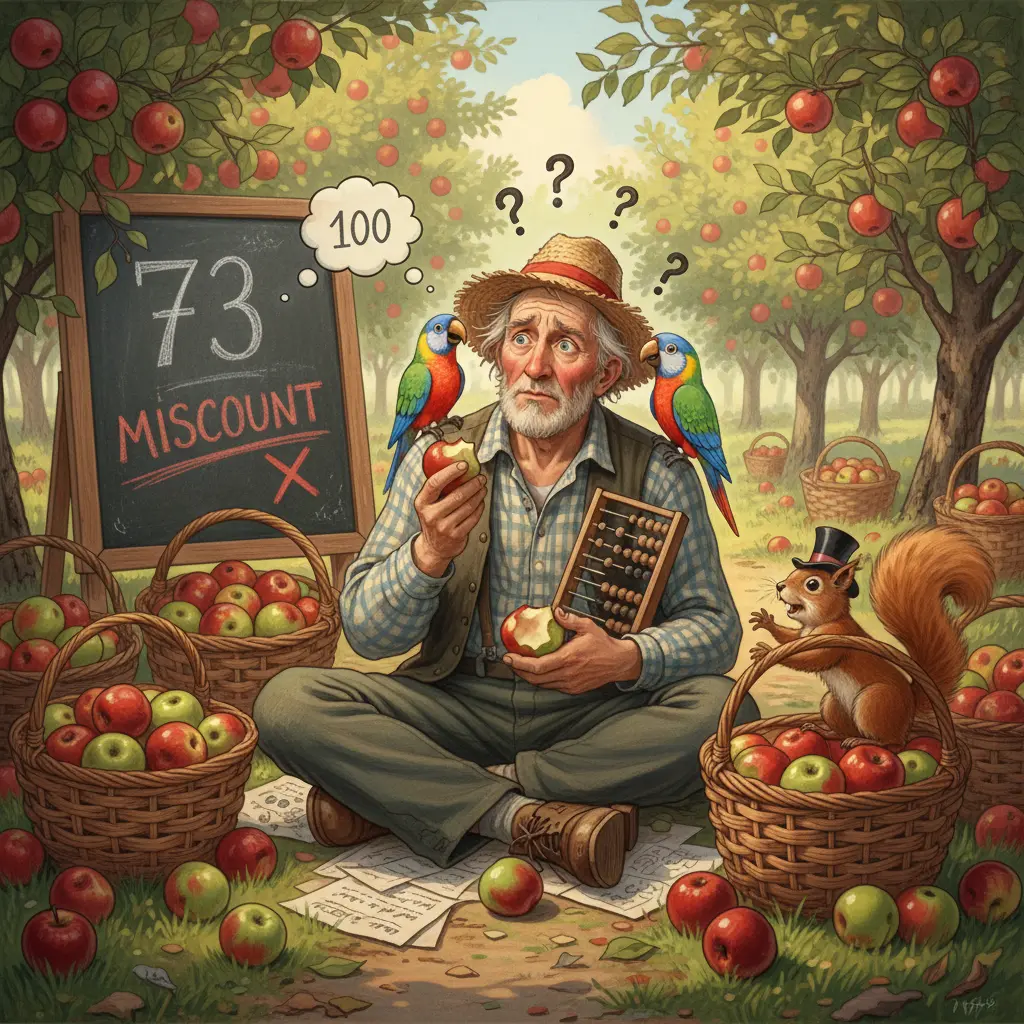
Root decomposition: mis- (wrong) + count (to enumerate). Historical origin: Latin 'mensura' (measure) → Middle English 'miscount'. Memory image: Picture a person trying to count apples, but they are distracted and keep losing track, resulting in a wrong total.
Note 1: These definitions and etymologies are not standard dictionary definitions, but extended explanations provided to help with memorization and understanding of the actual application of words. Through this background information, we strive to make words more vivid and easier to understand, and help you remember their meanings in real life.
Note 2: LexiTalk designs the learning flow around the linguistics principle of “Comprehensible Input.” When learners encounter material that is slightly above their level but still understandable from context, the brain naturally absorbs the language. That’s why we keep every word inside authentic contexts, using examples and associations to help you understand it and use it flexibly.
Read the FAQ explanation of Comprehensible InputMiscount means to count incorrectly or to make an error in tallying a number of items or people. It commonly arises in busy situations where attention is divided, such as inventory, event headcounts, ballots, or budget calculations. A miscount can lead to too few or too many items being recorded, requiring a recount or adjustment. The verb is often used with forms like 'miscounted' or 'miscounting' and is frequently accompanied by phrases such as 'due to fatigue' or 'because of a calculation error.' It contrasts with 'count correctly' and with 'miscalculate' in contexts involving quantities rather than pure math reasoning.
English tends to view miscount as a concrete, observable error in tallying, with emphasis on accuracy in counting tasks and the need for recounts. Learners should note common collocations (recount, tally, count correctly) and avoid equating miscount with all arithmetic mistakes.
What does the word 'miscount' mean?
Which sentence uses 'miscount' correctly?
Which word is a synonym for 'miscount'?
What is the opposite of 'miscount'?
Can you think of a real-life context where this word applies?
Download LexiTalk app for personalized learning experience
Download AppCookies
We use cookies for essential site functions, analytics, and ads. You can accept, reject, or manage preferences. Privacy Policy