
monkey - Master This Word
Master this word with our 5-step learning method – Learn English in English
Train English Through Brain Routes, Not Translation.
This page helps you stop memorizing isolated translations and start understanding a word through its shared mental image, native-style thinking, and practical training steps.
Master this word with our 5-step learning method – Learn English in English
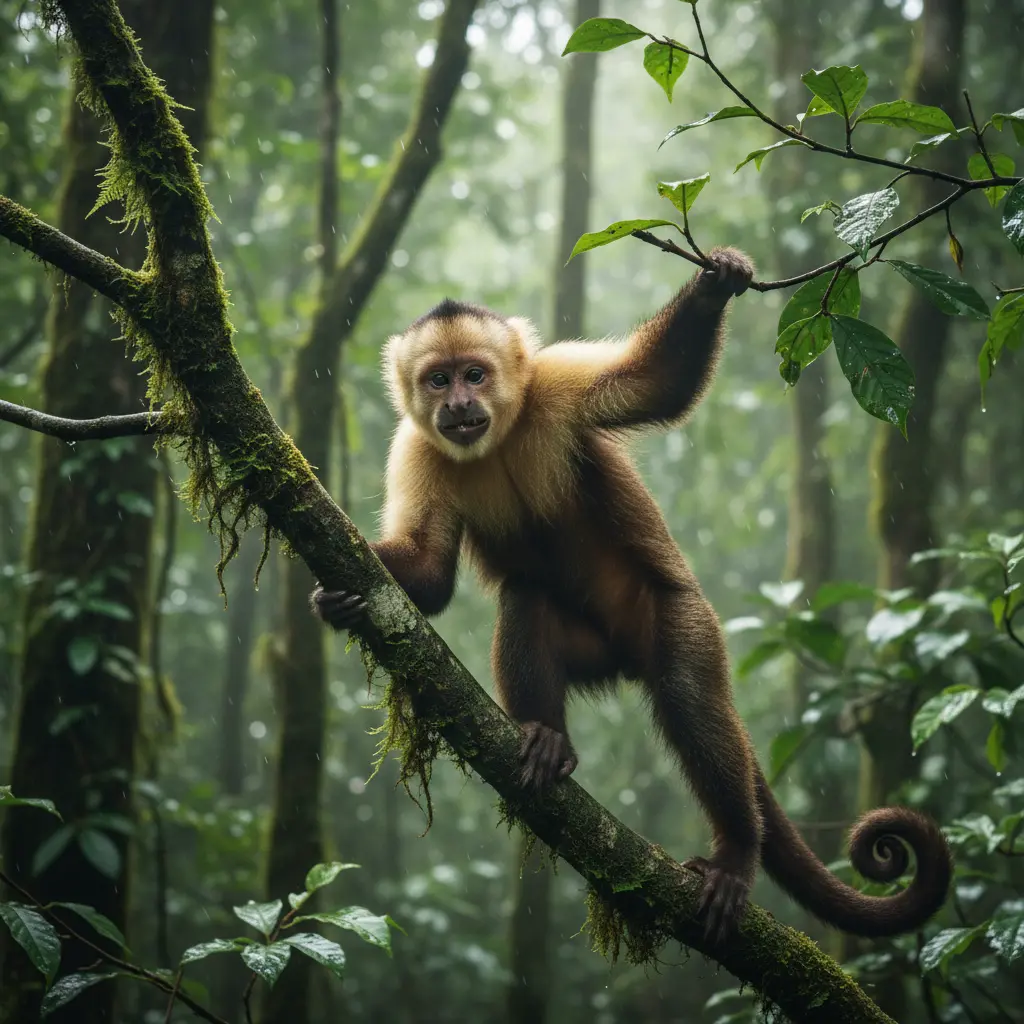
Example sentences are the start of understanding. Don't rush to memorize. First feel how the word works in a sentence.
The word 'monkey' likely comes from the French 'monchot' or perhaps from the Spanish 'monic', which refers to a small primate. Imagine a playful monkey swinging from tree branches, showcasing its agility.
Note 1: These definitions and etymologies are not standard dictionary definitions, but extended explanations provided to help with memorization and understanding of the actual application of words. Through this background information, we strive to make words more vivid and easier to understand, and help you remember their meanings in real life.
Note 2: LexiTalk designs the learning flow around the linguistics principle of “Comprehensible Input.” When learners encounter material that is slightly above their level but still understandable from context, the brain naturally absorbs the language. That’s why we keep every word inside authentic contexts, using examples and associations to help you understand it and use it flexibly.
Read the FAQ explanation of Comprehensible InputFirst I reach out and move my hand toward a branch, feeling the wood give under my grip. I shift my weight, pull myself up a notch, and watch a little figure twist its body in a quick, playful way. I adjust my breath and place each hand with care, trying to imitate the way someone else moves. The moment sticks, a mischievous energy rises, and I sense how people might call that friendly trickster the monkey in everyday talk.
Monkeys are a diverse group of primates, usually small to medium in size, with nimble hands and expressive faces. In everyday English, the word primarily denotes this animal, but it also crops up as a playful metaphor: a mischievous or playful person who acts on impulse or imitates others. The phrase monkey around or monkeying with something describes fiddling carelessly with objects. Idioms like see no monkey do or monkey business add cultural color, sometimes humorously exaggerating behavior. Learners should note that calling someone a monkey can be affectionate in a friendly context or rude if used badly, so tone and setting matter.
English often uses animal names and vivid idioms to color description, whereas learners may over-literalize phrases or miss nuance when the same idea is expressed with different imagery in their language.
What is the meaning of the word 'monkey'?
Which sentence uses the word 'monkey' correctly?
Which word is most similar to 'monkey'?
What is the opposite of 'monkey'?
Can you give an example of a real-life scenario involving a monkey?
Download LexiTalk app for personalized learning experience
Download AppCookies
We use cookies for essential site functions, analytics, and ads. You can accept, reject, or manage preferences. Privacy Policy