morality - Master This Word
Master this word with our 5-step learning method – Learn English in English
Train English Through Brain Routes, Not Translation.
This page helps you stop memorizing isolated translations and start understanding a word through its shared mental image, native-style thinking, and practical training steps.
Master this word with our 5-step learning method – Learn English in English
Example sentences are the start of understanding. Don't rush to memorize. First feel how the word works in a sentence.
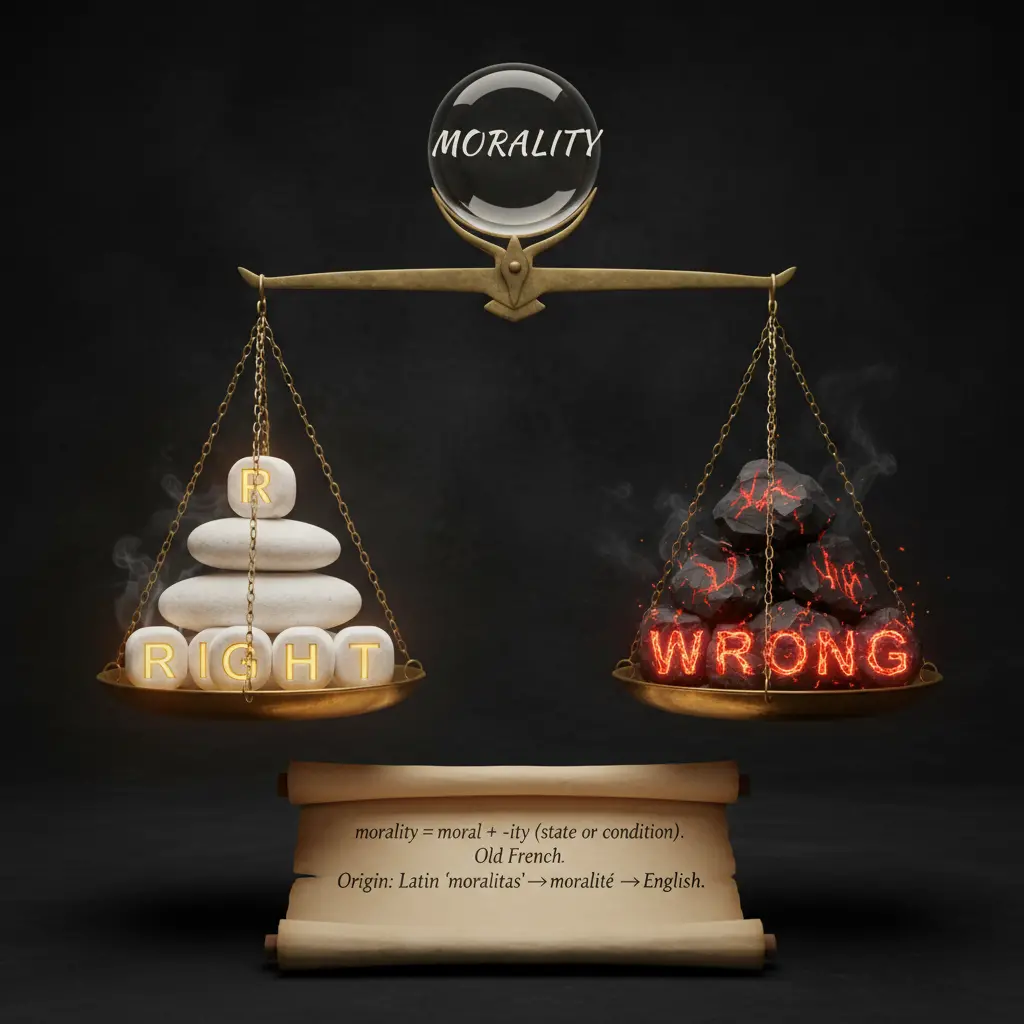
morality = moral + -ity (state or condition). Origin: Latin 'moralitas' → Old French 'moralité' → English. Memory image: Picture a scale balancing right and wrong, symbolizing ethical choices.
Note 1: These definitions and etymologies are not standard dictionary definitions, but extended explanations provided to help with memorization and understanding of the actual application of words. Through this background information, we strive to make words more vivid and easier to understand, and help you remember their meanings in real life.
Note 2: LexiTalk designs the learning flow around the linguistics principle of “Comprehensible Input.” When learners encounter material that is slightly above their level but still understandable from context, the brain naturally absorbs the language. That’s why we keep every word inside authentic contexts, using examples and associations to help you understand it and use it flexibly.
Read the FAQ explanation of Comprehensible InputI lean forward to help a coworker, my hands moving as we shift a stack of papers. A tiny decision sits in the air—should I admit a mistake or let it slide? I push past the urge to save face and tell the truth, feeling a cool weight settle in my chest. That moment makes morality feel like a quiet guide in how I act, even when nobody is watching.
Morality refers to the principles that distinguish right from wrong and to the broader system of beliefs that people use to live by those principles. It blends personal conscience with cultural, religious, and philosophical traditions to decide what is acceptable in a given situation. Morality guides everyday choices, from small acts of courtesy to major ethical decisions, and it often requires weighing competing duties such as honesty, fairness, and compassion. Because cultures differ in what they value, debates about morality can reveal tensions between individual rights and the common good. Learners often confuse morality with legality or with social norms, so clarifying context is key.
English often treats morality as an abstract, theory-friendly system that can be debated; learners may mix it with law or social norms and miss distinctions between personal conscience and universal values.
What is the meaning of the word 'morality'?
In which sentence is 'morality' used correctly?
Which word is a synonym of 'morality'?
How does 'morality' apply in real-world situations?
Reflecting on the concept of 'morality', how do you think it influences society?
Download LexiTalk app for personalized learning experience
Download AppCookies
We use cookies for essential site functions, analytics, and ads. You can accept, reject, or manage preferences. Privacy Policy