
neoclassical - Master This Word
Master this word with our 5-step learning method – Learn English in English
Train English Through Brain Routes, Not Translation.
This page helps you stop memorizing isolated translations and start understanding a word through its shared mental image, native-style thinking, and practical training steps.
Master this word with our 5-step learning method – Learn English in English
Example sentences are the start of understanding. Don't rush to memorize. First feel how the word works in a sentence.
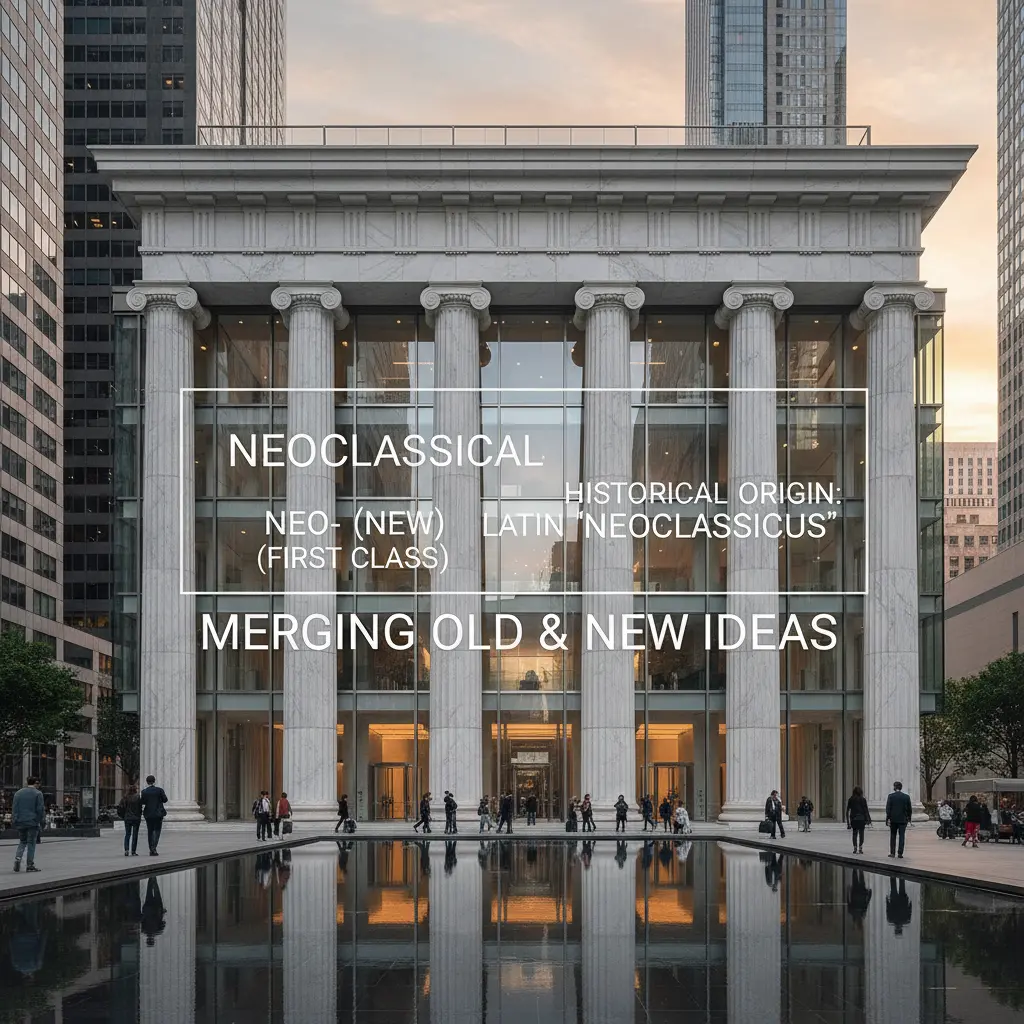
Root decomposition: neo- (new) + classical (from classicus, meaning 'first class'). Historical origin: From Latin 'neoclassicus' via French into English. Memory image: Picture a modern building featuring Greek columns, reflecting both old and new ideas merging together.
Note 1: These definitions and etymologies are not standard dictionary definitions, but extended explanations provided to help with memorization and understanding of the actual application of words. Through this background information, we strive to make words more vivid and easier to understand, and help you remember their meanings in real life.
Note 2: LexiTalk designs the learning flow around the linguistics principle of “Comprehensible Input.” When learners encounter material that is slightly above their level but still understandable from context, the brain naturally absorbs the language. That’s why we keep every word inside authentic contexts, using examples and associations to help you understand it and use it flexibly.
Read the FAQ explanation of Comprehensible InputNeoclassical describes a revivalist approach to classical art, architecture, and design that prioritizes symmetry, clear geometric forms, restrained ornament, and deliberate references to ancient Greek and Roman models. It arose in Europe in the mid-18th century and spread worldwide, shaping building facades with columns, pediments, and proportional harmony, as well as painting and sculpture that aim for idealized, balanced figures and calm, orderly composition. In modern usage, 'neoclassical' signals both admiration for antiquity and a modern reinterpretation rather than a literal copy. The memory image is a contemporary building featuring Greek columns and clean lines, merging old ideas with new techniques. The term can apply to interiors, furniture, and decorative arts as well.
Neoclassical in English often signals a revivalist, orderly reference to antiquity; learners may confuse it with simply 'classical' or with classical music terminology. Emphasize revival, restraint, and specific architectural or artistic contexts.
What does 'neoclassical' mean?
Choose the sentence that uses 'neoclassical' correctly.
What is a synonym for 'neoclassical'?
What is the opposite of 'neoclassical'?
Can you think of a real-life context related to 'neoclassical'?
Download LexiTalk app for personalized learning experience
Download AppCookies
We use cookies for essential site functions, analytics, and ads. You can accept, reject, or manage preferences. Privacy Policy