
nightmare - Master This Word
Master this word with our 5-step learning method – Learn English in English
Train English Through Brain Routes, Not Translation.
This page helps you stop memorizing isolated translations and start understanding a word through its shared mental image, native-style thinking, and practical training steps.
Master this word with our 5-step learning method – Learn English in English
Example sentences are the start of understanding. Don't rush to memorize. First feel how the word works in a sentence.
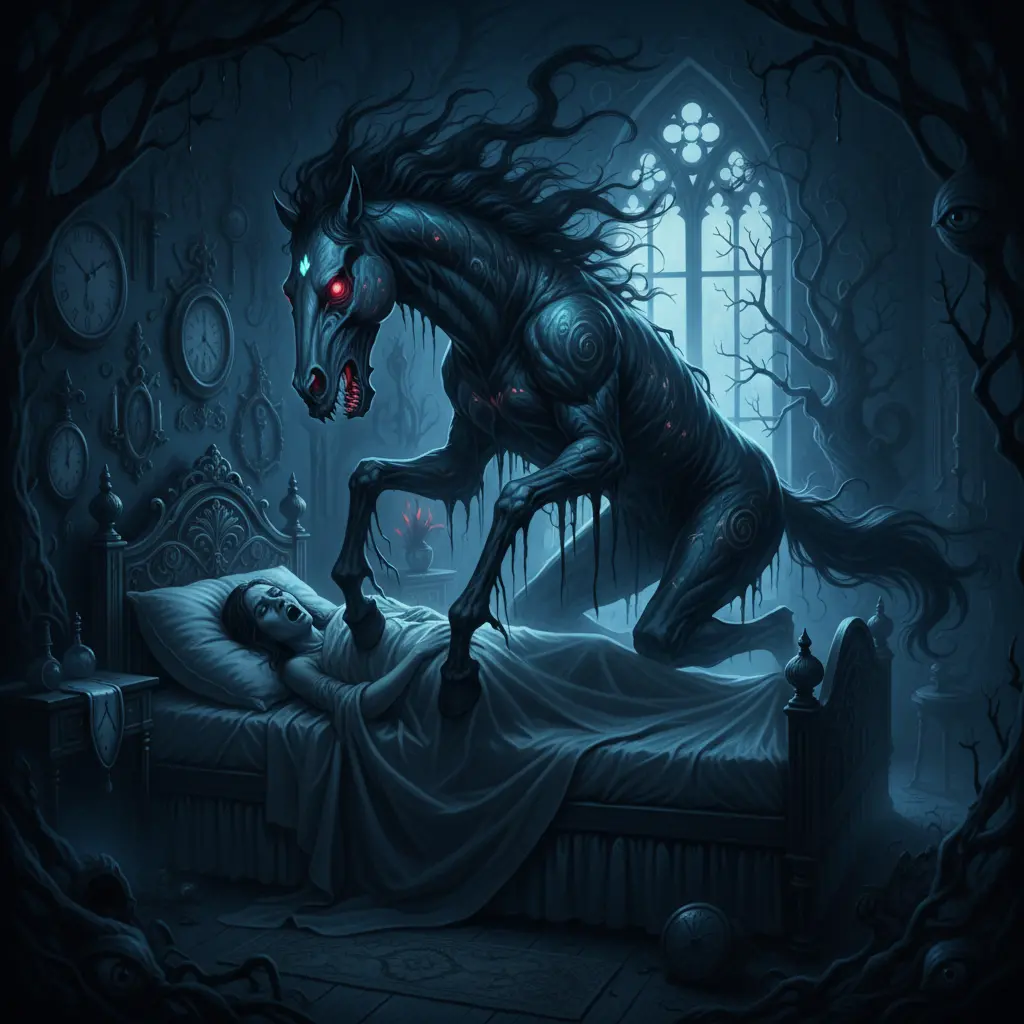
night + mare = night (time when it is dark) + mare (a female horse, used in folklore to signify a creature that suffocates sleepers). The term originated from Old English 'mare' meaning 'goblin' or 'incubus'. Imagine a terrifying horse-like creature lurking in your dreams, pressing down on you as you sleep.
Note 1: These definitions and etymologies are not standard dictionary definitions, but extended explanations provided to help with memorization and understanding of the actual application of words. Through this background information, we strive to make words more vivid and easier to understand, and help you remember their meanings in real life.
Note 2: LexiTalk designs the learning flow around the linguistics principle of “Comprehensible Input.” When learners encounter material that is slightly above their level but still understandable from context, the brain naturally absorbs the language. That’s why we keep every word inside authentic contexts, using examples and associations to help you understand it and use it flexibly.
Read the FAQ explanation of Comprehensible InputI tighten my grip on the blanket and pull it up to my chin, then turn toward the dark corner of the room. The night seems to shift as a nightmare slides in, and my heart pounds faster. I push away the panic, adjust my posture, and tell myself I can stay in control even when the dream crowds in. When the sweat cools, I set my shoulders a little, keeping the rhythm steady enough to face the night.
Nightmare is a noun that refers to a frightening dream that wakes you with fear, usually accompanied by a racing heart and sweating. It also describes a situation causing extreme anxiety or seeming out of control, such as a nightmare commute or a project turning into a nightmare. Native speakers say I had a nightmare to refer to a specific dream, or the project turned into a nightmare to describe the metaphorical sense. The word can be used in both formal and informal contexts, but many speakers still distinguish between a mild bad dream and a true nightmare by intensity and consequence.
To an English speaker, nightmare has a dual sense: a literal frightening dream and a strong metaphor for a terrible situation. Learners often default to bad dream or avoid metaphor, and may over-split the word into night + mare. Emphasize the metaphorical uses and the common collocations like have a nightmare and turn into a nightmare.
What is the meaning of the word 'nightmare'?
Which sentence uses the word 'nightmare' correctly?
Which word is most similar to 'nightmare'?
What is the opposite of 'nightmare'?
Can you give an example of a real-life scenario of 'nightmare'?
Download LexiTalk app for personalized learning experience
Download AppCookies
We use cookies for essential site functions, analytics, and ads. You can accept, reject, or manage preferences. Privacy Policy