
nomad - Master This Word
Master this word with our 5-step learning method – Learn English in English
Train English Through Brain Routes, Not Translation.
This page helps you stop memorizing isolated translations and start understanding a word through its shared mental image, native-style thinking, and practical training steps.
Master this word with our 5-step learning method – Learn English in English
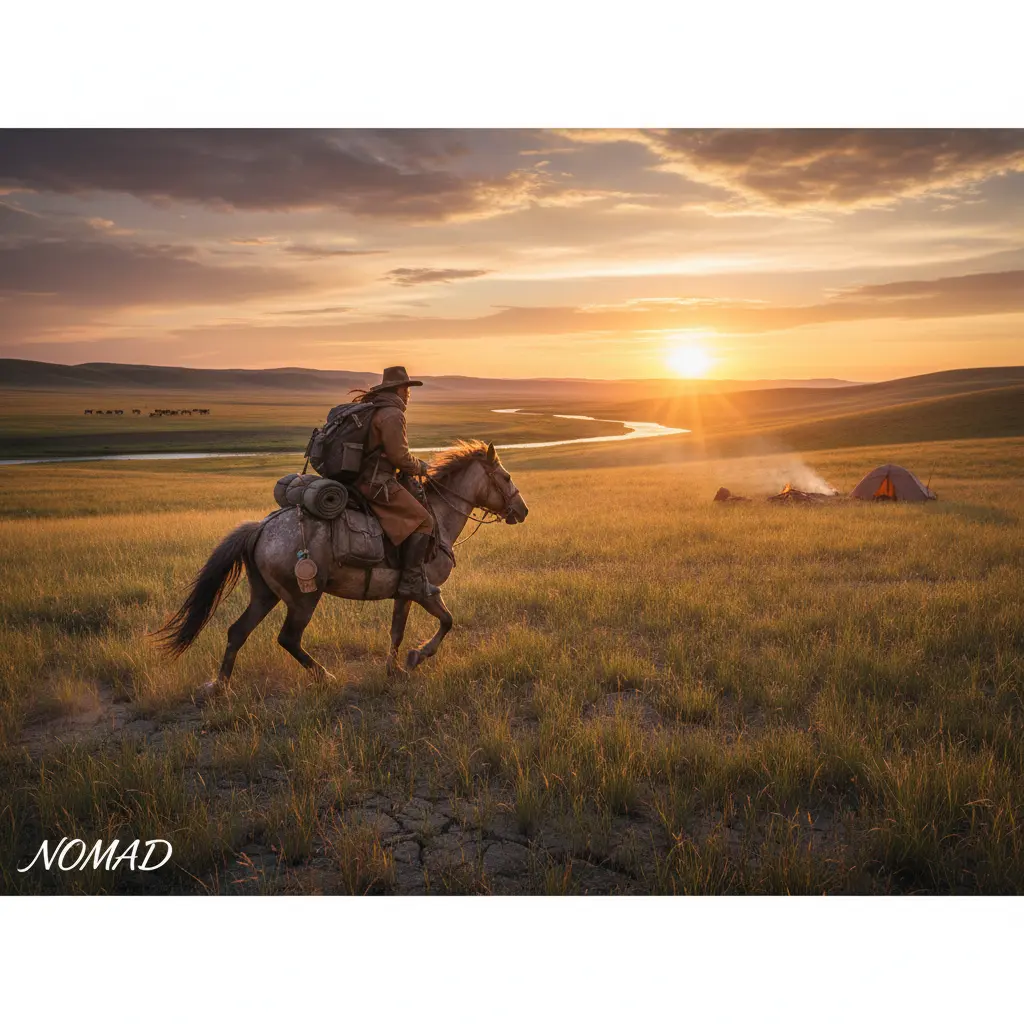
Example sentences are the start of understanding. Don't rush to memorize. First feel how the word works in a sentence.
Nomad comes from the Latin 'nomas', which means 'roaming'; derived from the Greek 'nomas', meaning 'pasture'. Imagine a free spirit riding across open plains, living off the land and never settling, truly embodying the essence of wandering.
Note 1: These definitions and etymologies are not standard dictionary definitions, but extended explanations provided to help with memorization and understanding of the actual application of words. Through this background information, we strive to make words more vivid and easier to understand, and help you remember their meanings in real life.
Note 2: LexiTalk designs the learning flow around the linguistics principle of “Comprehensible Input.” When learners encounter material that is slightly above their level but still understandable from context, the brain naturally absorbs the language. That’s why we keep every word inside authentic contexts, using examples and associations to help you understand it and use it flexibly.
Read the FAQ explanation of Comprehensible InputA nomad is a person who moves from place to place rather than settling in one location. Traditionally, nomads follow seasonal migrations, tending livestock, trading across wide regions, or seeking new pastures. In many cultures, nomad life embodies freedom, mobility, and resilience, but it can also bring challenges such as unstable housing and limited access to services. In modern English, the term covers historical and fictional figures as well as contemporary lifestyles, including digital nomads who travel while working remotely. Nomad is a noun; nomadic is the adjective, and nomadism is the noun form for the lifestyle. It contrasts with settler or sedentary, which imply permanence and attachment to a single place.
English typically frames nomadic life as a lifestyle choice and contrasts it with settled living; learners may think nomads lack routines or traveling forever. Focus on collocations like nomad life, nomadic lifestyle, nomadism.
What is the definition of 'nomad'?
Which sentence correctly uses the word 'nomad'?
Which word is most similar to 'nomad'?
What is the opposite of 'nomad'?
Can you give an example of a real-life scenario of a nomad?
Download LexiTalk app for personalized learning experience
Download AppCookies
We use cookies for essential site functions, analytics, and ads. You can accept, reject, or manage preferences. Privacy Policy