
nonporous - Master This Word
Master this word with our 5-step learning method – Learn English in English
Train English Through Brain Routes, Not Translation.
This page helps you stop memorizing isolated translations and start understanding a word through its shared mental image, native-style thinking, and practical training steps.
Master this word with our 5-step learning method – Learn English in English
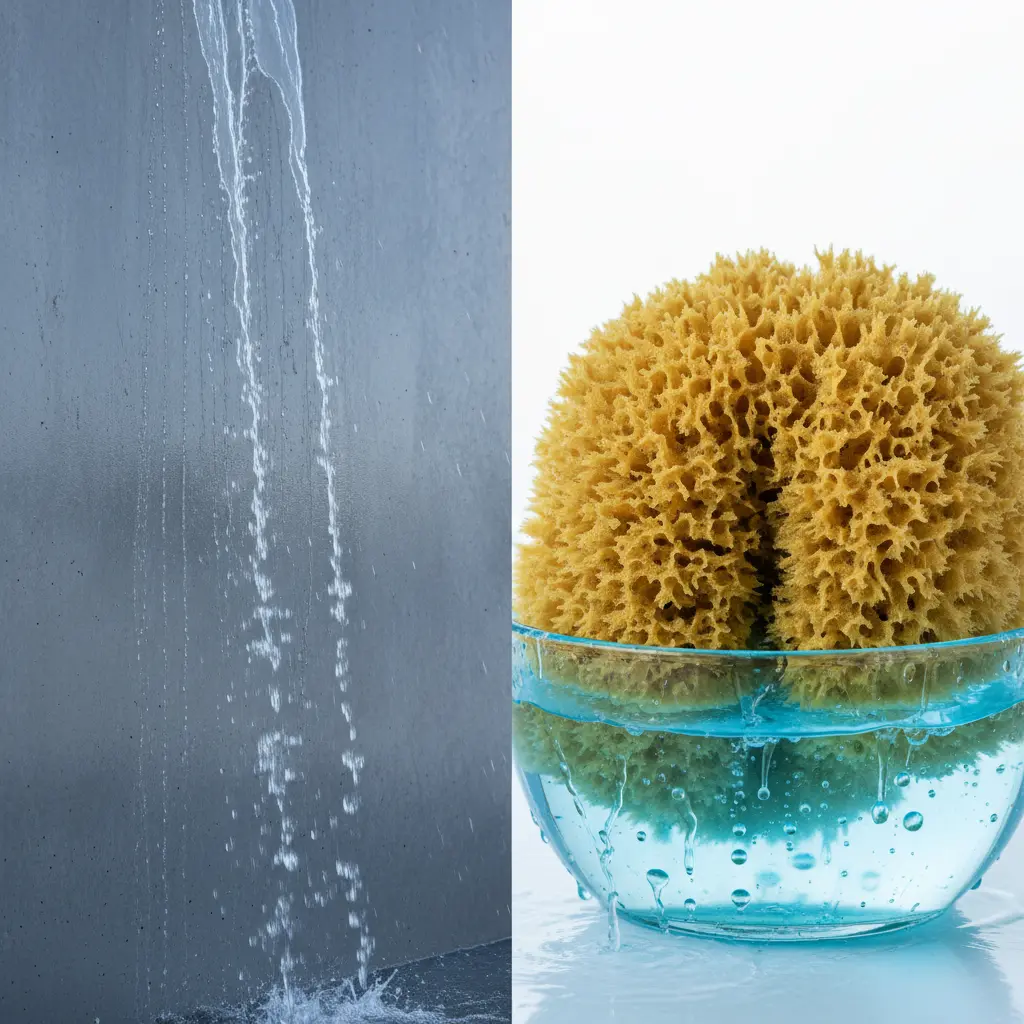
Example sentences are the start of understanding. Don't rush to memorize. First feel how the word works in a sentence.
Root decomposition: 'non-' (not) + 'porous' (having pores). Historical origin: Latin 'porosus' via Old French to English. Memory image: Imagine a solid wall that is completely water-resistant, contrasting with a sponge that absorbs everything.
Note 1: These definitions and etymologies are not standard dictionary definitions, but extended explanations provided to help with memorization and understanding of the actual application of words. Through this background information, we strive to make words more vivid and easier to understand, and help you remember their meanings in real life.
Note 2: LexiTalk designs the learning flow around the linguistics principle of “Comprehensible Input.” When learners encounter material that is slightly above their level but still understandable from context, the brain naturally absorbs the language. That’s why we keep every word inside authentic contexts, using examples and associations to help you understand it and use it flexibly.
Read the FAQ explanation of Comprehensible InputNonporous describes a material or surface that has no (or extremely few) pores, blocking the passage of liquids and gases. It is commonly used for coatings, membranes, and sealed surfaces in science, manufacturing, and construction contexts, where resisting absorption matters more than being visibly porous. The term emphasizes the degree of resistance rather than absolute impermeability, and contrasts with porous materials like sponge or wood. Its etymology comes from non- (not) + porous (full of pores), tracing back to Latin roots via Old French into English. A memory cue is envisioning a solid, water-repellent barrier beside a highly absorbent material.
Nonporous is often taken to imply perfection in impermeability, but in English it mainly signals a high resistance to penetration on surfaces or coatings, not an absolute guarantee. Learners tend to equate it with airtight or water-tight in all contexts, or assume all nonporous materials are chemically inert. Focus on usage with surfaces and membranes; distinguish from 'impermeable' in more general contexts.
What does the word 'nonporous' mean?
Choose the correct usage of the word 'nonporous' in a sentence.
Which word is most similar to 'nonporous'?
What is the opposite of the word 'nonporous'?
Can you give an example of a real-life scenario where a nonporous material is beneficial?
Download LexiTalk app for personalized learning experience
Download AppCookies
We use cookies for essential site functions, analytics, and ads. You can accept, reject, or manage preferences. Privacy Policy