
ohms - Master This Word
Master this word with our 5-step learning method – Learn English in English
Train English Through Brain Routes, Not Translation.
This page helps you stop memorizing isolated translations and start understanding a word through its shared mental image, native-style thinking, and practical training steps.
Master this word with our 5-step learning method – Learn English in English
Example sentences are the start of understanding. Don't rush to memorize. First feel how the word works in a sentence.
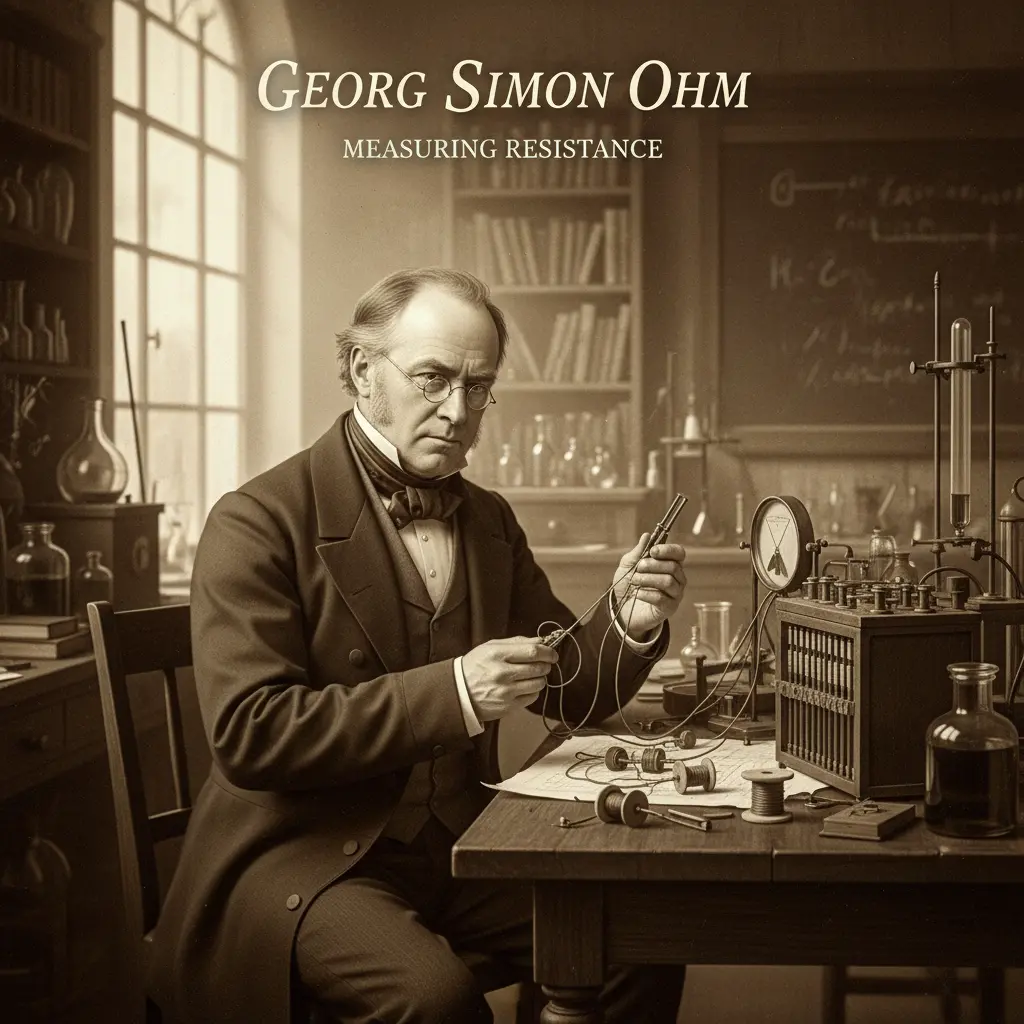
Root: 'Ohm', named after German physicist Georg Simon Ohm. Historical origin: The term comes from the German word 'Ohm' which was adopted into English in the 19th century. Memory image: Imagine a thoughtful scientist, Georg Simon Ohm, carefully measuring the resistance in a circuit using his invention, capturing the essence of electrical principles.
Note 1: These definitions and etymologies are not standard dictionary definitions, but extended explanations provided to help with memorization and understanding of the actual application of words. Through this background information, we strive to make words more vivid and easier to understand, and help you remember their meanings in real life.
Note 2: LexiTalk designs the learning flow around the linguistics principle of “Comprehensible Input.” When learners encounter material that is slightly above their level but still understandable from context, the brain naturally absorbs the language. That’s why we keep every word inside authentic contexts, using examples and associations to help you understand it and use it flexibly.
Read the FAQ explanation of Comprehensible InputAn ohm is the unit of electrical resistance. It measures how strongly a device or material resists the flow of electric current. By definition, one ohm is the resistance between two points of a conductor when a constant potential difference of one volt is applied to those points and the current is one ampere, with no electromotive force present. In everyday electronics you will see ohms on resistors, in voltage dividers, and in power supplies. In physics, the ohm also appears in discussions of impedance and circuit theory. The term honors the German physicist Georg Simon Ohm, linking modern practice to the 19th century science.
This section highlights how English speakers conceptually anchor ohm as a precise unit with a formal definition and common formulas like V = IR; learners often mix unit with quantities or default to plural forms in casual speech.
Download LexiTalk app for personalized learning experience
Download AppCookies
We use cookies for essential site functions, analytics, and ads. You can accept, reject, or manage preferences. Privacy Policy