optimism - Master This Word
Master this word with our 5-step learning method – Learn English in English
Train English Through Brain Routes, Not Translation.
This page helps you stop memorizing isolated translations and start understanding a word through its shared mental image, native-style thinking, and practical training steps.
Master this word with our 5-step learning method – Learn English in English
Example sentences are the start of understanding. Don't rush to memorize. First feel how the word works in a sentence.
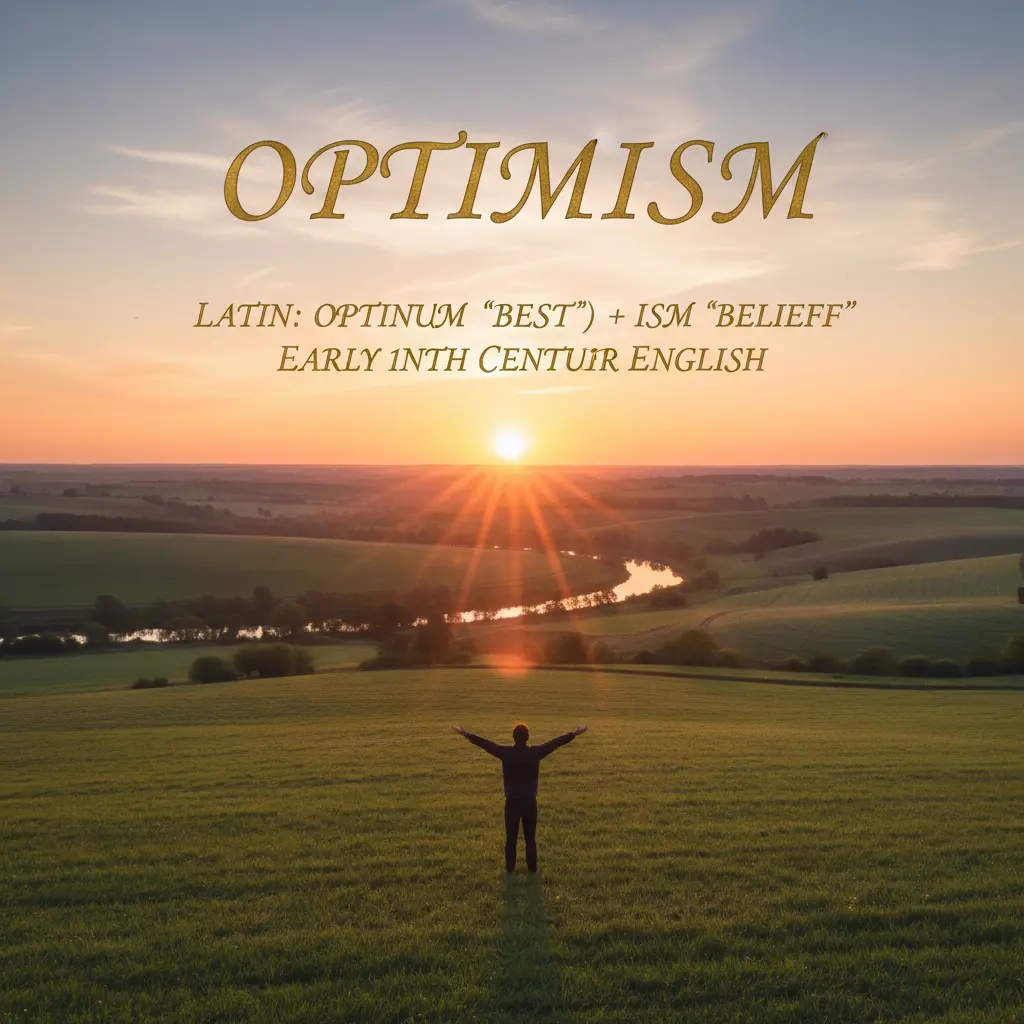
The word 'optimism' is derived from the Latin root 'optimum', meaning 'best', combined with the suffix '-ism', indicating a belief or doctrine. Its historical journey went from Latin to French ('optimisme') and into English in the early 19th century. Imagine a sun rising over a bright landscape, symbolizing hope and positivity, as you embrace the belief that everything will turn out for the best.
Note 1: These definitions and etymologies are not standard dictionary definitions, but extended explanations provided to help with memorization and understanding of the actual application of words. Through this background information, we strive to make words more vivid and easier to understand, and help you remember their meanings in real life.
Note 2: LexiTalk designs the learning flow around the linguistics principle of “Comprehensible Input.” When learners encounter material that is slightly above their level but still understandable from context, the brain naturally absorbs the language. That’s why we keep every word inside authentic contexts, using examples and associations to help you understand it and use it flexibly.
Read the FAQ explanation of Comprehensible InputI take a slow breath, roll my shoulders back, and move my gaze toward the window. A moment later, optimism starts to feel like a reachable button I can press as I shift my mind toward what could go right. It’s a tiny effort, but I can feel the pulse of possibility settling in my chest, and I hold that feeling for a moment while I plan the next step. In real life, this small turn of attention guides my choices, helps me speak up, and keep moving when the day gets heavy.
Optimism is a noun describing a hopeful outlook on life or the belief that good things will happen. It often involves focusing on positive possibilities, staying resilient in the face of setbacks, and expecting favorable outcomes even when evidence is uncertain. The word comes from the Latin optimum, through French optimisme, and entered English in the early nineteenth century. Cultural contexts shape how optimism is expressed: some people tie it to personal effort and planning, others to community or spiritual belief. While optimism can motivate and protect wellbeing, it should be balanced with realism to avoid ignoring real risks. In daily life, optimism can influence decisions, relationships, and goal setting.
English tends to separate broad outlook (optimism) from specific hopes or plans; focus on collocations like optimism about the future. Learners often misuse it with 'hope' or confuse it with constant cheerfulness.
What is the definition of 'optimism'?
Choose the sentence that uses 'optimism' correctly.
Which word is most similar to 'optimism'?
What is the opposite of 'optimism'?
Can you think of a real-life scenario that illustrates the concept of optimism?
Download LexiTalk app for personalized learning experience
Download AppCookies
We use cookies for essential site functions, analytics, and ads. You can accept, reject, or manage preferences. Privacy Policy