owl - Master This Word
Master this word with our 5-step learning method – Learn English in English
Train English Through Brain Routes, Not Translation.
This page helps you stop memorizing isolated translations and start understanding a word through its shared mental image, native-style thinking, and practical training steps.
Master this word with our 5-step learning method – Learn English in English
Example sentences are the start of understanding. Don't rush to memorize. First feel how the word works in a sentence.
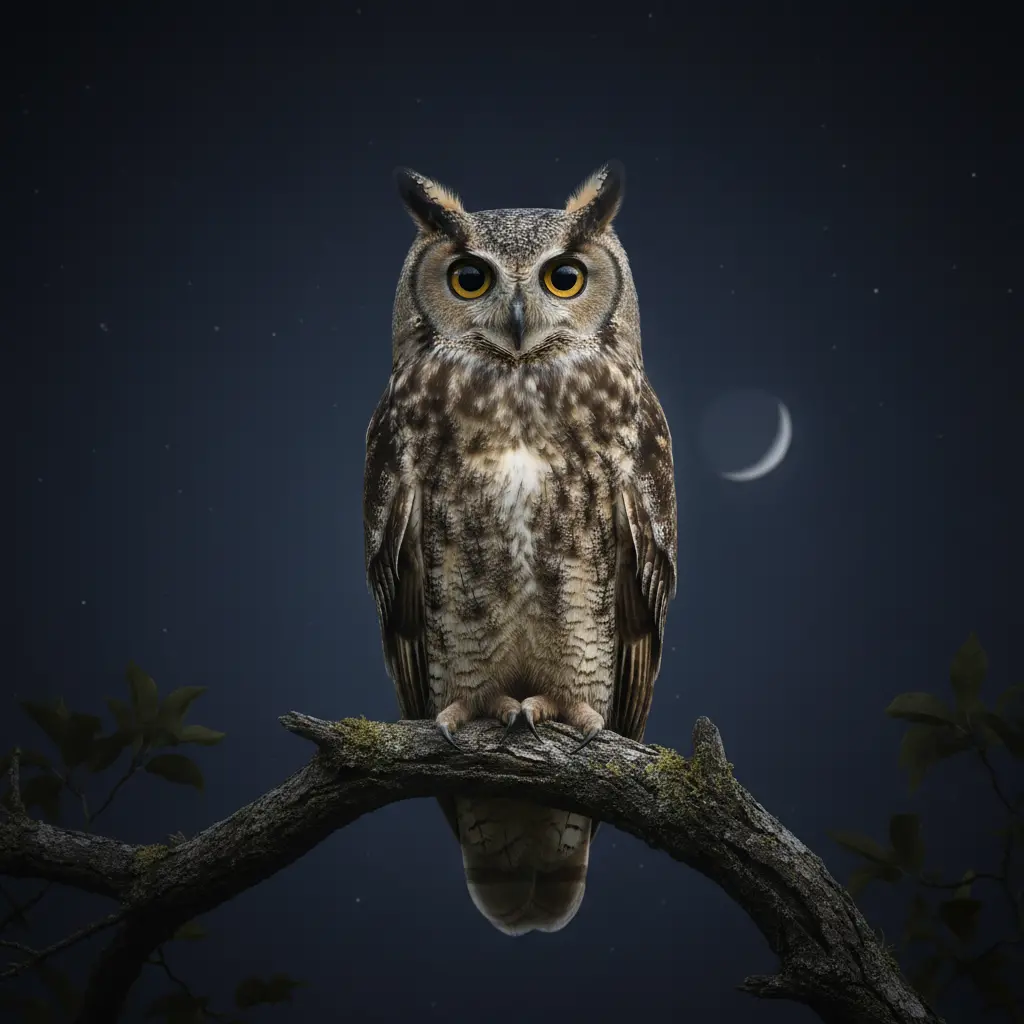
owl = ulula (Latin) → اسلامي (Arabic) → Old English 'āwela' → Modern English 'owl'. Picture an owl sitting quietly on a branch at night, wide awake with big, wise eyes watching over the dark.
Note 1: These definitions and etymologies are not standard dictionary definitions, but extended explanations provided to help with memorization and understanding of the actual application of words. Through this background information, we strive to make words more vivid and easier to understand, and help you remember their meanings in real life.
Note 2: LexiTalk designs the learning flow around the linguistics principle of “Comprehensible Input.” When learners encounter material that is slightly above their level but still understandable from context, the brain naturally absorbs the language. That’s why we keep every word inside authentic contexts, using examples and associations to help you understand it and use it flexibly.
Read the FAQ explanation of Comprehensible InputOwl is a nocturnal bird with a round face, forward facing eyes, and a quiet, almost magical flight. In English, the word conveys both a natural creature and broad symbolic meanings. Owls are famous for being awake at night, keeping watch, and being patient observers, which makes them a common image in literature and art. People often associate owls with wisdom and knowledge, borrowing that idea from myths and fables. Because owls appear in folklore around the world, the term can carry mood and tone from mysterious to scholarly. When learning the word, connect the animal's behavior to its metaphorical uses to avoid confusion with other birds.
Owl is often treated in English as a symbol of wisdom, so learners may overemphasize the intellectual aspect and expect set phrases. English also uses idioms like night owl that tie personality to behavior, which can be surprising if the learner expects animal traits to map directly to people. Emphasize distinctions between literal animal talk and metaphorical use.
What is the meaning of the word 'owl'?
Which of the following sentences uses the word 'owl' correctly?
What is a synonym for the word 'owl'?
What is an opposite (antonym) for the word 'owl'?
In what real-life context might you see an owl?
Download LexiTalk app for personalized learning experience
Download AppCookies
We use cookies for essential site functions, analytics, and ads. You can accept, reject, or manage preferences. Privacy Policy