paintings - Master This Word
Master this word with our 5-step learning method – Learn English in English
Train English Through Brain Routes, Not Translation.
This page helps you stop memorizing isolated translations and start understanding a word through its shared mental image, native-style thinking, and practical training steps.
Master this word with our 5-step learning method – Learn English in English
Example sentences are the start of understanding. Don't rush to memorize. First feel how the word works in a sentence.
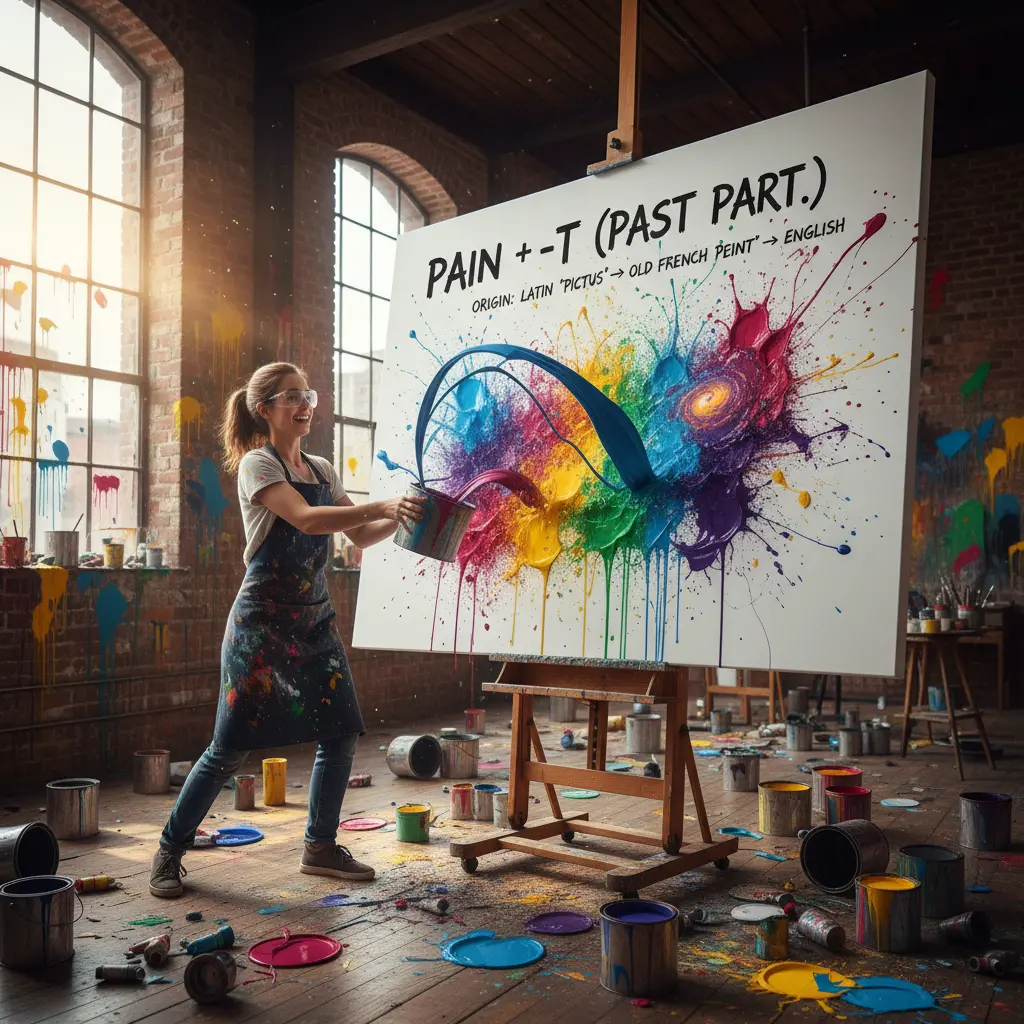
paint: pain + -t (past part.). Origin: Latin 'pictus' → Old French 'peint' → English. Imagine someone splashing colors onto a canvas, forming a vivid masterpiece from an otherwise dull surface.
Note 1: These definitions and etymologies are not standard dictionary definitions, but extended explanations provided to help with memorization and understanding of the actual application of words. Through this background information, we strive to make words more vivid and easier to understand, and help you remember their meanings in real life.
Note 2: LexiTalk designs the learning flow around the linguistics principle of “Comprehensible Input.” When learners encounter material that is slightly above their level but still understandable from context, the brain naturally absorbs the language. That’s why we keep every word inside authentic contexts, using examples and associations to help you understand it and use it flexibly.
Read the FAQ explanation of Comprehensible InputHands hover over a blank page; I hold a brush and push color across the surface. I move the bristles, watching the edges shift as pigment blooms into light and shadow. The effort feels like tuning a voice—steady, careful, with small adjustments. What I end up painting lets the scene be felt, not explained, as if you could glimpse it in the air and feel it with your eyes.
Paint is a versatile verb in English, covering coating a surface with color, making an image with pigments, and describing something vividly in speech or writing. In everyday use you can say you will paint a wall, paint a portrait, or paint a vivid scene with words. The past participle 'painted' appears in phrases like 'painted a mural' and 'painted in bold colors'. The word also appears in idioms and set phrases, such as 'paint a picture' meaning to describe something in detail. Etymology traces to Latin pictus via Old French peint; the sense of applying pigment is old, while the figurative sense grew later.
English treats paint as a flexible verb with concrete and figurative senses, which can surprise learners who expect one simple meaning. Some learners assume it only refers to the liquid or to wall coating, or that it always means drawing a picture. Also, compare 'paint' with 'color' as a material vs action. Remember 'paint a picture' is figurative.
What is the meaning of the word 'paintings'?
Choose the correctly used sentence that includes the word 'paintings'.
Which word is most similar to 'paintings'?
What is the opposite of the word 'paintings'?
Can you think of a real-life context where one might appreciate art?
Download LexiTalk app for personalized learning experience
Download AppCookies
We use cookies for essential site functions, analytics, and ads. You can accept, reject, or manage preferences. Privacy Policy