paragraph - Master This Word
Master this word with our 5-step learning method – Learn English in English
Train English Through Brain Routes, Not Translation.
This page helps you stop memorizing isolated translations and start understanding a word through its shared mental image, native-style thinking, and practical training steps.
Master this word with our 5-step learning method – Learn English in English
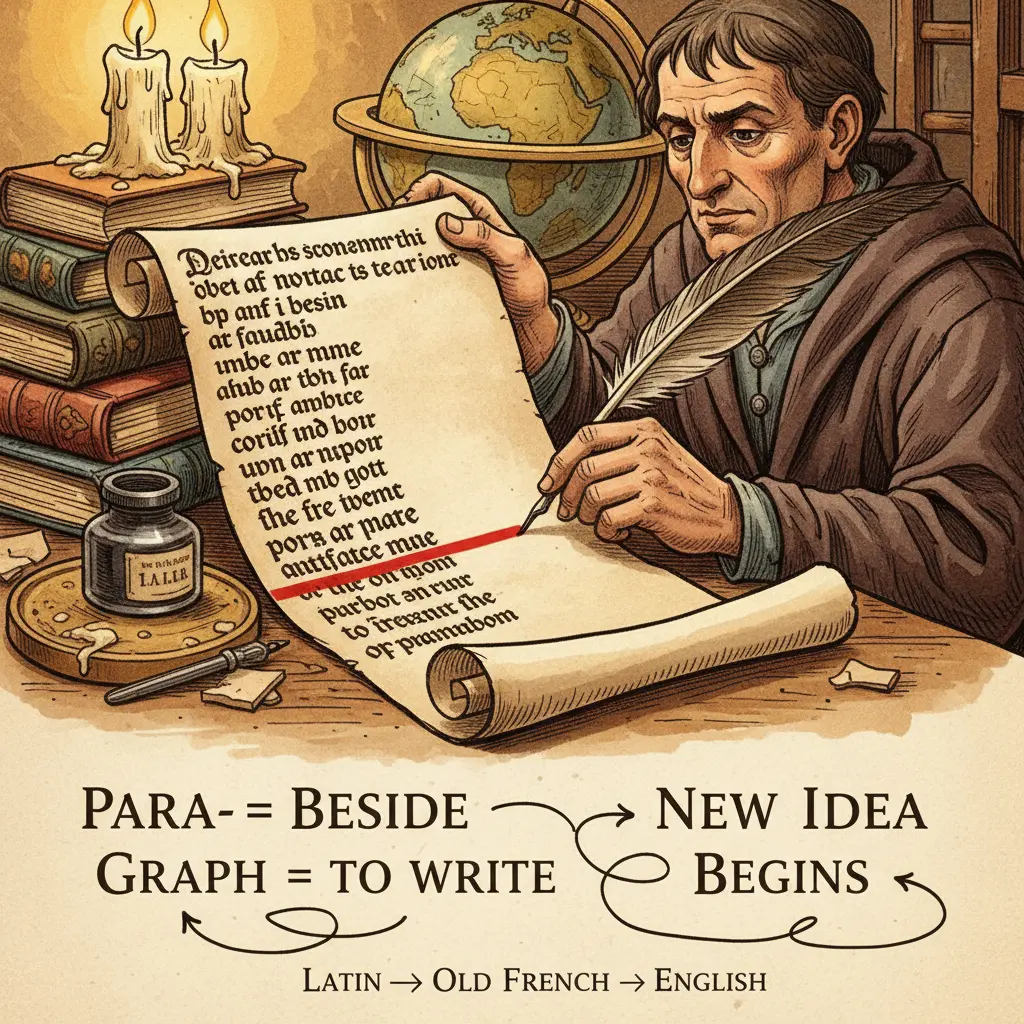
Example sentences are the start of understanding. Don't rush to memorize. First feel how the word works in a sentence.
para- = beside, graph = to write; Latin → Old French → English. Imagine a writer creating a new section beside the previous one, drawing a line to signify a new idea's beginning.
Note 1: These definitions and etymologies are not standard dictionary definitions, but extended explanations provided to help with memorization and understanding of the actual application of words. Through this background information, we strive to make words more vivid and easier to understand, and help you remember their meanings in real life.
Note 2: LexiTalk designs the learning flow around the linguistics principle of “Comprehensible Input.” When learners encounter material that is slightly above their level but still understandable from context, the brain naturally absorbs the language. That’s why we keep every word inside authentic contexts, using examples and associations to help you understand it and use it flexibly.
Read the FAQ explanation of Comprehensible InputI lean over the page and move my finger to start a paragraph, watching the cursor settle at the top. A short sequence unfolds as I push the lines into a single block, gathering scattered notes. I adjust the spacing and place each sentence so the thought breathes as one paragraph. Letting the words settle, I keep the rhythm steady and ready for the next line.
A paragraph is a distinct section of writing that expresses a single main idea and consists of multiple sentences. It starts on a new line and is usually separated from the previous text by a line break or indentation. Paragraphs organize thoughts, signal shifts in topic, and guide readers through the structure of a piece. In English, a paragraph typically opens with a topic sentence, followed by supporting details and examples, and ends with a concluding sentence that links to the next paragraph. Length varies by purpose and genre, but clarity and coherence are the goals.
English learners tend to focus on topic sentences and paragraph coherence; some languages allow looser ties between sentences, which can lead to weaker initial topic statements.
What is the meaning of the word 'paragraph'?
Which of the following sentences uses the word 'paragraph' correctly?
Which word is most similar to 'paragraph'?
What is the opposite of the word 'paragraph'?
Can you give an example of a real-life scenario involving a 'paragraph'?
Download LexiTalk app for personalized learning experience
Download AppCookies
We use cookies for essential site functions, analytics, and ads. You can accept, reject, or manage preferences. Privacy Policy