
percentage - Master This Word
Master this word with our 5-step learning method – Learn English in English
Train English Through Brain Routes, Not Translation.
This page helps you stop memorizing isolated translations and start understanding a word through its shared mental image, native-style thinking, and practical training steps.
Master this word with our 5-step learning method – Learn English in English
Example sentences are the start of understanding. Don't rush to memorize. First feel how the word works in a sentence.
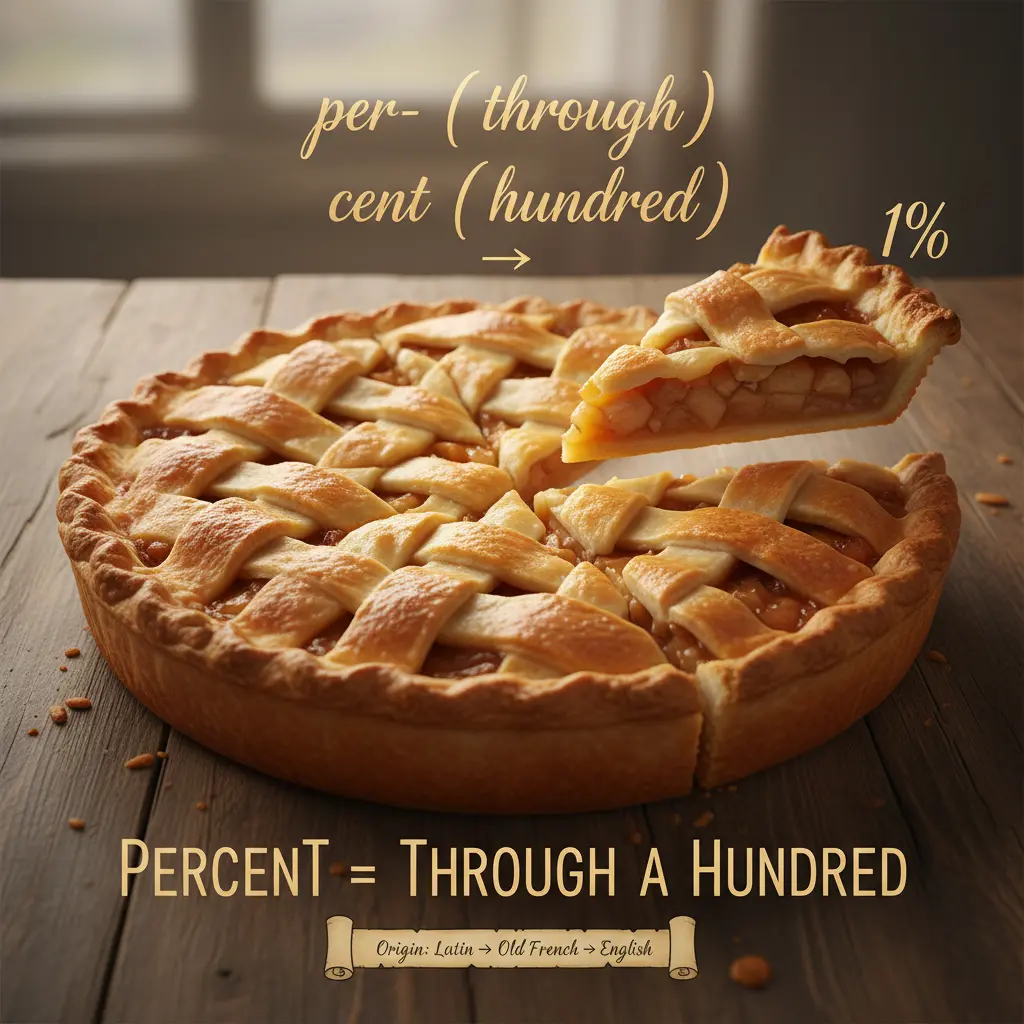
per- (through) + cent (hundred) = through a hundred; Origin: Latin → Old French → English. Imagine a pie divided into 100 pieces, allowing you to see what part of the whole you're talking about, symbolizing division and portioning.
Note 1: These definitions and etymologies are not standard dictionary definitions, but extended explanations provided to help with memorization and understanding of the actual application of words. Through this background information, we strive to make words more vivid and easier to understand, and help you remember their meanings in real life.
Note 2: LexiTalk designs the learning flow around the linguistics principle of “Comprehensible Input.” When learners encounter material that is slightly above their level but still understandable from context, the brain naturally absorbs the language. That’s why we keep every word inside authentic contexts, using examples and associations to help you understand it and use it flexibly.
Read the FAQ explanation of Comprehensible InputWith a light touch, I move the slider on the screen and watch the digits skate toward a percentage. I keep nudging the numbers until the readout feels right for the bill, and the room quiets as the result settles. That small push of control makes the number real, like a decision I can act on. From there, the idea of percentage sticks in my head and guides how I compare parts in everyday life.
A percentage is a way to express a part of a whole as a fraction of 100. It is a type of ratio used to compare how large one portion is relative to the total. We see percentages in everyday life on sale signs, test scores, interest rates, and statistical reports. The word 'percentage' emphasizes the idea of measuring a portion of a hundred, while 'percent' is the symbol % that follows a number (for example, 25%). A 'percentage point' describes the absolute difference between two percentages. When calculating a percentage, you multiply the part by 100 and then divide by the whole; the result is written with a % sign.
In English, percentage is a noun describing a portion of a whole. Learners often confuse it with percent, which is the symbol after a number, and with percentage point, which measures difference between two percentages.
What is the meaning of the word 'percentage'?
In what context would you use the word 'percentage'?
Which word is similar to 'percentage'?
What is the opposite of 'percentage'?
How is the concept of 'percentage' relevant in everyday life?
Download LexiTalk app for personalized learning experience
Download AppCookies
We use cookies for essential site functions, analytics, and ads. You can accept, reject, or manage preferences. Privacy Policy